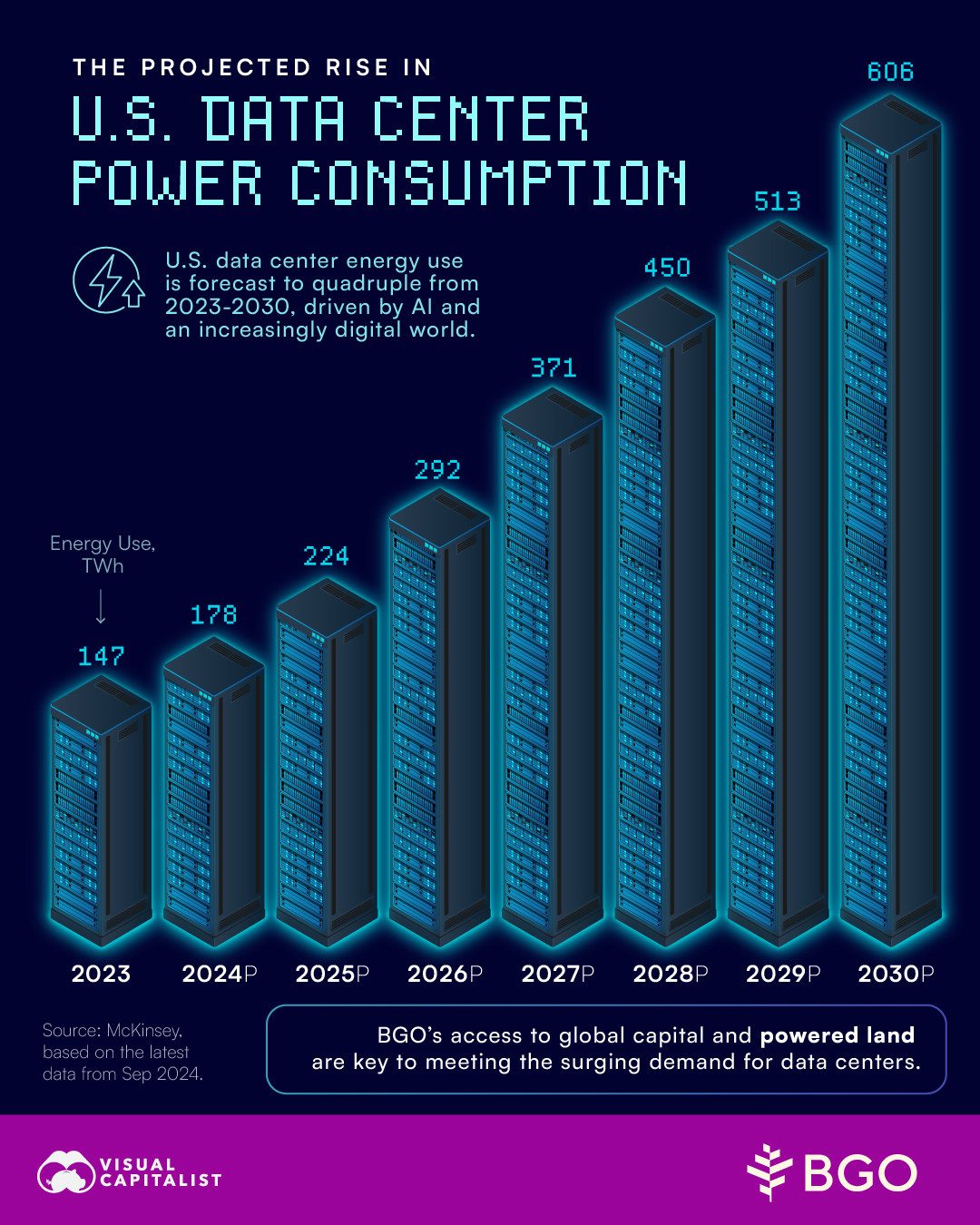
Data Center Power Consumption
U.S. data centers are projected to consume four times more energy by 2030, a trend driven by the rise of artificial intelligence (AI) and our increasingly digital world. This dramatic increase underscores the growing importance of understanding and managing the energy demands of data centers. The share of total U.S. power demand from data centers could rise from 4% in 2023 to nearly 12% by 2030.
Why This Matters
The surge in data center energy consumption is not just a matter of numbers; it has substantial implications for the environment, the economy, and technology infrastructure. The energy demands of data centers are intricately linked to advancements in technology, particularly AI. As AI applications become more prevalent, the computational power required to support them also increases, leading to higher energy consumption.
AI is revolutionizing various industries, from healthcare to finance, by enabling more efficient processes, accurate predictions, and enhanced decision-making. However, training complex AI models requires significant computational resources, which in turn demand substantial energy. This trend is expected to continue, making it crucial to address the energy needs of data centers proactively.
Additionally, the growing digital world means more devices are connected to the internet, generating and consuming vast amounts of data. From streaming services to cloud storage, the demand for data processing and storage is on the rise, further straining the energy grid.
Understanding the Energy Demand
Current Energy Consumption
Currently, data centers account for approximately 4% of the total U.S. power demand. This figure, while significant, is expected to grow substantially in the coming years. The energy demand of data centers is driven by several factors, including the need for constant cooling to keep servers operational, powering the servers themselves, and the associated infrastructure.
Projections for 2030
By 2030, data centers could consume four times more energy than they do today. This means that the share of total U.S. power demand from data centers could rise to nearly 12%. Such a dramatic increase highlights the need for sustainable and efficient energy solutions in the data center industry. The projected rise is fueled by the growing adoption of AI and the expanding digital landscape, which necessitate more powerful and energy-intensive computational resources.
Contributing Factors
Several factors contribute to the projected increase in data center energy consumption. First, the exponential growth of AI applications requires more computational power. Training AI models, particularly deep learning models, involves processing vast amounts of data, which is energy-intensive. Additionally, the increasing number of connected devices and the growing demand for digital services further drive up energy consumption.
The need for constant availability and reliability of data services also plays a significant role. Data centers must operate 24/7, ensuring that data is always accessible. This continuous operation necessitates a steady supply of energy, contributing to the overall power demand.
Practical Tips for Managing Energy Consumption
Given the projected rise in data center energy consumption, it is essential to adopt practical strategies to manage and mitigate this demand. Here are some effective measures:
Energy-Efficient Hardware
Investing in energy-efficient hardware can significantly reduce the power consumption of data centers. Modern servers and storage devices are designed to be more energy-efficient, using less power to perform the same tasks. Upgrading to the latest hardware can lead to substantial energy savings.
Renewable Energy Sources
Transitioning to renewable energy sources, such as solar and wind power, can help reduce the carbon footprint of data centers. Many tech companies are already investing in renewable energy projects to power their data centers. This not only helps in managing energy consumption but also contributes to environmental sustainability.
Optimized Cooling Systems
Cooling systems account for a significant portion of a data center's energy consumption. Optimizing these systems can lead to substantial energy savings. Techniques such as free cooling, which uses natural air to cool servers, and using energy-efficient cooling equipment can help reduce power consumption.
Data Center Design
The design of a data center can also impact its energy efficiency. Modular data centers, for example, allow for flexible scaling and can be more energy-efficient than traditional data centers. Additionally, placing data centers in locations with cooler climates can reduce the need for cooling, further lowering energy consumption.
AI-Powered Efficiency
Ironically, AI can also be a tool for improving data center efficiency. AI algorithms can optimize energy usage by predicting and adjusting power consumption in real-time. For example, AI can help in load balancing, ensuring that energy is used efficiently across different servers and systems.
Important Takeaways
The projected rise in data center energy consumption underscores the need for proactive management and sustainable practices. Key takeaways include:
- Growing Demand: AI and digital advancements will drive a significant increase in energy consumption by data centers, with projections indicating a fourfold rise by 2030.
- Environmental Impact: Increased energy consumption will have environmental implications, making it crucial to adopt sustainable practices.
- Economic Implications: Managing energy demand will also have economic implications, as efficient use of resources can lead to cost savings.
- Technology Solutions: Innovations in hardware, renewable energy, and AI-powered optimization can help mitigate the energy demands of data centers.
Conclusion
The projected rise in U.S. data center energy consumption is a critical issue that demands attention. As AI and digital technologies continue to advance, the energy demands of data centers will only increase. By adopting sustainable practices, investing in energy-efficient hardware, and leveraging renewable energy sources, it is possible to manage this growing demand effectively. Proactive measures today can pave the way for a more energy-efficient and sustainable digital future.
Watch the Reel
Questions readers ask
Why is the energy consumption of U.S. data centers expected to increase so dramatically by 2030?
The projected quadrupling of energy consumption in U.S. data centers by 2030 is primarily due to the rapid expansion of the digital landscape and the increasing reliance on artificial intelligence (AI). These technologies require significant computational power, which in turn demands more energy.
How much of the total U.S. power demand will data centers consume by 2030?
By 2030, data centers in the U.S. are projected to consume nearly 12% of the total power demand in the country, marking a substantial rise from the 4% they were projected to consume in 2023.
What are the primary challenges associated with the increase in data center energy use?
The increasing energy use in data centers presents several challenges, including environmental impacts, economic burdens, and the strain it places on the technology infrastructure. Effective energy management strategies will be crucial to mitigate these issues.
How does the digital revolution contribute to the rising energy consumption in data centers?
The digital revolution has led to a surge in data processing and storage needs, which in turn requires more power to support. As more devices and applications go digital, the demand for data center services, and consequently, their energy consumption, continues to rise.
What role does AI play in the projected increase in data center energy consumption?
AI applications require substantial computational resources to function effectively. As AI becomes more integrated into various industries and services, the demand for high-performance data centers increases, driving up their energy consumption.
What can be done to address the energy challenges posed by data centers?
To tackle the energy challenges, data centers can focus on improving energy efficiency, adopting renewable energy sources, and optimizing their power usage effectiveness (PUE). These steps can help mitigate the environmental and economic impacts of rising energy consumption.
What are the implications of the rising energy use in data centers for the economy?
The rising energy use in data centers can lead to increased operational costs for businesses, potentially driving up the prices of goods and services. Additionally, the high energy demand can strain the power grid, affecting overall economic stability and growth.
Related deep dives
Similar reads based on topic and creator.


Recent articles
Fresh deep dives from the latest Reels we unpacked.




Comments
Be the first to comment.