Electric Vehicle Sales Trends and Market Impact
Electric vehicle (EV) sales have surged in recent years, but how significant is their impact on the global market? By examining annual vehicle sales data, we can gain insights into the shifting dynamics between internal combustion engines, plug-in hybrids, and battery electric vehicles.
Context / Why This Matters
Understanding these trends is crucial for several reasons. For one, the automotive industry is undergoing a major transformation, driven by environmental concerns, technological advancements, and regulatory pressures. This shift affects not only car manufacturers but also infrastructure development, energy markets, and consumer behavior. Furthermore, the rise of EVs has implications for global emissions reduction targets and energy security.
Main Discussion
The Peak of Combustion Vehicle Sales
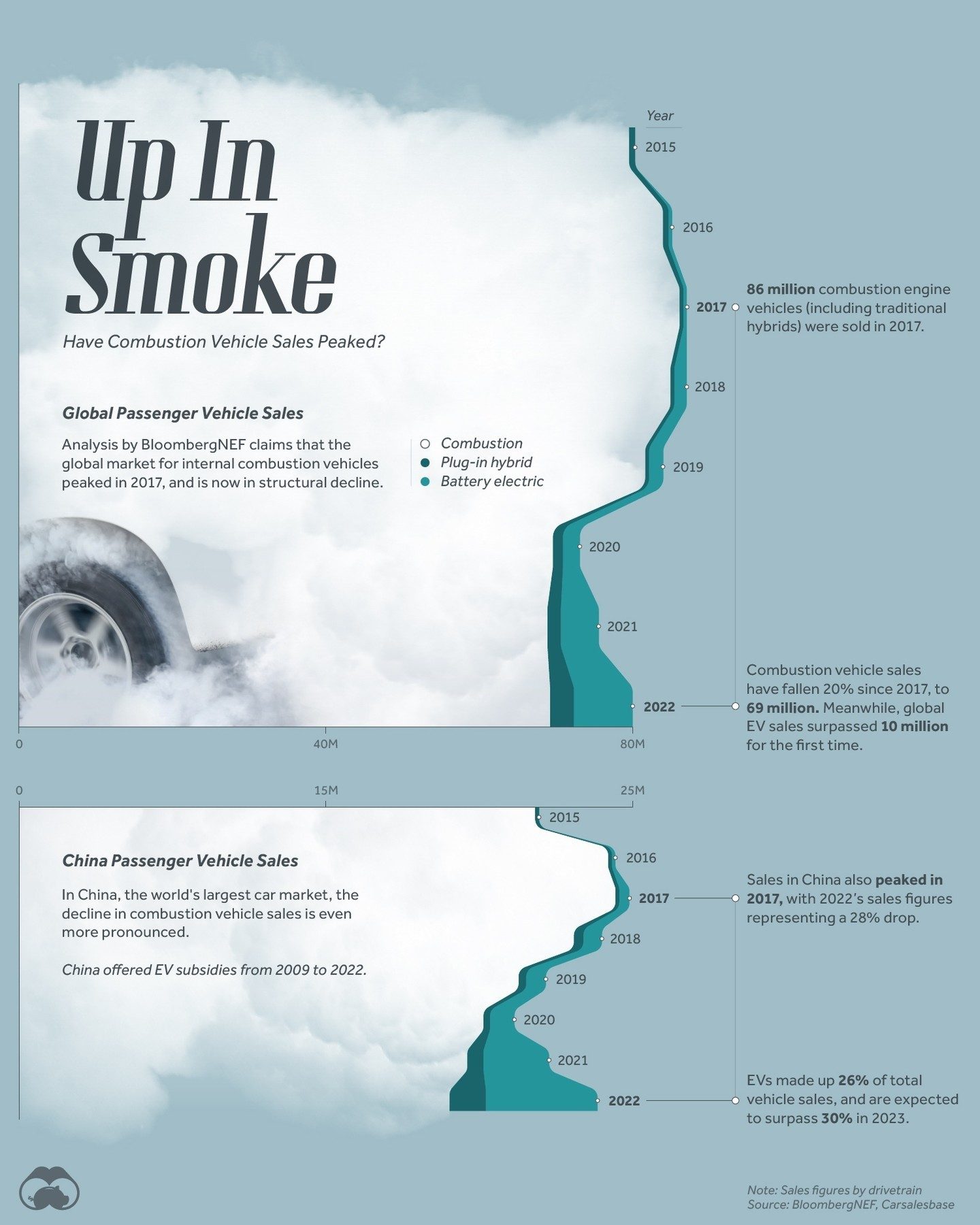
A closer look at the data reveals that global combustion vehicle sales, which include traditional hybrids, reached their peak in 2017. According to analysis by BloombergNEF, the market for these vehicles is now in a state of structural decline. In 2017, an estimated 86 million combustion engine hybrids were sold. However, by 2022, this number had dropped by 20%, settling at around 69 million. This decline coincides with a notable rise in electric vehicle sales, which surpassed 10 million units for the first time in 2022.
The Rise of Electric Vehicles
The data shows a significant increase in electric vehicle (EV) sales, which made up 26% of total vehicle sales in 2022. This figure is expected to rise to over 30% in 2023, indicating a growing consumer preference for electric vehicles. The decline in combustion vehicle sales is not just a global trend; it is also evident in key markets such as China. In 2017, China's passenger vehicle sales peaked, but by 2022, they had fallen by 28%.
Global vs. Regional Trends
While the global trends are clear, it’s essential to consider regional variations. For instance, the decline in combustion vehicle sales in China is more pronounced than in other regions. This can be attributed to several factors, including stricter emissions regulations, government incentives for EV purchases, and the rapid development of charging infrastructure. In contrast, markets in other regions, such as Europe and North America, are experiencing a more gradual shift towards electric vehicles.
Key Factors Driving the Shift
Several key factors are driving the shift from combustion to electric vehicles. One of the most significant is the increasing awareness of environmental issues and the need to reduce carbon emissions. Governments worldwide are implementing stricter regulations to curb emissions, which is forcing automakers to invest in electric vehicle technology. Additionally, advancements in battery technology have made EVs more affordable and practical for consumers, with longer ranges and shorter charging times.
Another critical factor is the availability of charging infrastructure. As more charging stations are built, consumers are becoming more confident in the practicality of owning an electric vehicle. This infrastructure development is a collaborative effort between governments, automakers, and energy companies, aimed at creating a seamless transition from combustion to electric vehicles.
The Role of Government and Policy
Government policies play a pivotal role in accelerating the adoption of electric vehicles. Many countries have set targets for phasing out internal combustion engines and are offering incentives for EV purchases, such as tax breaks and subsidies. These policies are crucial in encouraging consumers to make the switch and in attracting investments in EV manufacturing and infrastructure.
For example, Norway has been a leader in EV adoption, with over 60% of new car sales being electric in 2022. This success is largely due to a combination of generous incentives, extensive charging infrastructure, and a long-term commitment to reducing carbon emissions. Other countries are following suit, with ambitious plans to increase EV market share in the coming years.
Practical Tips
For consumers considering the switch to an electric vehicle, several practical tips can make the transition smoother:
- Research and Compare Models: There are numerous EV models on the market, each with its own set of features and benefits. Research different makes and models to find one that suits your needs and budget.
- Check for Incentives: Many governments offer financial incentives for purchasing an electric vehicle. Be sure to check what incentives are available in your region.
- Plan for Charging: Ensure you have access to a reliable charging solution. This could be a home charging station or access to public charging infrastructure.
- Consider Total Cost of Ownership: While the upfront cost of an EV can be higher, the total cost of ownership, including fuel and maintenance, is often lower than that of a combustion engine vehicle.
Important Takeaways
Electric vehicle sales have grown rapidly, making a significant dent in the global vehicle market. Key takeaways from this data include:
- Combustion vehicle sales peaked in 2017 and have been declining since.
- Electric vehicle sales are rising, with a market share expected to surpass 30% in 2023.
- Government policies and infrastructure development are crucial in accelerating EV adoption.
- The shift to electric vehicles is driven by environmental concerns, technological advancements, and regulatory pressures.
- Regional trends, such as the rapid decline in China, highlight the importance of local factors in EV adoption.
Understanding these trends can help consumers, policymakers, and industry stakeholders navigate the evolving automotive landscape and make informed decisions about the future of transportation.
Conclusion
The shift from combustion to electric vehicles is a complex but necessary transition. As electric vehicle sales continue to rise, they are set to play a pivotal role in reducing global carbon emissions and addressing the challenges posed by climate change. By staying informed about these trends and understanding the factors driving this shift, we can all contribute to a more sustainable future.
Watch the Reel
Questions readers ask
What was the global market share of electric vehicles in 2022?
In 2022, electric vehicles (EVs) made up a quarter of total vehicle sales, indicating a significant portion of the global market. This highlights the growing popularity and acceptance of EVs among consumers worldwide.
Which countries are leading the global EV adoption?
While the shift towards EVs is global, key markets like China have seen a notable increase in EV sales. In China, combustion vehicle sales have declined as EVs gain more traction, reflecting the country's significant role in the global EV market.
How have electric vehicle sales trends affected the automotive industry?
The surge in EV sales has led to a major transformation in the automotive industry. This shift is driven by environmental concerns, technological advancements, and regulatory pressures, impacting not only car manufacturers but also infrastructure development and energy markets.
What are the key factors driving the growth of the electric vehicle market?
The growth of the electric vehicle market is primarily driven by environmental concerns, technological advancements, and regulatory pressures. These factors have led to a significant increase in EV sales and a corresponding decline in sales of internal combustion engine vehicles.
What insights can be gained from examining annual vehicle sales data?
Examining annual vehicle sales data provides insights into the shifting dynamics between internal combustion engines, plug-in hybrids, and battery electric vehicles. This data helps in understanding the impact of EVs on the global market and the trends shaping the future of the automotive industry.
What is the significance of the shift towards electric vehicles in key markets like China?
The shift towards electric vehicles in key markets like China is significant as it reflects global trends and has a substantial impact on global EV adoption. This shift is evident in the decline of combustion vehicle sales and the increase in EV sales, highlighting China's role in the global EV market.
What is the impact of electric vehicle market trends on emissions targets?
The trends in the electric vehicle market are crucial for achieving global emissions targets. As EVs gain market share, they contribute to reducing greenhouse gas emissions from the transportation sector, helping to mitigate climate change and improve air quality.
Related deep dives
Similar reads based on topic and creator.


Recent articles
Fresh deep dives from the latest Reels we unpacked.




Comments
Be the first to comment.