Artificial Muscle Technology
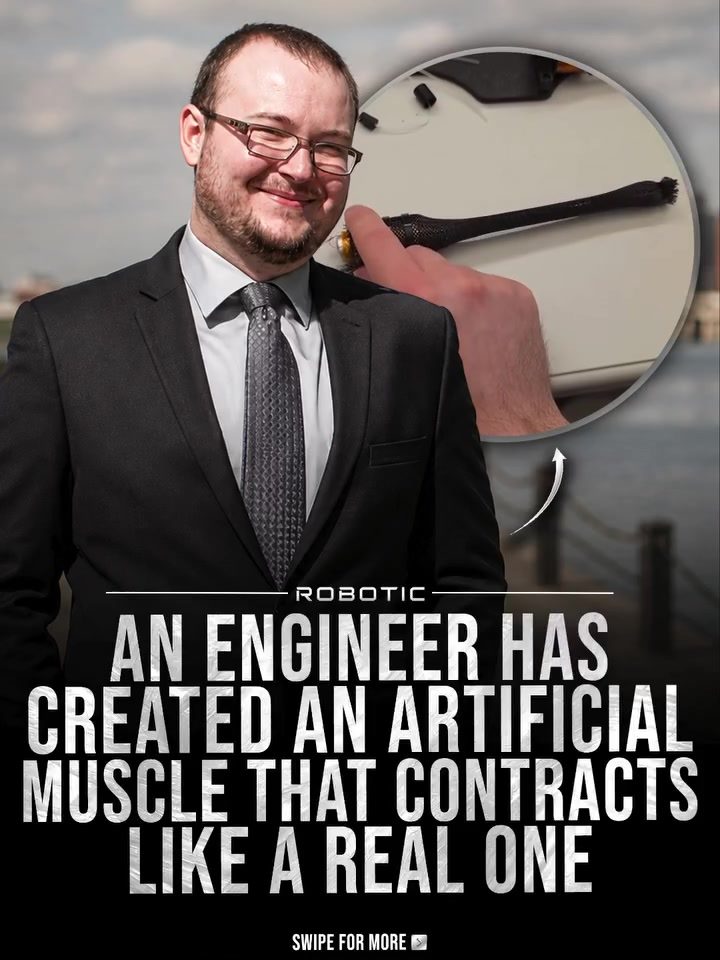
Artificial muscles are revolutionizing the field of robotics, and independent engineer Ian Pritchard is at the forefront of this innovation. His latest creation is a compact, coil-based artificial muscle that contracts when electrically activated, mimicking the natural movement of biological muscles. This technological advancement promises to reshape the future of robotics. These artificial muscles are designed to replace traditional motors, making robots lighter, quieter, and more capable of natural movement.
Context / Why This Matters
The development of artificial muscles represents a significant leap forward in robotics. Traditional robotic systems often rely on bulky motors and gearboxes, which limit the dexterity and natural movement of robots. Artificial muscles, on the other hand, offer a more organic and efficient way to generate movement, making robots more adaptable and versatile.
This technology is particularly important for humanoid robots, which require intricate movements that mimic human actions. By integrating artificial muscles, future robots could perform tasks with greater precision and fluidity, opening up new possibilities in fields such as healthcare, manufacturing, and even personal assistance.
Main Discussion
The Technology Behind Artificial Muscles
Artificial muscles operate on the principle of electroactivation, where an electrical signal triggers the muscle to contract. This mechanism is similar to how biological muscles shorten to generate movement. The key advantage of artificial muscles is their ability to replicate the natural, smooth motions of human muscles, which is difficult to achieve with traditional motors.
Pritchard's latest prototype is a coil-based artificial muscle that contracts when electrically activated. This design is a significant improvement over previous versions, demonstrating the rapid progress of the project through continuous iteration. The compact size and efficient operation of these muscles make them ideal for integration into robotic systems.
Applications in Robotics
The potential applications of artificial muscles in robotics are vast. By replacing bulky motors and gearboxes, artificial muscles can make robots lighter and more agile. This is particularly beneficial for humanoid robots, which require a high degree of dexterity and natural movement. Future robots equipped with artificial muscles could perform tasks with greater precision and fluidity, making them more effective in various environments.
Advantages Over Traditional Motors
Artificial muscles offer several advantages over traditional motors. For one, they are lighter and more compact, which reduces the overall weight and size of robotic systems. This makes robots more efficient and easier to maneuver. Additionally, artificial muscles operate more quietly than traditional motors, making them suitable for environments where noise is a concern.
Another key advantage is the ability to generate more natural and precise movements. Traditional motors often produce jerky, mechanical movements that are far from natural. Artificial muscles, on the other hand, can replicate the smooth, fluid motions of biological muscles, making robots more adaptable and versatile.
Integration and Development
The integration of artificial muscles into robotic systems is still in its early stages, but significant progress is being made. Researchers and engineers are continuously refining the technology to improve its performance and reliability. Similar technologies are also being explored by research groups for next-generation humanoid robots, highlighting the growing interest and potential of this field.
Practical Tips
If you're interested in exploring artificial muscle technology, here are some practical tips to get you started:
- Stay Informed: Keep up with the latest research and developments in the field. Follow key researchers and organizations to stay informed about new breakthroughs and innovations.
- Experiment with Prototypes: If you have access to prototyping tools, consider building and testing your own artificial muscle prototypes. This hands-on experience can provide valuable insights into the technology's capabilities and limitations.
- Collaborate with Experts: Reach out to researchers and engineers in the field to collaborate on projects. Their expertise and experience can be invaluable in advancing your understanding and development of artificial muscle technology.
Important Takeaways
- Artificial muscles offer a more natural and efficient way to generate movement in robots.
- These muscles are lighter, quieter, and more compact than traditional motors, making robots more agile and versatile.
- The technology has vast potential applications in fields such as healthcare, manufacturing, and personal assistance.
- Continuous research and development are crucial for advancing artificial muscle technology and integrating it into robotic systems.
Conclusion
The development of artificial muscles by Ian Pritchard and other researchers represents a significant advancement in robotics. By replicating the natural movements of biological muscles, artificial muscles offer a more efficient and versatile way to generate movement in robots. This technology has the potential to revolutionize the field, making robots lighter, quieter, and more capable of natural movement. As research and development continue, the future of robotics looks brighter than ever. The potential of artificial muscle technology is vast, and its impact on various industries is just beginning to be realized.
Watch the Reel
Questions readers ask
What are artificial muscles and how do they improve robotics?
Artificial muscles are innovative components that contract with electrical signals, mimicking the behavior of biological muscles. They improve robotics by making machines lighter, quieter, and more agile, enabling smoother and more natural movements compared to traditional motors.
How do artificial muscles differ from traditional robotic motors?
Unlike traditional motors, artificial muscles do not rely on bulky gearboxes or complex mechanisms. They contract directly with electrical signals, allowing for more compact designs and greater flexibility in movement, which can be crucial in applications like healthcare and manufacturing.
What are the benefits of using artificial muscles in healthcare robotics?
Artificial muscles can make healthcare robots more dexterous and capable of performing delicate tasks, such as assisting with surgeries or providing rehabilitative care. Their quieter operation and natural movement can also make them more comfortable for patients to interact with.
How are artificial muscles contributing to advancements in manufacturing robotics?
In manufacturing, artificial muscles can enhance robotic agility and precision, enabling robots to handle tasks that require fine motor skills. This can lead to improved efficiency and the ability to perform more complex assembly and manufacturing processes.
Who is Ian Pritchard and what is his contribution to artificial muscle technology?
Ian Pritchard is an independent engineer known for his work in developing artificial muscles for robotics. His latest creation is a compact, coil-based artificial muscle that contracts when electrically activated, paving the way for more natural and efficient robotic movements.
What is the significance of soft robotics in the context of artificial muscles?
Soft robotics involves creating robots from highly compliant materials, and artificial muscles are a key component in this field. They enable robots to be more flexible and adaptable, capable of interacting safely with humans and navigating complex environments.
What does the future hold for artificial muscles in robotics?
The future of artificial muscles in robotics looks promising, with potential applications ranging from advanced prosthetics to more intuitive consumer devices. As the technology continues to develop, we can expect to see robots with increasingly natural and human-like movements, enhancing their integration into various aspects of daily life.
Related deep dives
Similar reads based on topic and creator.



Recent articles
Fresh deep dives from the latest Reels we unpacked.




Comments
Be the first to comment.