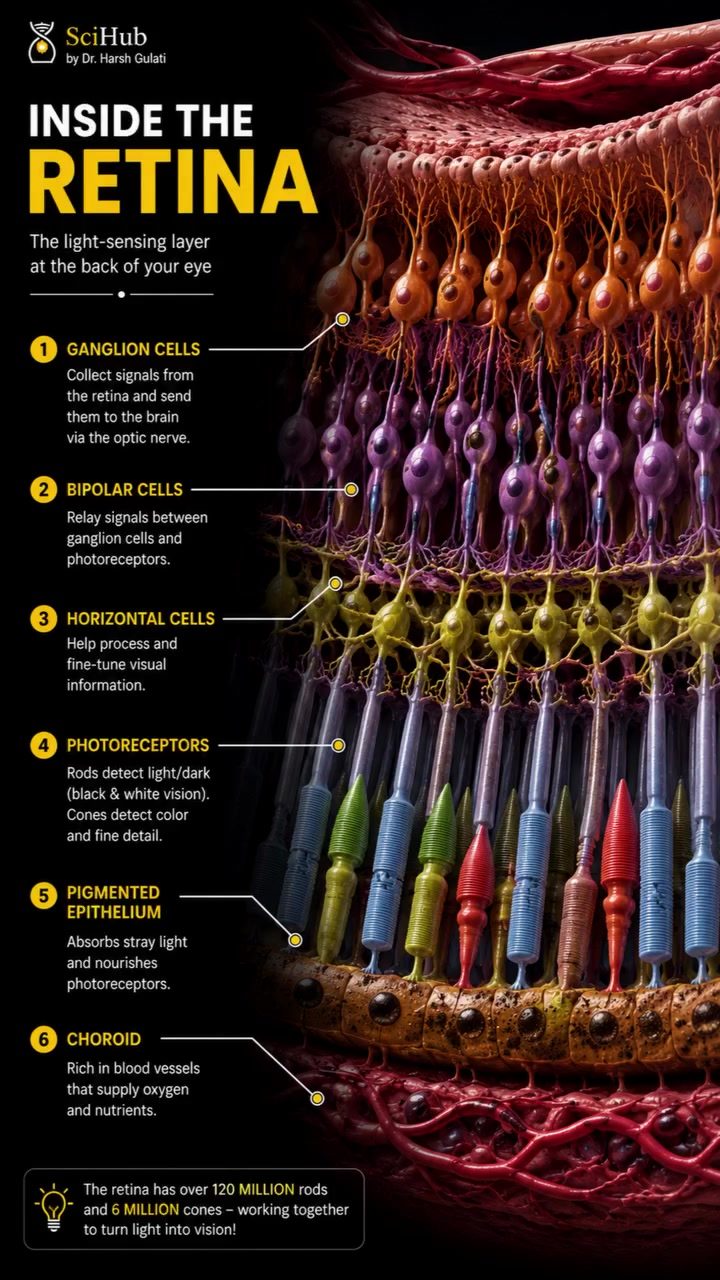
Inside the Retina: Where Vision Begins
The retina, a delicate layer of nerve cells nestled at the back of the eye, is the gateway to vision. This intricate structure, barely 0.2–0.5 mm thick, is composed of millions of specialized cells that work in unison to convert light into the images we see. Understanding the retina's anatomy and function provides a deeper appreciation for the remarkable process of human vision.
Context: Why This Matters
The retina is more than just a component of the eye; it is a living, dynamic layer that translates light into electrical signals the brain can interpret. By exploring its structure and function, we gain insights into how we perceive the world around us. This knowledge is not just fascinating but also crucial for understanding and treating various eye conditions and diseases.
Main Discussion
The Retina's Structure
The retina is a layered structure, each layer playing a critical role in vision. The outermost layer, closest to the light, is the pigmented epithelium. This layer absorbs stray light, reducing glare and improving visual acuity. It also nourishes the photoreceptors, ensuring they function optimally.
Photoreceptors: The Eyes' Sensors
Just beneath the pigmented epithelium lie the photoreceptors—rods and cones. Rods are highly sensitive to light and are responsible for vision in low light conditions, such as twilight or night. They do not detect colors, providing only black, white, and shades of gray. Cones, on the other hand, require more light but are responsible for color vision and the perception of fine details. The human retina contains approximately 120 million rods and 6 million cones, each playing a vital role in our visual experience.
Signal Processing and Transmission
The signals from the photoreceptors are relayed through a series of cells:
-
Bipolar Cells: These relay signals from the photoreceptors to the ganglion cells. While they process information, they do not generate action potentials—they transmit information over short distances.
-
Horizontal Cells: These cells help process and fine-tune visual information, contributing to the retina's ability to discern contrast and detail.
-
Ganglion Cells: These cells collect and combine signals from the bipolar and horizontal cells, converting them into electrical impulses. The optic nerve, an extension of the ganglion cells, carries these impulses to the brain.
The Optic Nerve: The Highway to the Brain
The optic nerve serves as the primary communication link between the retina and the brain. It transmits the electrical impulses generated by the ganglion cells, which the brain then interprets as images. This process is what allows us to see the world around us.
The Choroid: The Retina's Lifeline
The choroid, a vascular layer rich in blood vessels, lies just beneath the retina. It provides the necessary oxygen and nutrients to the retina, ensuring its cells can function properly. Without the choroid, the retina would not receive the vital supplies it needs to maintain vision.
Practical Tips
While the retina's function is largely automatic, there are ways to maintain and even enhance your vision:
Regular Eye Check-Ups
Regular eye check-ups can help detect any issues with the retina early, allowing for prompt treatment. Conditions like retinal detachment, diabetic retinopathy, and macular degeneration can be managed more effectively with early intervention.
Healthy Lifestyle
A healthy lifestyle, including a balanced diet rich in vitamins and minerals, can support overall eye health. Foods high in antioxidants, such as leafy greens, carrots, and berries, are particularly beneficial for the retina.
Proper Lighting
Ensuring adequate lighting, especially when reading or working on detailed tasks, can reduce eye strain and fatigue. Proper lighting helps the eyes focus more efficiently, which is crucial for maintaining retinal health.
Protection from UV Rays
Protecting your eyes from harmful UV rays with sunglasses or protective lenses can prevent damage to the retina. Prolonged exposure to UV rays can lead to cataracts and other eye conditions, so it's important to be vigilant.
Regular Exercise
Physical activity improves blood circulation, which is essential for the choroid's function. Regular exercise ensures that the retina receives a steady supply of oxygen and nutrients, promoting overall eye health.
Important Takeaways
In this journey through the retina, it is clear that this small, intricate structure plays a monumental role in vision. From the conversion of light into electrical signals to the processing and transmission of these signals to the brain, the retina is a marvel of biological engineering.
Conclusion
The retina is a complex and vital part of the human eye, responsible for translating light into the images we see. By understanding its structure and function, we not only appreciate the intricacies of vision but also gain valuable insights into maintaining and improving eye health. Whether through regular check-ups, a healthy lifestyle, or protective measures, caring for our retinas is essential for preserving the gift of sight.
Watch the Reel
Questions readers ask
What are the primary types of photoreceptor cells in the retina and how do they contribute to vision?
The primary types of photoreceptor cells in the retina are rods and cones. Rods are highly sensitive to light and are responsible for low-light and peripheral vision, while cones are responsible for color vision and function best in bright light. Together, they convert light into electrical signals that the brain interprets as visual images.
How does the retina convert light into signals that the brain can understand?
The retina converts light into signals through a process that involves photoreceptor cells. These cells, when struck by light, trigger a chemical reaction that generates electrical signals. These signals are then transmitted through a complex network of nerve cells, ultimately reaching the optic nerve, which relays the information to the brain.
What role do retinal nerve cells play in the vision process?
Retinal nerve cells, particularly ganglion cells, play a crucial role in transmitting visual information from the retina to the brain. They receive signals from photoreceptor cells and bipolar cells, process this information, and send it through the optic nerve to the visual cortex, where it is interpreted as images.
Why is the retina considered a dynamic layer in the eye?
The retina is considered dynamic because it is constantly active in converting light into electrical signals. It adjusts to different lighting conditions, repairs itself to some extent, and continually sends updated visual information to the brain, allowing us to perceive our environment in real-time.
What happens if the retina is damaged?
Damage to the retina can impair vision significantly. Depending on the extent and location of the damage, it can lead to issues like blurred vision, loss of peripheral vision, or even complete blindness. Conditions affecting the retina, such as macular degeneration, diabetic retinopathy, and detachment, highlight the critical role of the retina in maintaining clear and functional vision.
How do rods and cones differ in their response to light?
Rods and cones differ in their response to light primarily based on their sensitivity and function. Rods are more sensitive to light and are active in low-light conditions, providing black-and-white vision. Cones, on the other hand, require higher light levels and are responsible for color vision and detailed vision in bright conditions.
What is the significance of the retina's thin structure in its functionality?
The retina's thin structure, measuring only 0.2–0.5 mm, allows for efficient light absorption and processing. This thinness ensures that light can reach the photoreceptor cells quickly and effectively, facilitating the rapid conversion of light into electrical signals that the brain interprets as visual information.
Related deep dives
Similar reads based on topic and creator.



Recent articles
Fresh deep dives from the latest Reels we unpacked.




Comments
Be the first to comment.