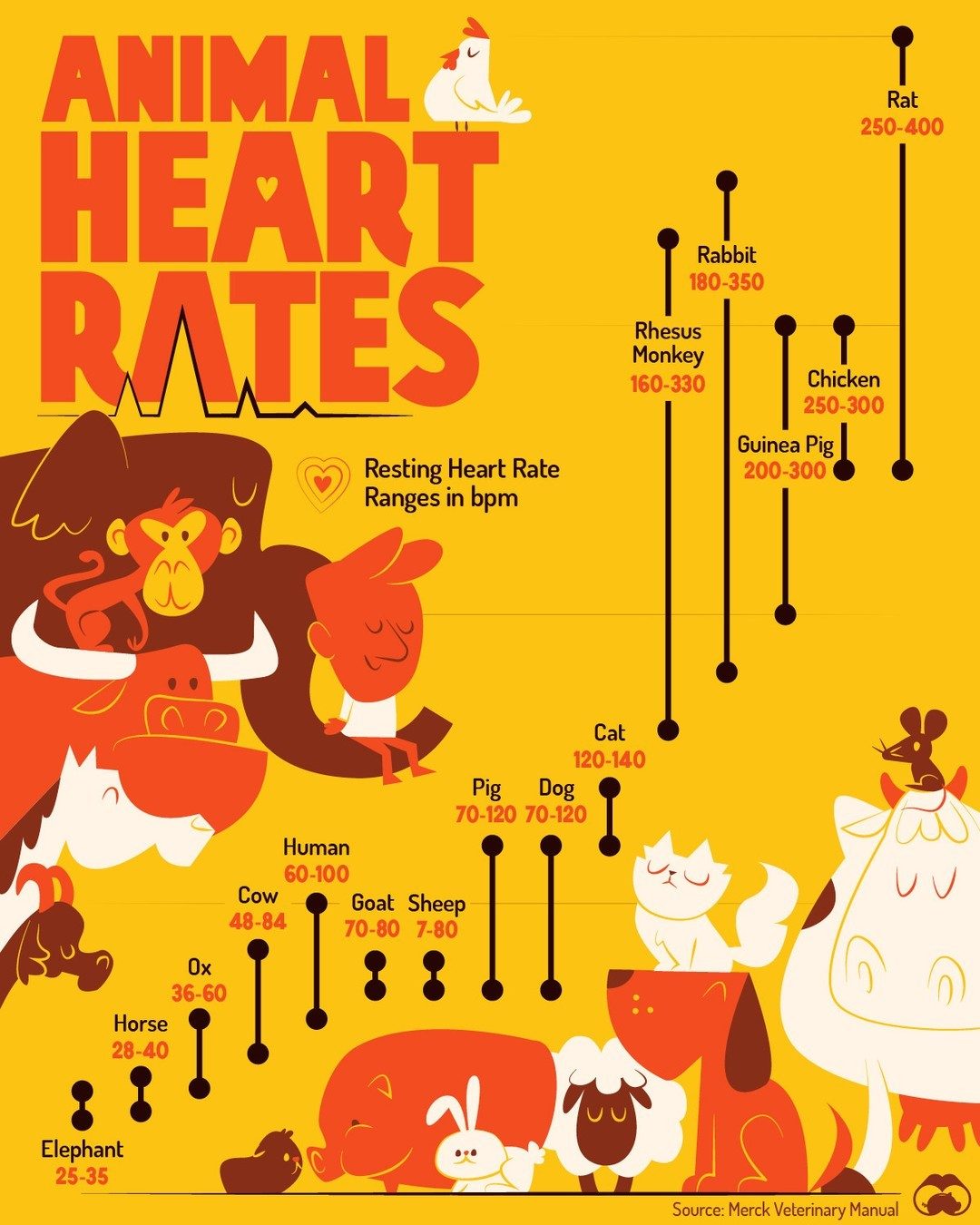
Animal Heart Rates
Animal heart rates vary widely, influenced by factors such as size, activity levels, and environmental demands. Understanding the range of resting heart rates among different species provides valuable insights into their physiology and overall well-being. Here we explore the resting heart rates of 15 diverse animals, drawing from data sourced from the Merck Veterinary Manual.
Context / Why This Matters
The physiological differences in animal heart rates highlight the diverse adaptations animals have developed to survive in their respective environments. For instance, hummingbirds, known for their high metabolic rates and rapid wing beats, have heart rates that can reach up to 225 beats per minute (bpm) at rest. In contrast, blue whales, the largest animals on Earth, have heart rates as low as 2 bpm. These extremes illustrate how the heart rate can be a critical indicator of an animal's metabolic needs and overall health.
Main Discussion
Small Animals with High Heart Rates
Small animals, such as hummingbirds, rabbits, and guinea pigs, generally have higher resting heart rates. This is due to their higher metabolic rates and increased energy demands. These animals need to maintain their body heat and support their rapid movements, which requires a faster heart rate to supply oxygen and nutrients to their bodies efficiently.
Medium-Sized Animals
Medium-sized animals, like dogs, cats, and pigs, have moderate resting heart rates. Dogs, for example, have a resting heart rate range of 70-120 bpm, while cats typically range from 120-140 bpm. These ranges allow for efficient energy distribution and support moderate activity levels.
Large Animals with Slower Heart Rates
Large animals, such as elephants, horses, and cows, typically have slower resting heart rates. An elephant's heart rate, for example, ranges from 25-35 bpm. This slower rate is sufficient to supply the vast body with oxygen and nutrients due to their lower metabolic demands per unit of body mass and their slower movements.
Birds with High Heart Rates
Birds, despite their size, often have high heart rates. Chickens have a resting heart rate of 160-330 bpm, and monkeys, which have a range of 180-350 bpm, reflect the high metabolic demands of flight and rapid movement.
Human heart rates are around 60-100 bpm. This places humans in a moderate category, reflecting a balanced metabolic rate and energy consumption typical of our size and activity levels.
Environmental and Physiological Factors
The variation in heart rates also reflects the diverse environmental and physiological needs of different species. For example, marine animals like the blue whale have slower heart rates due to their aquatic environment and lower oxygen demands compared to land-dwelling animals. Conversely, animals in colder climates or those with high activity levels often have higher heart rates to maintain body heat and support rapid movements.
Practical Tips
When assessing the health of an animal, understanding its normal resting heart rate is crucial. Keeping track of an animal’s heart rate can help identify changes in physiology, stress levels, or health issues.
-
Monitoring Heart Rate: Use a stethoscope or heart rate monitor to take regular readings, especially if the animal is undergoing medical treatment or if you suspect health issues.
-
Consult Veterinary Resources: Rely on trusted veterinary manuals, such as the Merck Veterinary Manual, for accurate information on normal heart rate ranges for different species.
-
Recognize Variations: Be aware that heart rates can vary based on the animal's size, activity level, and environmental conditions.
-
Track Changes Over Time: Regularly measure the heart rate and note any significant changes, which could indicate underlying health issues.
Important Takeaways
Understanding the resting heart rate ranges of different animals provides valuable insights into their physiological adaptations and overall health. By appreciating the diversity in heart rates, we can better care for animals and recognize when they might be experiencing health issues.
-
Size Matters: Generally, smaller animals have higher resting heart rates, while larger animals have slower rates.
-
Activity Levels: More active animals, such as hummingbirds and rabbits, have higher resting heart rates to support their rapid movements.
-
Environmental Adaptations: Marine animals like the blue whale have slower heart rates due to their environmental adaptations and lower oxygen demands.
-
Physiological Indicators: Monitoring an animal’s heart rate is a crucial indicator of its health and well-being.
Conclusion
The wide range of resting heart rates across the animal kingdom underscores the incredible diversity and adaptability of animal physiology. By understanding these ranges, we can provide better care for animals and gain a deeper appreciation for the complex mechanisms that sustain life in various environments. Whether you are a veterinarian, an animal enthusiast, or simply curious about animal physiology, knowing the resting heart rate of different species is a valuable piece of knowledge.
Watch the Reel
Questions readers ask
What is the resting heart rate of a hummingbird and why is it so high?
The resting heart rate of a hummingbird can reach up to 225 beats per minute. This high heart rate is due to their high metabolic rate and the rapid wing beats required for hovering flight, which demands a significant amount of energy.
How does the blue whale's heart rate compare to other animals?
The blue whale has an exceptionally slow heart rate, averaging around 2 beats per minute at rest. This is significantly lower than most other animals, reflecting the whale's enormous size and the efficient way it has evolved to conserve energy over long periods of underwater activity.
Why do animal heart rates vary so widely?
Animal heart rates vary widely due to differences in size, metabolic needs, activity levels, and environmental adaptations. Smaller animals with high activity levels, like hummingbirds, have faster heart rates, while larger animals with slower metabolisms, like whales, have much slower heart rates.
Where can I find a chart or infographic showing the heart rates of various animals?
You can find charts and infographics displaying the heart rates of various animals on veterinary websites, animal care resources, and scientific articles. These visual tools can help you easily compare the heart rates of different species and understand their physiological differences.
What is the typical resting heart rate range for common pets like dogs and cats?
The typical resting heart rate for dogs ranges from 60 to 140 beats per minute, depending on their size and breed. For cats, it generally ranges from 120 to 140 beats per minute. These rates can help pet owners monitor their pets' health and detect any abnormalities.
How accurate are veterinary manuals in providing animal heart rate information?
Veterinary manuals, such as the Merck Veterinary Manual, are highly reliable sources for accurate information on animal heart rates. These manuals are compiled by experts in the field and regularly updated to ensure the data is current and precise, making them a trustworthy resource for understanding animal physiology.
What factors should I consider when comparing the heart rates of different animals?
When comparing heart rates, consider the animal's size, activity level, and metabolic rate. Larger animals tend to have slower heart rates, while smaller, more active animals have faster heart rates. Additionally, consider the animal's environment and how it has adapted to survive, as these factors significantly influence heart rate.
Related deep dives
Similar reads based on topic and creator.




Recent articles
Fresh deep dives from the latest Reels we unpacked.




Comments
Be the first to comment.