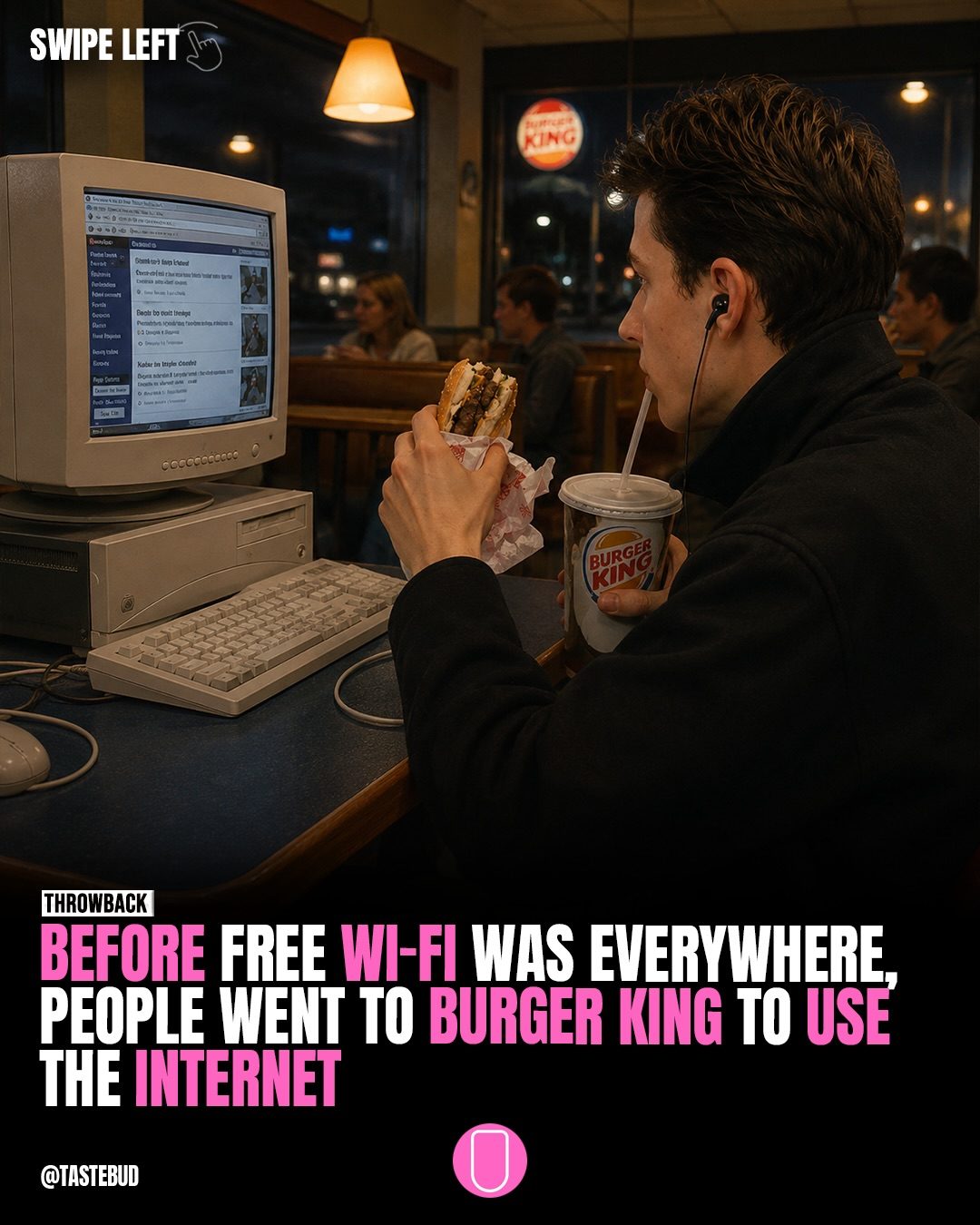
Nostalgic Internet Use
Before the era of ubiquitous free Wi-Fi, fast-food restaurants like Burger King served as more than just a place to grab a quick bite. For students, travellers, and anyone without reliable internet access at home, these establishments became essential hubs for getting online. People would often sit for hours, checking emails, browsing the web, or chatting online, sometimes staying longer for the internet connection than for the food itself.
Why This Matters
The shift from relying on public spaces for internet access to having it readily available at home or on the go is a significant cultural change. Understanding this evolution helps us appreciate the conveniences of modern technology and the ways in which our daily habits have been transformed. Additionally, it reminds us of the importance of accessibility, as not everyone has reliable internet at home even today.
The Evolution of Internet Access
The Early Days of Public Internet Access
In the late 1990s and early 2000s, having a stable internet connection at home was a luxury. Dial-up connections were slow and often unreliable, making public places like libraries, cafes, and fast-food restaurants essential for anyone needing to get online. Burger King, along with other chains like McDonald's and Starbucks, capitalized on this need by offering free internet access to customers. This not only attracted more people but also created a communal space where people could socialize while staying connected.
The Rise of Free Wi-Fi
As technology advanced, the cost of internet access decreased, and Wi-Fi became more prevalent in public spaces. The shift from dial-up to high-speed broadband made internet access more convenient and faster. Fast-food restaurants and cafes began offering free Wi-Fi, making it easier for people to stay connected on the go. This trend continued, and soon, free Wi-Fi became a standard feature in most public spaces, including parks, airports, and shopping malls.
The Impact on Daily Life
The availability of free Wi-Fi has significantly impacted daily life. It has made it easier to stay connected with friends and family, work remotely, and access information from anywhere. For many people, having reliable internet access is no longer a luxury but a necessity. This shift has also led to the rise of digital nomads — people who work remotely and travel the world, taking advantage of free Wi-Fi in various locations.
The Role of Fast-Food Restaurants
Fast-food restaurants have played a significant role in the evolution of public internet access. They have provided a convenient and affordable space for people to get online, especially during the early days of the internet. Today, many fast-food chains continue to offer free Wi-Fi, making them popular spots for students, travellers, and anyone needing a quick connection.
The Convenience Factor
One of the primary reasons people flocked to fast-food restaurants for internet access was the convenience. These places were often open late, offering a comfortable and safe space to work or browse the web. Additionally, they provided food and drinks, making them an attractive option for people who needed to spend extended periods online.
The Social Aspect
Beyond convenience, fast-food restaurants also offered a social aspect. People could connect with friends or meet new people while enjoying a meal. This created a sense of community, especially for students and travellers who might not have had a reliable internet connection at home.
Practical Tips
Making the Most of Public Wi-Fi
Even with the widespread availability of free Wi-Fi, it's essential to be cautious when using public networks. Here are some practical tips:
- Use a VPN: A Virtual Private Network (VPN) can help protect your data by encrypting your internet connection. This is especially important when using public Wi-Fi, as it can prevent hackers from intercepting your information.
- Avoid Sensitive Activities: Refrain from conducting sensitive activities, such as online banking or shopping, on public Wi-Fi networks. These activities can expose your personal information to potential threats.
- Keep Your Software Updated: Ensure that your devices are up-to-date with the latest security patches. This can help protect you from vulnerabilities that hackers might exploit.
- Use Strong Passwords: Always use strong, unique passwords for your online accounts. Consider using a password manager to help you keep track of your passwords securely.
Staying Connected on the Go
With the prevalence of free Wi-Fi, staying connected on the go has never been easier. Here are some tips for staying connected while travelling:
- Research Free Wi-Fi Spots: Before your trip, research areas that offer free Wi-Fi. Many cafes, libraries, and fast-food restaurants provide free internet access.
- Use a Mobile Hotspot: If you need a reliable connection, consider using a mobile hotspot. This can be a cost-effective solution, especially if you need to stay connected for extended periods.
- Carry a Portable Charger: Ensure you have a portable charger to keep your devices powered up. This is especially important if you rely on your smartphone for internet access.
- Use Offline Features: Many apps and services offer offline features that allow you to download content for later use. This can be useful if you're in an area with limited internet access.
Important Takeaways
- Public spaces like fast-food restaurants were once crucial for accessing the internet.
- The availability of free Wi-Fi has transformed how we stay connected, making it easier to access the internet on the go.
- While convenient, using public Wi-Fi networks requires caution to protect your personal information.
- The rise of digital nomads has been driven by the widespread availability of free Wi-Fi.
Conclusion
The evolution of internet access has come a long way from relying on public spaces to having it readily available at home or on the go. Fast-food restaurants like Burger King once served as essential hubs for people needing to get online, but today, free Wi-Fi is everywhere, transforming our daily habits and the way we stay connected. Understanding this shift helps us appreciate the conveniences of modern technology and the importance of accessibility.
Watch the Reel
Questions readers ask
Why did people use Burger King for WiFi?
People, especially those who were students, travellers, or lacked reliable internet at home, used Burger King for WiFi because it provided a free and accessible way to get online. They could check emails, browse the web, and chat for hours, making it a convenient alternative to other internet sources.
How has the availability of WiFi changed over the years?
The availability of WiFi has significantly evolved from being primarily accessible in public spaces like Burger King to being ubiquitous in homes, public spaces, and on personal devices through smartphones.
What were the benefits of using fast-food restaurants for internet access?
Fast-food restaurants like Burger King offered a comfortable and free space for people to access the internet. This was particularly beneficial for those who could not afford or access internet services at home, making it a community resource for connectivity.
How have people’s online habits changed since the rise of home internet and smartphones?
With the rise of home internet and smartphones, people's online habits have shifted from spending extended periods in public spaces to accessing the internet anytime, anywhere. This convenience has transformed how we communicate, work, and entertain ourselves.
What role did fast-food restaurants play in the digital age?
Fast-food restaurants like Burger King played a pivotal role in the early digital age by providing essential internet access to those who needed it, fostering community engagement through shared connectivity.
What are some alternatives to using fast-food restaurants for free WiFi?
With the widespread availability of home internet and mobile data plans, alternatives to using fast-food restaurants for free WiFi include public libraries, coffee shops, and municipal hotspots. Many cities also offer free WiFi in public parks and transportation hubs.
How has the shift from public WiFi to personal devices impacted daily life?
The shift from relying on public WiFi to having personal devices with internet access has made daily life more convenient and flexible. People can now stay connected on the go, work remotely, and access information instantly, enhancing overall productivity and entertainment.
Related deep dives
Similar reads based on topic and creator.


Recent articles
Fresh deep dives from the latest Reels we unpacked.




Comments
Be the first to comment.