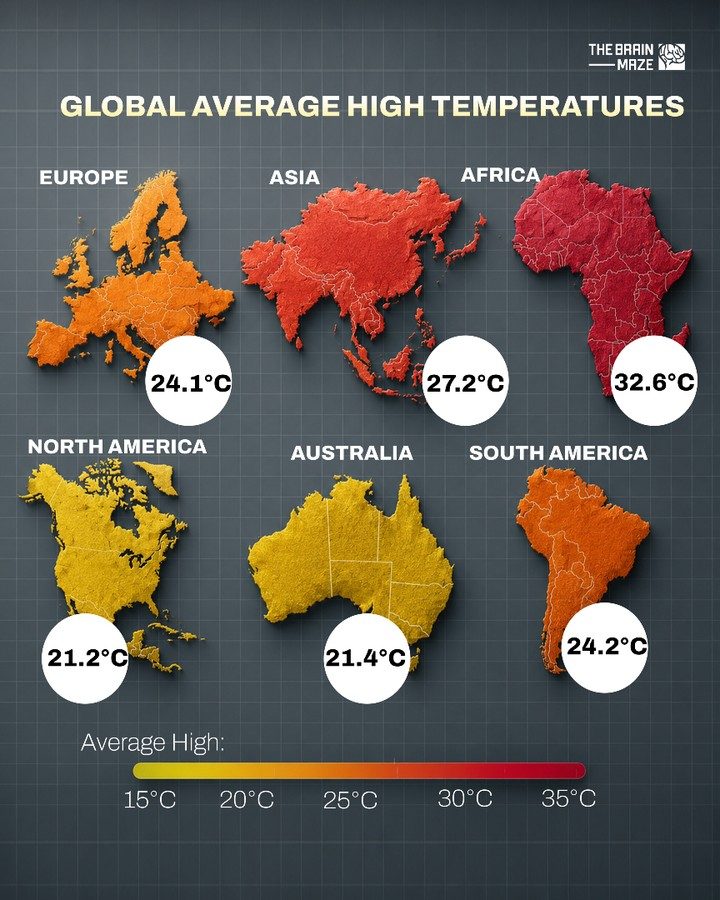
Global Average High Temperatures
Global average high temperatures reveal significant regional variations, with Africa experiencing the highest temperatures at 32.6°C, followed by Asia at 27.2°C. Europe and South America average around 24°C, while North America and Australia have cooler highs, closer to 21°C. This data underscores the uneven distribution of heat across continents as global temperatures continue to rise.
Context / Why This Matters
Understanding global temperature variations is crucial for comprehending climate patterns and their impacts. The disparities in average high temperatures across continents highlight the complex interplay of geographical factors, such as latitude, altitude, and proximity to large bodies of water. These factors influence local climates and contribute to the overall global temperature distribution.
Main Discussion
Africa: The Hottest Continent
Africa leads the global average high temperatures with a scorching 32.6°C. This high temperature can be attributed to several factors, including the continent's tropical and subtropical climates, expansive deserts, and minimal rainfall in many regions. These conditions make Africa particularly vulnerable to the effects of climate change, such as increased heatwaves and droughts.
Asia: The Second-Hottest Continent
Asia follows closely behind Africa, with an average high temperature of 27.2°C. The continent's vast size and diverse geography contribute to a wide range of climates, from the arid deserts of the Middle East to the humid tropics of Southeast Asia. These varied conditions lead to significant regional temperature differences within the continent.
Moderate Temperatures in Europe and South America
Europe and South America have average high temperatures around 24°C, offering a more temperate climate compared to Africa and Asia. These continents benefit from maritime influences, which help moderate temperature extremes. The Atlantic Ocean plays a significant role in Europe's climate, while the Pacific and Atlantic oceans influence South America's weather patterns. These maritime effects contribute to milder summers and winters, making these regions more habitable for a wide range of species, including humans.
Cooler Climates in North America and Australia
North America and Australia experience the lowest average high temperatures, around 21°C. These regions' cooler climates can be attributed to their higher latitudes and the presence of vast oceans, which help regulate temperatures. North America's diverse geography, from the icy Arctic to the tropical Caribbean, results in varied climate zones. Similarly, Australia's vast stretches of desert and temperate zones contribute to a range of climatic conditions, making it one of the driest and most arid continents.
Practical Tips
Staying Safe in High-Temperature Regions
For those living in or traveling to regions with high average temperatures, such as Africa and Asia, it's essential to stay hydrated, wear protective clothing, and avoid prolonged exposure to direct sunlight. Additionally, being aware of local weather patterns and seeking shelter during the hottest parts of the day can help mitigate the effects of extreme heat. Using air conditioning and fans can also provide relief from the heat during indoor activities.
Adapting to Moderate Climates
Residents of Europe and South America can appreciate the benefits of a temperate climate, which offers mild winters and summers. However, it's still important to prepare for occasional temperature extremes. Installing insulation and investing in energy-efficient heating and cooling systems can help maintain comfortable indoor temperatures year-round. Additionally, dressing in layers can help adapt to changing weather conditions.
Managing Cooler Climates
Those living in North America and Australia can take advantage of the cooler temperatures to engage in outdoor activities without the need for extreme precautions against heat. However, it's essential to be prepared for colder conditions, especially during winter. Wearing appropriate clothing, such as insulated jackets and thermal layers, can help maintain body heat. Additionally, heating systems and insulated housing can provide relief from the cold during the winter months.
Important Takeaways
Understanding the global distribution of average high temperatures provides valuable insights into the diverse climates across continents. This knowledge can help inform decisions about adaptation and mitigation strategies in the face of ongoing climate change. By recognizing the unique challenges and opportunities presented by different climates, individuals and communities can take proactive steps to ensure their well-being and resilience in a changing world.
Conclusion
The data on global average high temperatures highlights the diverse and uneven distribution of heat across continents, with Africa leading at 32.6°C, followed by Asia at 27.2°C, and Europe and South America averaging around 24°C. North America and Australia have the lowest average high temperatures, around 21°C. These variations underscore the importance of understanding local climate patterns and their implications for human health, agriculture, and ecosystems. Adapting to the unique challenges and opportunities presented by different climates can help ensure the well-being and resilience of communities in the face of ongoing climate change.
Watch the Reel
Questions readers ask
Why is Africa the hottest continent in terms of average high temperatures?
Africa's high temperatures are primarily due to its geographical location. Much of Africa lies within the tropics, where the sun's rays are most direct, and it has vast desert regions that exacerbate the heat. Additionally, Africa's proximity to the equator and the lack of significant land masses to buffer heat contribute to its high temperatures.
How do geographical factors influence regional temperature differences?
Geographical factors such as latitude, altitude, and proximity to large bodies of water greatly influence regional temperature differences. For instance, continents closer to the equator generally experience higher temperatures due to more direct sunlight. Altitude can also cool temperatures, as seen in mountainous regions. Large bodies of water can moderate temperatures, keeping coastal regions cooler than inland areas.
What are the average high temperatures in Europe and South America?
Europe and South America both have an average high temperature of around 24°C. These regions experience a more temperate climate compared to Africa and Asia, largely due to their mid-latitude locations and the influence of ocean currents that help regulate temperatures.
Why are North America and Australia cooler than other continents in terms of average high temperatures?
North America and Australia have cooler average high temperatures due to several factors. Both continents have significant landmasses that extend into cooler latitudes, and they are influenced by ocean currents that bring cooler air. Additionally, Australia's southern location and proximity to the Southern Ocean contribute to its cooler temperatures.
How do variations in average high temperatures across continents affect local climates?
Variations in average high temperatures across continents significantly affect local climates. These differences influence weather patterns, precipitation levels, and the types of ecosystems that can thrive in each region. Understanding these variations is essential for predicting and adapting to climate changes, as well as for planning agricultural and urban development.
What role do large bodies of water play in shaping regional temperatures?
Large bodies of water, such as oceans and seas, play a crucial role in shaping regional temperatures. They act as heat sinks, absorbing and releasing heat more slowly than land, which helps to moderate temperatures in coastal regions. This moderating effect can lead to cooler summers and warmer winters in areas near large bodies of water, as compared to inland regions.
Why is it important to study global temperature distribution?
Studying global temperature distribution is important for understanding climate patterns and their impacts. This knowledge helps in predicting weather events, assessing the risks of climate change, and developing strategies to mitigate its effects. By examining temperature variations, scientists can better understand the dynamics of our planet's climate system and work towards sustainable solutions.
Related deep dives
Similar reads based on topic and creator.

Recent articles
Fresh deep dives from the latest Reels we unpacked.




Comments
Be the first to comment.