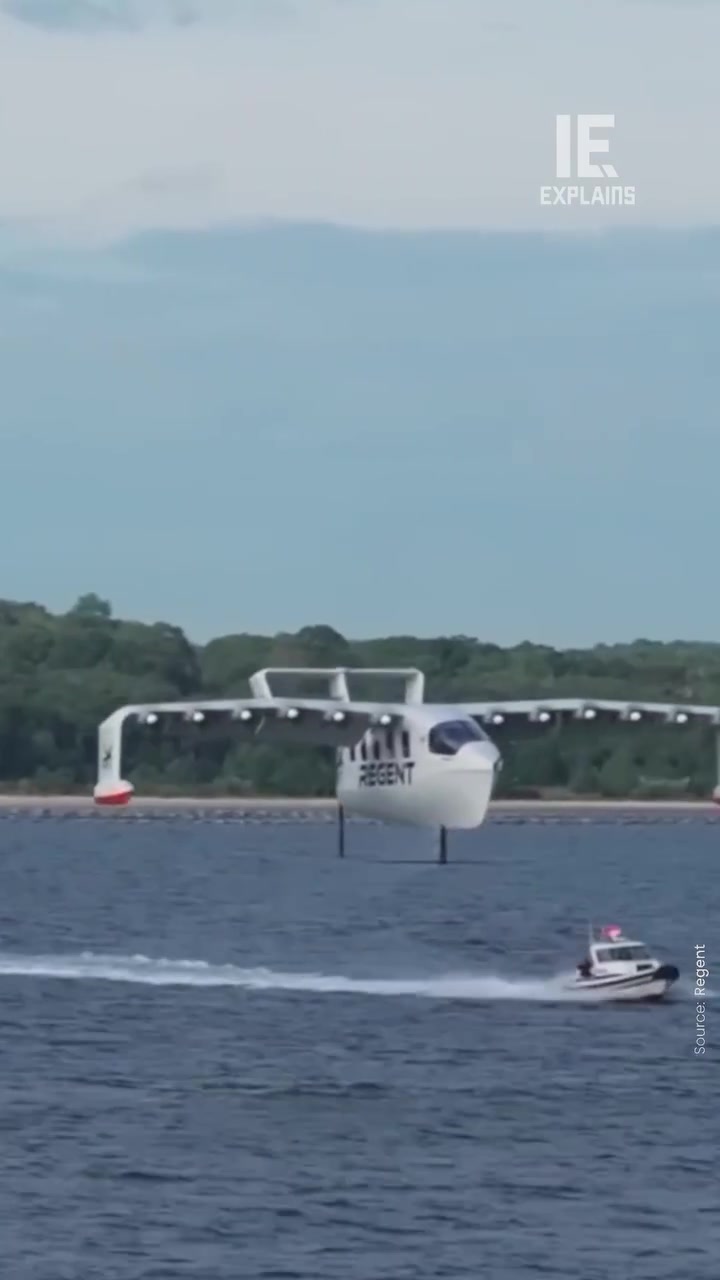
The Seaborne Launch
On September 2, 2026, a distinctly modern flying machine rose 33 feet above Narragansett Bay, Rhode Island. Powered entirely by electric engines, this was no ordinary seaplane. It wasn't a helicopter, either. It was the largest, all-electric, wing-in-ground-effect craft to lift off the water with people on board. This feat, done by Regent—a company aiming to revolutionize coastal travel—exemplifies the renewed interest in an aircraft type first pioneered over half a century ago.
What Is a Wing-in-Ground-Effect Craft?
A wing-in-ground-effect (WIG) craft, also known as a ground effect vehicle or sea glider, operates with its wing close to the surface—usually water. The air pushed downward between the wing and the water compresses upward, generating extra lift and decreasing drag. Essentially, the craft surfs on air trapped under the wing, allowing it to glide efficiently at low altitudes. This makes WIG craft exceptionally suited for carrying heavy loads with minimal energy. Unlike conventional aircraft, WIG craft are designed to never climb out of this ground effect zone, which means they are not subjected to hazardous crosswinds. To succeed, a WIG craft must overcome several challenges. Wave action, for instance, can make for a rough takeoff. Longitudinal control—essentially, controlling the aircraft's pitch—can be tricky. And to date, there has not been a significant civilian market for such craft, making commercial viability uncertain. Nevertheless, Regent aims to succeed where others have stumbled. The Regent flying boat is 65 feet across the wing and 57 feet long. It moves over water in three stages: float, foil, and fly.
- Float: The craft starts like any boat, floating on its hull.
- Foil: As it gains speed, it lifts onto hydrofoils, raising the body out of the water to reduce drag.
- Fly: At higher speeds, the craft lifts off the hydrofoils and truly takes to the air, flying close to the water's surface. This three-stage process allows the craft to glide smoothly over water, making it an appealing option for coastal travel and military uses.
Why This Matters — Why Did The Soviets Try and Fail?
The Soviet Union pioneered WIG craft with the Kasatige (KM), a 544-ton craft with 10 jet engines flying over the Caspian Sea. The KM cruised 5–10 meters above the water at 430 kilometers per hour, setting a standard for such craft. However, several factors contributed to the failure of the Soviet program. One key issue was wave action. Taking off into a headwind meant slamming across successive wave crests, which hammered the structure and made for a highly unstable ride. Stability was another central engineering challenge, particularly maintaining enough control authority without losing lift. The second Soviet WIG craft, the Lun, faced several setbacks, including a 1980 crash attributed to pilot error. An earlier incident in 1975, caused by alloy issues, also significantly damaged the craft. Lastly, the Soviet program faced ownership problems. With the collapse of the Soviet Union, military funding dried up, leaving the Lun to rot until 2020. Now, the Lun is being restored for a museum, a testament to its engineering legacy. Notably, the Soviets weren't the only ones to try this approach. Germany, Iran, South Korea, China, and Japan have all developed WIG craft programs. In the United States, DARPA's Liberty Lifter project aimed to create a ground effect seaplane in the class of a C-17. However, it was canceled in July 2025 after around $98 million in investment, with DARPA opting to hand over lessons to the industry instead of building a demonstrator. Several factors prevented the Soviet WIG program from succeeding.
Diving Into The Details
The Science of Flight
A sea glider's wing produces lift when the air it pushes down gets squeezed between the wing and the water. The surface pushes back, flattens the wing's air pressure, and collapses induced drag. This makes WIG craft good candidates for battery-powered flight, as electric motors are efficient but not powerful enough for conventional aircraft.
The Soviet Legacy
The Soviets built three generations of WIG craft, the most notable being the KM and Lun. These craft were massive, with the Lun measuring 74 meters and weighing 380 tons. They were designed to carry significant payloads, including about six anti-ship missiles. However, the Soviet program ultimately failed due to a combination of technical, operational, and political challenges.
The Third Try
Regent has taken a different approach:
- Hydrofoils: Regent's craft uses hydrofoils to transition from floating to flying, a crucial step that the Soviets never perfected.
- Electric Motors: Instead of jet engines, Regent's craft relies on 12 electric motors alongside the wing's leading edge.
- Certification: Regent's craft, at 12 passengers and two crew, is not certified as an aircraft. It's treated as a vessel by the US Coast Guard, commanded by certified mariners. This bypasses much of the aviation certification process, which can be time-consuming and expensive.
A Commercial Viability Conundrum
Regent's craft is designed for short coastal routes, typically under 200 miles over water. This could make it an attractive option for island hops, harbor-to-harbor runs, and coastal city pairs where airports are either expensive or impossible. The craft's speed—around six times that of a ferry, with no airport at either end—makes it an appealing choice for certain routes. Notably, Regent has already secured orders from companies like Brittany Ferries and Ocean Flyers, with investors including Japan Airlines and Lockheed Martin.
How to Hire a Flying Boat Captain
Embarking on a trip via a sea glider means seeking out a pilot with a different set of credentials. The seaborn vessel does not require aviation certification.
- Mariner Credentials: Since the craft is treated as a vessel, it is commanded by certified mariners.
- Training Requirements: Mariners must undergo specialized training for operating WIG craft, which is less rigorous than pilot certification.
- Experience: Look for mariners with experience in hydrofoil operation, as this will be crucial for transitioning between the three stages of flight.
Watch the Reel
Questions readers ask
What exactly is a wing-in-ground-effect craft and how does it differ from traditional aircraft?
A wing-in-ground-effect craft, or WIG craft, operates with its wing close to the surface of the water. It generates extra lift and decreases drag by compressing air between the wing and the water, allowing it to glide efficiently at low altitudes. Unlike conventional aircraft, WIG craft are designed to never climb out of this ground effect zone, which makes them less susceptible to crosswinds.
How does the Regent flying boat achieve its three-stage process over water?
The Regent flying boat starts by floating on its hull, similar to a boat. As it gains speed, it lifts onto hydrofoils, raising the body out of the water to reduce drag. At higher speeds, it lifts off the hydrofoils and truly takes to the air, flying close to the water's surface. This three-stage process allows for a smooth and efficient transition from water to air.
Why did the Soviet Union's WIG craft programs, like the Kasatiga and Lun, ultimately fail?
The Soviet WIG craft programs faced several challenges, including wave action, which made for a rough takeoff and unstable ride. Stability was another key issue, as maintaining control authority without losing lift proved difficult. Additionally, the collapse of the Soviet Union led to a loss of military funding, which left the Lun craft to deteriorate.
What are the potential advantages of using WIG craft for coastal travel and military purposes?
WIG craft offer the advantage of being able to carry heavy loads with minimal energy, making them efficient for coastal travel. They are also less susceptible to crosswinds and can glide smoothly over water, which makes them appealing for military uses, such as surveillance and transport.
How does the Regent flying boat compare to other WIG craft, like the Soviet Union's Kasatiga and Lun?
The Regent flying boat is the largest all-electric WIG craft to date, with a wingspan of 65 feet and a length of 57 feet. Unlike the Soviet WIG craft, which relied on jet engines and faced stability issues, the Regent flying boat uses electric engines and has a three-stage process for smooth water-to-air transition.
Related deep dives
Similar reads based on topic and creator.




Recent articles
Fresh deep dives from the latest Reels we unpacked.




Comments
Be the first to comment.