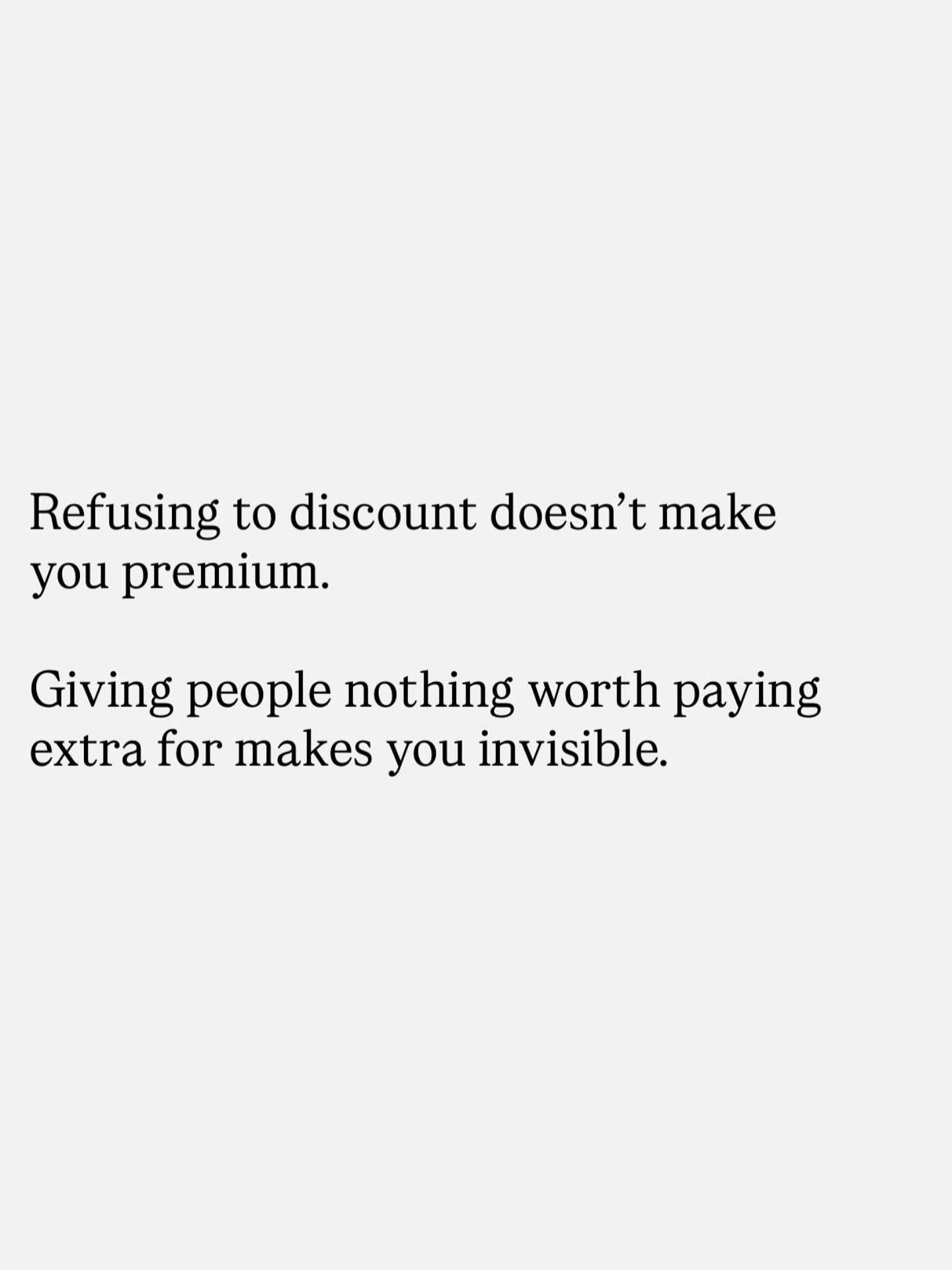
Positioning Your Product: Why Discounts Aren't the Enemy
Discounts, or lack thereof, are a critical point of consideration for businesses. They often create a dilemma: do you offer discounts to attract more customers, or do you hold your ground and maintain your premium status? The answer lies in understanding the true foundations of premium branding and how customers perceive value.
Why This Matters
In a competitive market, your product's positioning can significantly impact customer perception and brand visibility. Refusing discounts doesn’t automatically elevate your product to a premium status. Instead, customers must feel and see the inherent value your product offers, building a strong perception of quality and exclusivity.
Craft: The Foundation of Premium Branding
The Art of Craftsmanship
The craftsmanship of a product is the backbone of its premium status. High-quality materials, intricate designs, and meticulous attention to detail all contribute to a product that speaks for itself. When customers see and feel the craftsmanship, they are willing to pay a premium price, recognizing the value inherent in the product. It's not just about the product's functionality; it's about the story it tells and the experience it promises.
The Role of Design
Exquisite design is another element that can elevate a product to a premium status. This includes the aesthetics, ergonomics, and overall user experience. A well-designed product not only captures attention but also creates a sense of belonging and exclusivity. When customers feel that the product is uniquely tailored to their needs and preferences, they are more likely to view it as premium.
Stories: Creating a Connection
Building a Brand Narrative
Creating a narrative around your brand can help customers feel more connected to your product. A compelling story can make customers want to belong to the community you've built. This narrative doesn’t have to be grand; it could be the story of how the product came to be, the values your brand stands for, or the impact it has on the world. When customers resonate with your story, they are more likely to perceive your product as premium.
Authenticity and Transparency
Authenticity is key to building a premium brand. Customers are discerning and can tell when a brand is being insincere. By being transparent about your processes, values, and mission, you build trust and create a genuine connection with your customers. This authenticity adds value to your product, making it worth the higher price point.
Experiences: The Intangible Value
Creating Memorable Experiences
Experiences are an often overlooked aspect of premium branding. The way customers interact with your product, from the moment they discover it to the after-sales service, can significantly impact their perception of value. Creating memorable experiences can make a product worth paying extra for, even if it comes at a premium price.
Personalization and Customization
Personalization is a powerful tool in creating a premium experience. Customizing products or services to meet individual needs and preferences makes customers feel valued and important. This personal touch can make a product stand out and feel exclusive, further justifying a premium price.
Practical Tips
Focus on Quality
Ensuring that your product is of the highest quality should be your top priority. Invest in materials, craftsmanship, and design to create a product that stands out. This attention to detail will make the value of your product evident to customers, making them more likely to pay a premium.
Build a Strong Brand Narrative
Develop a compelling story around your brand. Share your values, mission, and the journey of how your product came to be. A strong narrative can create an emotional connection with customers, making your product more desirable and worth the extra cost.
Create Unique Experiences
Make every interaction with your brand memorable. From unboxing to customer service, ensure that each touchpoint with your customers is positive and unique. A seamless and enjoyable experience can significantly enhance the perceived value of your product.
Embrace Transparency
Be open and transparent about your brand's values, processes, and mission. This authenticity builds trust and fosters a genuine connection with your customers, making them more invested in your brand and willing to pay a premium.
Refuse Discounts Strategically
While refusing discounts doesn’t automatically make you premium, it can be a strategic move. Ensure that your no-discount policy is part of a broader strategy that emphasizes the value and exclusivity of your product. Communicate the reasons why your product is worth the higher price, whether it’s through craftsmanship, design, or brand narrative.
Important Takeaways
- Refusing discounts alone does not make a product premium. The true value lies in the craft, stories, and experiences you create for your customers.
- Craftsmanship and design are foundational elements of premium branding, making products worth paying extra for.
- Building a compelling narrative and being authentic can create a strong emotional connection with customers, making your brand more desirable.
- Creating unique and memorable experiences can significantly enhance the perceived value of your product, justifying a premium price.
- Emphasize the inherent value of your product, whether through its quality, design, or brand narrative, to justify a no discount policy.
Conclusion
Understanding the true foundations of premium branding can transform how you position your product. It’s not about refusing discounts; it’s about creating value that customers are willing to pay for. Focus on craftsmanship, build a compelling narrative, and create unique experiences to make your product stand out. By doing so, you position your brand as premium, ensuring that customers feel and see the value in your product, making it worth the higher price point.
Watch the Reel
Questions readers ask
How does refusing discounts impact customer perception?
Refusing discounts can signal that your product is exclusive and high-quality, but it doesn't guarantee customers will perceive it as premium. Customers need to see and feel the value through other means, such as design, craftsmanship, and brand story.
What are some ways to communicate the value of a premium product?
To communicate the value of a premium product, focus on the craftsmanship, design, and unique features. Craft a compelling brand story that resonates with customers and highlights what makes your product special.
Does offering discounts devalue a premium product?
Offering discounts doesn't necessarily devalue a premium product, but it can change how customers perceive it. Frequent or steep discounts can make a product seem less exclusive and more like a commodity.
What role does brand storytelling play in premium product positioning?
Brand storytelling is crucial for creating a strong connection with customers and building a perception of premium value. A well-crafted story can enhance the perceived value of your product, making customers feel that they are investing in something special.
How can craftsmanship influence the perceived value of a product?
Craftsmanship showcases the skill, care, and attention to detail that goes into making a product. High-quality craftsmanship can significantly enhance the perceived value, making customers more likely to see the product as premium.
Why is it important to focus on quality when positioning a premium product?
Focusing on quality ensures that customers experience the value your product offers. High-quality materials and construction not only last longer but also provide a better user experience, reinforcing the perception of premium value.
Can discounts be part of a premium product strategy?
Discounts can be part of a premium product strategy, but they should be used strategically. Occasional promotions or bundled offers can attract new customers without devaluing the premium perception, as long as the core messaging around quality and craftsmanship remains strong.
Recent articles
Fresh deep dives from the latest Reels we unpacked.




Comments
Be the first to comment.