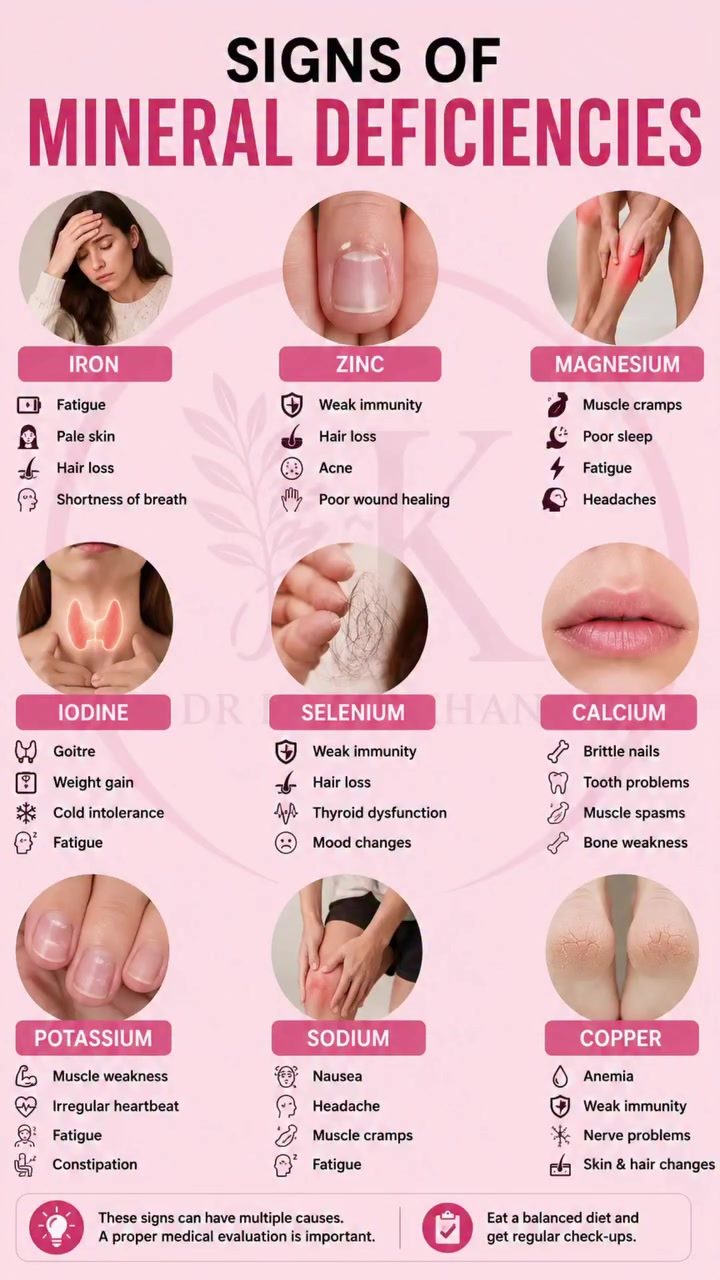
Signs of Mineral Deficiencies
Mineral deficiencies can manifest in various ways, and recognizing these signs is the first step in addressing potential health issues. It's important to understand that while your body may give warning signs, symptoms alone cannot confirm a diagnosis. Blood tests and professional evaluation are often necessary to pinpoint the exact deficiency. Common deficiencies, if left unaddressed, can lead to a range of health problems.
Context / Why this matters
Minerals play a crucial role in maintaining overall health. They are essential for various bodily functions, including the production of hormones, the regulation of metabolism, and the maintenance of bone health. Deficiencies can lead to fatigue, weakness, and other health issues. Addressing these deficiencies through a balanced diet, a healthy lifestyle, and regular check-ups is key to preventing long-term health problems.
Main discussion
Common Mineral Deficiencies and Their Symptoms
Iron
Iron is vital for the production of hemoglobin, which carries oxygen in the blood. Common symptoms of iron deficiency include:
- Pale skin
- Hair loss
- Shortness of breath
- Irregular heartbeat
If you experience any of these symptoms, it's important to consult a healthcare professional for a proper evaluation.
Zinc
Zinc is crucial for a healthy immune system and wound healing. Symptoms of zinc deficiency may include:
- Weak immunity
- Poor sleep
- Poor wound healing
Zinc deficiency can affect overall health and increase susceptibility to infections.
Magnesium
Magnesium is essential for muscle and nerve function, blood glucose control, and blood pressure regulation. Symptoms of magnesium deficiency can include:
- Muscle cramps
- Headaches
Addressing magnesium deficiency can help alleviate these symptoms and improve overall health.
Iodine
Iodine is necessary for thyroid function, which regulates metabolism. Symptoms of iodine deficiency may include:
- Goitre (enlarged thyroid gland)
- Weight gain
- Cold intolerance
Iodine deficiency can lead to hypothyroidism, which affects metabolism and energy levels.
Selenium
Selenium is an antioxidant that supports thyroid function and immune health. Symptoms of selenium deficiency can include:
- Weak immunity
- Thyroid dysfunction
- Mood changes
Addressing selenium deficiency can help support a healthy immune system and thyroid function.
Calcium
Calcium is essential for bone health and muscle function. Symptoms of calcium deficiency may include:
- Brittle nails
- Muscle spasms
- Bone weakness
Calcium deficiency can lead to osteoporosis and other bone-related issues.
Potassium
Potassium is crucial for heart function, muscle and nerve function, and maintaining blood pressure. Symptoms of potassium deficiency can include:
- Muscle weakness
- Fatigue
- Constipation
Potassium deficiency can affect heart health and overall energy levels.
Sodium
Sodium is essential for maintaining fluid balance and supporting nerve and muscle function. Symptoms of sodium deficiency can include:
- Nausea
- Muscle cramps
- Fatigue
Sodium deficiency can affect overall health and energy levels.
Copper
Copper is necessary for the production of red blood cells and supporting immune function. Symptoms of copper deficiency can include:
- Anemia
- Weak immunity
- Nerve problems
- Skin and hair changes
Copper deficiency can affect skin and hair health and immune function.
Diagnostic Steps
If you suspect a mineral deficiency, it's important to consult a healthcare professional. A proper medical evaluation, including blood tests, is crucial for an accurate diagnosis. Symptoms alone cannot confirm a deficiency, and self-diagnosis can lead to incorrect treatments and further health issues. Regular check-ups and lab tests can help detect and address deficiencies before they become more serious.
Preventive Measures
Preventing mineral deficiencies involves a balanced diet, a healthy lifestyle, and regular check-ups. Include a variety of nutrient-dense foods in your diet to ensure you're getting all the necessary minerals. Foods rich in iron, zinc, magnesium, iodine, selenium, calcium, potassium, sodium, and copper should be part of your daily meals.
Practical Tips
Balanced Diet
A balanced diet is the cornerstone of preventing mineral deficiencies. Include foods rich in essential minerals in your meals. For example:
- Iron: Red meat, poultry, fish, beans, dark leafy greens
- Zinc: Oysters, red meat, poultry, beans, nuts
- Magnesium: Dark leafy greens, whole grains, nuts, seeds
- Iodine: Seafood, dairy, eggs, iodized salt
- Selenium: Brazil nuts, seafood, meat, poultry
- Calcium: Dairy products, leafy greens, fortified foods
- Potassium: Bananas, oranges, spinach, potatoes
- Sodium: Table salt, soy sauce, processed foods
- Copper: Shellfish, nuts, seeds, whole grains
Regular Check-Ups
Regular check-ups and lab tests can help detect mineral deficiencies before they become serious. Schedule routine appointments with your healthcare provider to monitor your health and address any potential issues early.
Lifestyle Choices
Maintain a healthy lifestyle to support overall health and prevent deficiencies. Regular exercise, adequate sleep, and stress management can all contribute to better health and help your body absorb and utilize essential minerals more effectively.
Important Takeaways
Mineral deficiencies can have significant health implications if left unaddressed. Recognizing the symptoms, seeking professional evaluation, and maintaining a balanced diet are key steps in preventing and managing deficiencies. Regular check-ups and a healthy lifestyle can help ensure you're getting all the necessary minerals and maintain overall health.
Conclusion
Paying attention to the signs of mineral deficiencies is crucial for maintaining overall health. By understanding the symptoms, seeking professional evaluation, and adopting a balanced diet and healthy lifestyle, you can prevent and manage deficiencies effectively. Always consult a healthcare professional for accurate diagnosis and treatment.
Watch the Reel
Questions readers ask
What are the common signs of mineral deficiencies?
Common signs of mineral deficiencies can include fatigue, muscle weakness, hair loss, and irregular heartbeat. These symptoms can vary depending on the specific mineral that is lacking. For example, calcium deficiency might cause muscle cramps and brittle bones, while magnesium deficiency can lead to muscle twitches and fatigue.
How can I tell if I have a mineral deficiency?
Recognizing mineral deficiency symptoms is the first step, but it's important to consult with a healthcare professional. Symptoms alone are not enough for a diagnosis. Blood tests and professional evaluations can help pinpoint the exact deficiency. For instance, iodine deficiency can cause goiter, which can be detected through a physical examination.
What are the symptoms of magnesium deficiency?
Symptoms of magnesium deficiency can include muscle cramps, twitches, and weakness. People may also experience fatigue, irritability, and irregular heartbeat. Magnesium is crucial for nerve and muscle function, so a deficiency can have noticeable effects on the body. Some individuals may also experience insomnia or increased blood pressure.
What are symptoms of zinc deficiency?
Zinc deficiency can manifest as impaired immunity, hair loss, and a weakened sense of taste or smell. It can also cause skin problems, such as rashes, and delayed wound healing. Zinc is essential for a healthy immune system, so a deficiency can make you more susceptible to infections. A balanced diet is crucial to preventing zinc deficiency.
What health issues can arise from a lack of potassium?
Potassium deficiency can cause muscle weakness, cramps, and even paralysis in severe cases. Additionally, individuals may experience constipation, fatigue, and heart palpitations. Potassium is vital for maintaining heart health and proper muscle function, so a deficiency can have serious implications if left untreated.
What are the signs of calcium deficiency?
Signs of calcium deficiency can include muscle cramps, spasms, and numbness in the fingers and toes. Individuals may also experience brittle bones, which can lead to an increased risk of fractures. In severe cases, calcium deficiency can lead to bone loss and osteoporosis. A balanced diet rich in calcium and vitamin D is essential for preventing this deficiency.
Recent articles
Fresh deep dives from the latest Reels we unpacked.




Comments
Be the first to comment.