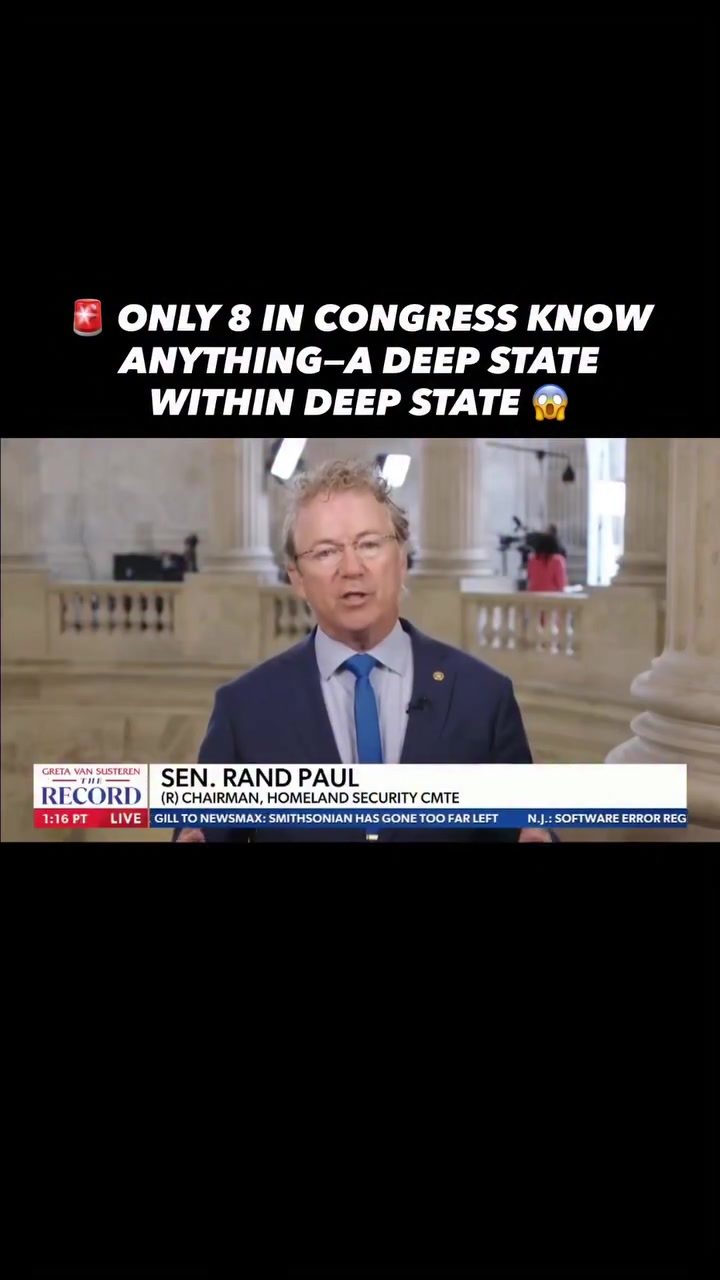
The Concept of a "Deep State" Within the U.S. Government
The phrase "deep state" has become a common term in political discourse, often used to describe a hypothetical network of unelected government officials and agencies that supposedly wield significant power and influence. According to Senator Rand Paul, there is a "deep state within the deep state," comprising a select few members of Congress who possess intimate knowledge of the CIA and FBI operations. This elite group, known as the "elite eight," consists of the chairmen and ranking members of the intelligence committees in both the House and Senate, as well as the leaders of both parties.
Context: The Intel Committee and Congressional Oversight
Congress's oversight of intelligence agencies is a crucial aspect of democratic governance. However, this oversight is often limited to a small number of elected officials. Senator Paul argues that most members of Congress are kept in the dark about the true operations of the CIA and FBI, as only a select few receive real briefings. These briefings, according to Paul, are often superficial, focusing on specific aspects of an idea rather than providing a comprehensive view of the agencies' activities.
The "Deep State" Within the Deep State
The concept of a "deep state within the deep state" raises important questions about transparency and accountability in government. Senator Paul suggests that the true power dynamics within government agencies are not widely known, even among elected officials. This idea challenges the conventional understanding of the "deep state" as a monolithic entity, instead proposing a more nuanced view of power structures within the government.
The Elusive Nature of Classified Briefings
According to Senator Paul, classified briefings often fail to provide genuine insights into the activities of intelligence agencies. He describes these briefings as "dog and pony shows," which appear to promote certain narratives but do not reveal the true workings of the agencies. This critique highlights the importance of transparency in government operations and the need for more comprehensive oversight mechanisms.
The Role of the Intelligence Committees
The intelligence committees play a crucial role in overseeing the activities of the CIA, FBI, and other intelligence agencies. However, as Senator Paul notes, these committees often perpetuate a cycle of apologists for the intelligence community, where members are unconcerned with Americans' privacy and abuses of power. This dynamic raises concerns about the effectiveness of congressional oversight and the potential for abuses to go unchecked.
Practical Tips for Understanding the "Deep State"
While the idea of a "deep state within the deep state" may seem abstract, there are practical steps that citizens can take to better understand the complex dynamics of government power. For instance, staying informed about the activities of the intelligence committees and advocating for greater transparency in government operations can help to hold elected officials accountable. Additionally, engaging in public discourse and supporting independent journalism can contribute to a more informed and engaged citizenry.
Important Takeaways
Understanding the concept of a "deep state within the deep state" requires a nuanced approach to government power. By recognizing the limited scope of congressional oversight and the potential for abuses to occur, citizens can better navigate the complexities of government operations. Senator Paul's critique of the intelligence committees and classified briefings highlights the need for greater transparency and accountability in government.
Conclusion
The idea of a "deep state within the deep state" challenges traditional notions of government power and oversight. By shedding light on the inner workings of intelligence agencies and the role of congressional oversight, this concept offers valuable insights into the complexities of government operations. As citizens and elected officials continue to grapple with these issues, it is crucial to advocate for greater transparency, accountability, and comprehensive oversight.
Watch the Reel
Questions readers ask
Who is included in the 'elite eight' group that Senator Rand Paul refers to?
The 'elite eight' comprises the chairmen and ranking members of the intelligence committees in both the House and Senate, as well as the leaders of both parties. These individuals receive privileged briefings and have intimate knowledge of CIA and FBI operations, according to Senator Paul.
What is the significance of the 'elite eight' within the context of the 'deep state'?
The 'elite eight' are seen as part of the 'deep state' because, according to Senator Paul, they are the members of Congress who have the most influence over the intelligence agencies. Paul's statements suggest that they are a key element of the 'deep state within the deep state' due to their privileged access to information.
How does Senator Rand Paul's definition of the 'deep state' differ from the conventional understanding?
While the conventional understanding of the 'deep state' involves unelected government officials and agencies, Senator Paul's perspective includes a group of elected Congressional members who have disproportionate influence over intelligence agencies. This group, the 'elite eight,' is seen as wielding significant power due to their access to sensitive information.
What kind of information do the 'elite eight' receive that other members of Congress do not?
The 'elite eight' receive privileged briefings about the operations of the CIA and FBI. These briefings provide them with detailed, specific information that other members of Congress do not have access to, which contributes to their disproportionate influence.
Why does Senator Paul believe the 'elite eight' have disproportionate influence over the CIA and FBI?
Senator Paul argues that the 'elite eight' have disproportionate influence because of their access to highly sensitive information and their involvement in key oversight committees. Their intimate knowledge of intelligence operations allows them to exert undue influence over these agencies.
How does the 'elite eight' fit into the structure of Congress?
The 'elite eight' are part of the congressional leadership and intelligence committees. They are elected officials who hold key positions in the Senate and House, specifically as chairmen and ranking members of the intelligence committees.
What are the implications of Senator Paul's allegations about the 'deep state' within Congress?
Senator Paul's allegations suggest that a small group of Congressional members have undue influence over intelligence agencies, which could potentially lead to power imbalances and oversight issues. It raises questions about transparency and accountability in the way intelligence agencies are managed and overseen.
Recent articles
Fresh deep dives from the latest Reels we unpacked.




Comments
Be the first to comment.