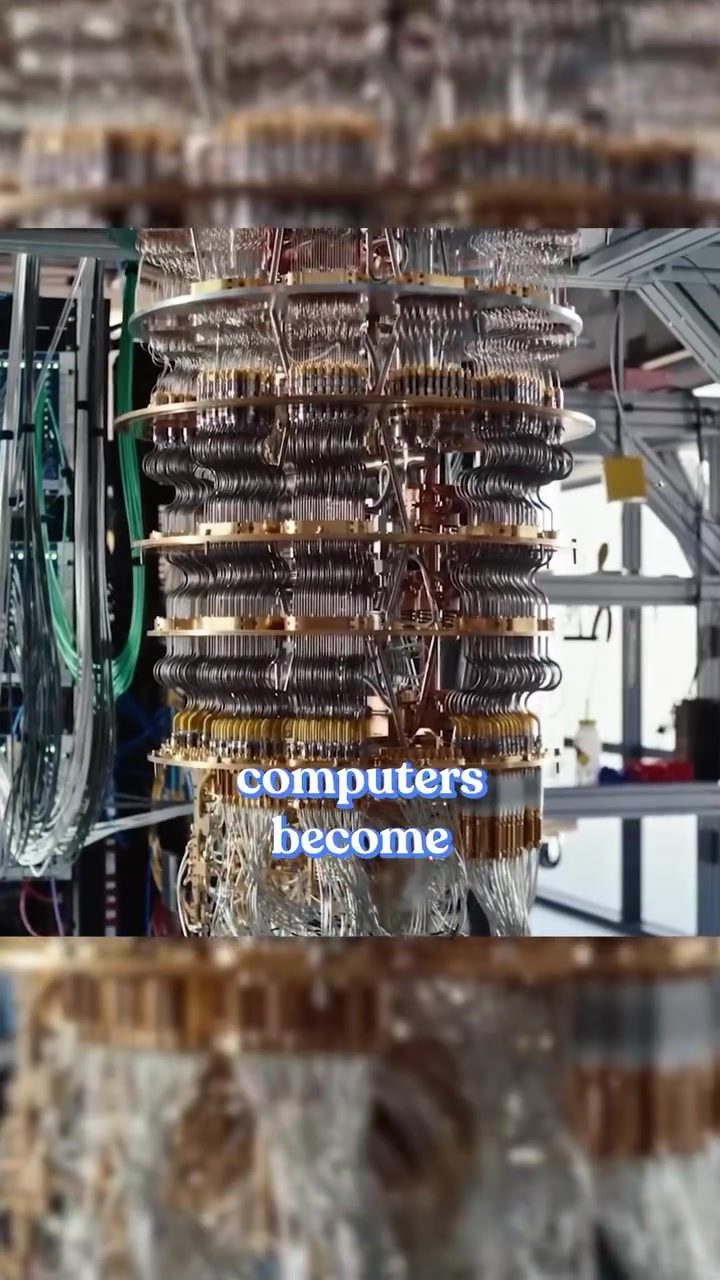
When Will Quantum Computers Become Mainstream?
Quantum computing is often described as a technology that is both imminent and decades away. This paradox is a result of the current state of quantum computers, which are still in a phase known as Noisy Intermediate-Scale Quantum (NISQ). To understand the trajectory of quantum computing and when it might become mainstream, it's essential to delve into the technical specifics and the broader context of technological adoption.
Why This Matters
Quantum computers have the potential to revolutionize fields like cryptography, materials science, and chemistry. However, their current limitations make it challenging to predict when they will become mainstream. Understanding the current bottlenecks and future prospects can help set realistic expectations and guide investment in this cutting-edge technology.
Main Discussion
Current State of Quantum Computing
Quantum computers today are in the NISQ phase, which means they have tens to hundreds of qubits but also high error rates and short coherence times. This phase is characterized by noise and instability, making large-scale quantum computing impractical for most applications.
Transition to Mainstream
When GPUs went mainstream, it was because AI couldn't function effectively without them. For quantum computing to reach a similar inflection point, it needs to demonstrate capabilities that classical computers cannot match. This will likely involve solving complex problems in fields like cryptography, materials science, and chemistry, where quantum computers offer significant advantages.
Error Correction and Scalability
The ability to correct errors is crucial for the scalability of quantum computers. Unlike classical bits, quantum information cannot be copied, making error correction highly challenging. Achieving millions of error-corrected logical qubits is essential for a stable and functional quantum computer. This requirement poses a significant technical barrier to mainstream adoption.
Integration with Classical Computing
Quantum computers will not replace classical computers but will coexist with them. They will be used in data centers alongside CPUs and GPUs, handling specific problems that classical machines cannot solve. This integration will allow for a more gradual and complementary adoption of quantum technology, rather than a sudden replacement of existing systems.
Practical Tips
Understanding Quantum Advantages
To leverage quantum computing effectively, it's essential to understand where quantum computers offer significant advantages over classical ones. This knowledge can guide future research and development, ensuring that quantum technology is applied where it will have the most impact.
Investment in Infrastructure
Investing in robust infrastructure for quantum computing is crucial. This includes not only hardware but also the development of error correction algorithms and software that can manage and utilize quantum systems effectively.
Collaboration and Research
Collaboration between academia, industry, and government is essential for advancing quantum computing. Shared research and development efforts can accelerate the progress toward achieving error-corrected logical qubits and overcoming other technical hurdles.
Important Takeaways
Quantum computing is still in its early stages, but it has the potential to transform various fields. Achieving mainstream adoption will require significant advancements in error correction, scalability, and integration with classical computing systems. Recognizing the current limitations and future prospects can help guide investment and research toward practical applications of quantum technology.
Conclusion
Quantum computing is poised to become a game-changer in several industries, but its path to mainstream adoption is fraught with technical challenges. By understanding the current state of quantum technology and the steps needed to overcome its limitations, we can better prepare for a future where quantum computers coexist with classical systems, solving problems that were previously impossible.
Watch the Reel
Questions readers ask
What is the current state of quantum computing?
Quantum computing is currently in the Noisy Intermediate-Scale Quantum (NISQ) phase. This means that quantum computers are operating with a significant amount of noise and instability. While they show promise, they are not yet reliable enough for widespread use. They are working on error correction to improve their stability and performance.
How do quantum computers differ from classical computers?
Quantum computers use quantum bits, or qubits, which can exist in multiple states at once, unlike classical bits that are binary. This allows quantum computers to process a vast number of possibilities all at once, making them potentially much faster than classical computers for certain complex problems. However, they are currently unreliable for most everyday tasks.
What are the main challenges in achieving quantum computing scalability?
The main challenges include quantum error correction, stability, and noise reduction. Quantum computers are highly susceptible to errors and external interference, which can disrupt their computations. Researchers are working on error correction codes and improving qubit coherence times to enhance scalability.
What problems can quantum computers solve that classical computers cannot?
Quantum computers have the potential to tackle complex problems in fields like cryptography, materials science, and chemistry. They can simulate molecular structures, optimize complex systems, and potentially break classical encryption methods, offering new avenues for innovation.
What is the role of quantum error correction in the future of quantum computing?
Quantum error correction is crucial for the future of quantum computing. It involves developing methods to detect and correct errors in quantum computations without measuring the qubits directly. This is essential for creating stable and reliable quantum computers that can perform meaningful calculations.
Related deep dives
Similar reads based on topic and creator.



Recent articles
Fresh deep dives from the latest Reels we unpacked.




Comments
Be the first to comment.