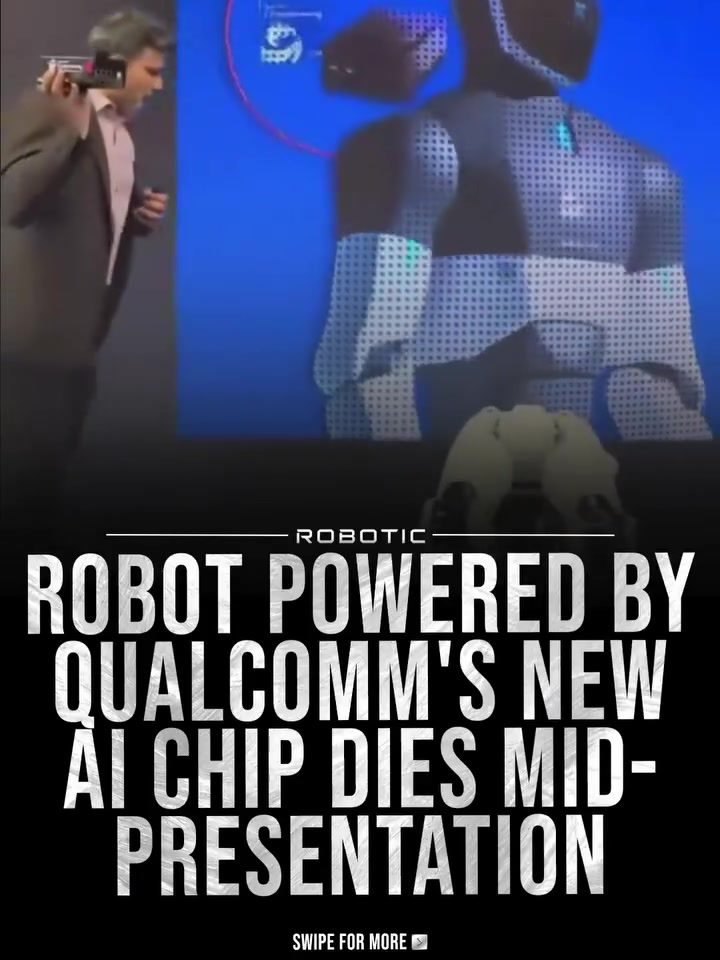
Robot Malfunctions Highlight Engineering Challenges in AI Hardware
Robotic demonstrations are meant to showcase the cutting edge of AI hardware and software, but they don't always go as planned. During a recent live presentation, a humanoid robot powered by Qualcomm's latest AI chip unexpectedly malfunctioned, stopping mid-presentation. This incident underscores the complexities and challenges in developing dependable AI-driven humanoid robots.
Why This Matters
The malfunction highlights several key points about the current state of robotics. Even with advanced AI hardware, real-world performance depends on a combination of factors. Reliable software, effective power management, precise sensors, and seamless system integration are all critical components. The incident serves as a reminder that while AI is advancing rapidly, creating dependable humanoid robots remains one of engineering's biggest challenges.
Main Discussion
The Importance of Real-World Testing
Real-world testing is crucial for identifying potential issues in robotic systems. In a controlled environment, a robot might function perfectly, but unexpected variables in a live setting can lead to malfunctions. This is why rigorous testing under various conditions is essential.
The Role of Software and System Integration
Advanced AI hardware alone cannot ensure a robot's reliability. The software that controls the robot and the integration of all its components must be just as robust. Software glitches or integration issues can cause a robot to malfunction, as seen in the live demonstration.
Power Management and Sensors
Power management and sensors are other critical aspects of robotic performance. Efficient power management ensures that the robot has enough energy to function continuously without overheating. Sensors provide the robot with the necessary data to interact with its environment effectively. Any failure in these areas can lead to a malfunction, as seen in the Qualcomm-powered robot.
The Complexity of Humanoid Robots
Humanoid robots are particularly complex due to their resemblance to humans. They require advanced motor skills, sensory capabilities, and cognitive functions to mimic human behavior. Building a dependable humanoid robot involves overcoming numerous engineering challenges, from creating realistic movements to ensuring seamless interaction with the environment.
Practical Tips
When developing or deploying robotic systems, especially humanoid robots, consider the following tips:
Conduct Thorough Testing
Ensure that your robotic systems undergo rigorous testing in various environments. This helps identify potential issues before they occur in a live setting.
Invest in Reliable Software
Software reliability is as important as hardware reliability. Make sure your software is well-tested, reliable, and capable of handling unexpected conditions.
Focus on Power Management
Efficient power management is crucial for the continuous operation of robotic systems. Ensure that your robots have adequate power sources and can manage power efficiently.
Integrate High-Quality Sensors
High-quality sensors provide the necessary data for the robot to interact with its environment effectively. Invest in reliable sensors and ensure they are well-integrated into the system.
Prioritize System Integration
System integration is vital for the seamless operation of a robotic system. Ensure all components, from sensors to software, work together harmoniously.
Important Takeaways
The incident with the Qualcomm-powered robot highlights the complexities of developing dependable humanoid robots. It underscores the importance of not just advanced AI hardware, but also reliable software, effective power management, precise sensors, and seamless system integration. While AI is advancing rapidly, creating dependable humanoid robots remains one of the biggest challenges in engineering.
Conclusion
The malfunction of a humanoid robot powered by Qualcomm's latest AI chip during a live demonstration serves as a reminder of the complexities involved in developing dependable robotic systems. It highlights the need for thorough testing, reliable software, effective power management, high-quality sensors, and seamless system integration. As AI continues to advance, addressing these challenges will be crucial for the future of robotics.
Watch the Reel
Questions readers ask
What caused the robot malfunction during the Qualcomm AI chip demo?
The robot malfunction was likely due to a combination of factors, including software glitches, power management issues, or integration problems between the AI chip and other components. The incident highlights the complexity of creating reliable AI-driven humanoid robots.
Why are live demonstrations of AI robots challenging?
Live demonstrations can be unpredictable due to various factors such as real-time processing demands, environmental variables, and the complexity of AI algorithms. These factors can lead to unexpected failures, even with advanced AI hardware like Qualcomm's chip.
What are the key factors in developing reliable humanoid robots?
Developing reliable humanoid robots requires a combination of robust software, effective power management, precise sensors, and seamless integration of hardware components. Each of these factors plays a crucial role in ensuring the robot's performance in real-world scenarios.
How does the Qualcomm AI chip contribute to the development of humanoid robots?
The Qualcomm AI chip provides advanced processing capabilities for humanoid robots, enabling real-time decision-making and complex tasks. However, the chip's effectiveness is dependent on how well it is integrated with other components and managed in terms of power and software.
What can be learned from the malfunction of the AI-driven robot during the demo?
The malfunction serves as a reminder of the engineering hurdles in creating dependable AI hardware. It underscores the need for thorough testing, robust software development, and effective power management to ensure reliable performance in AI-driven robots.
What are the common issues faced in AI hardware and software integration in robotics?
Common issues include synchronization problems, data processing delays, and incompatibility between different system components. Ensuring seamless integration requires meticulous design, extensive testing, and often, iterative improvements.
What role does power management play in the reliability of AI-driven robots?
Effective power management is crucial for the reliability of AI-driven robots. It ensures that the AI hardware, like the Qualcomm chip, operates efficiently without overheating or running out of power, which can lead to malfunctions and system failures.
Related deep dives
Similar reads based on topic and creator.



Recent articles
Fresh deep dives from the latest Reels we unpacked.




Comments
Be the first to comment.