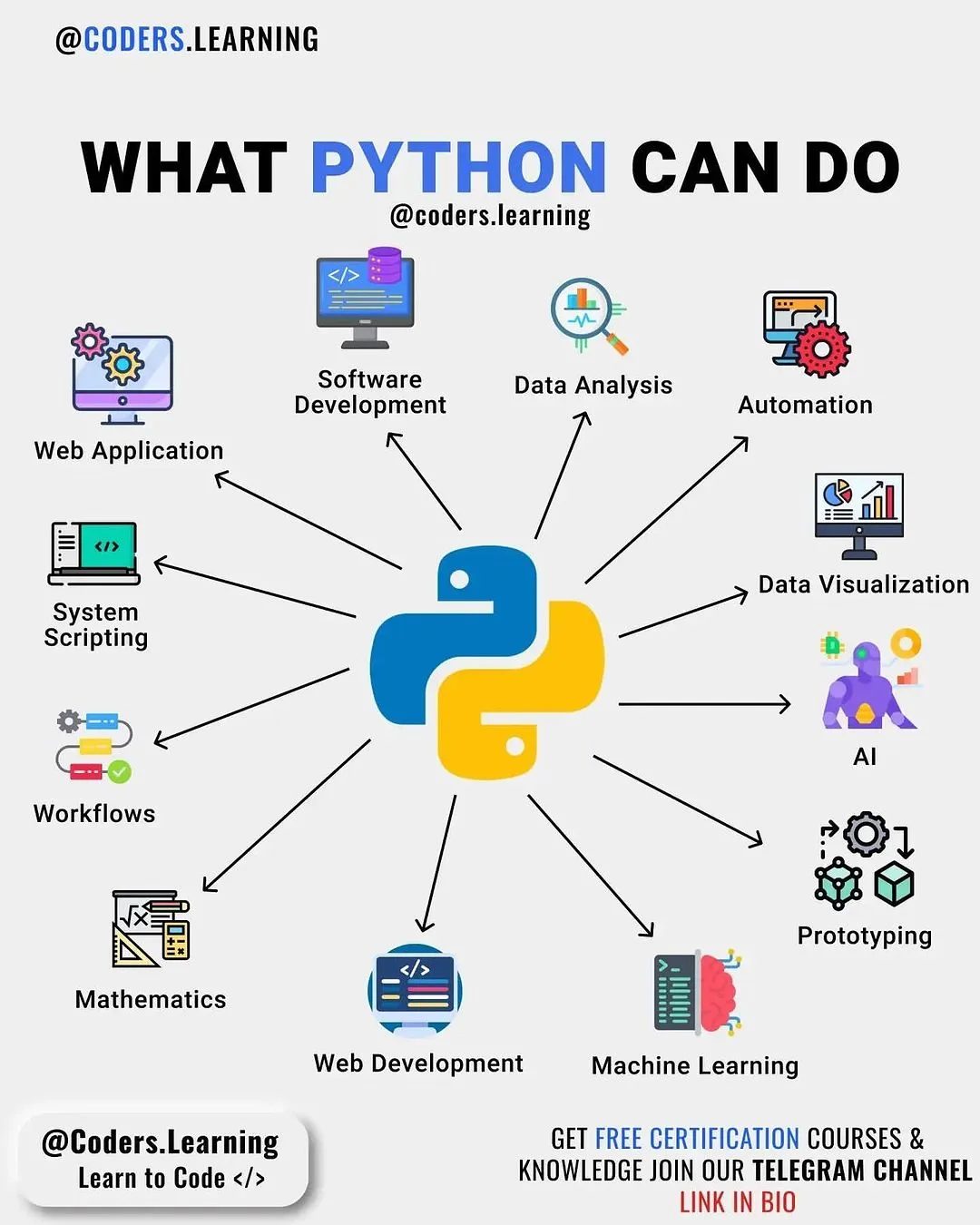
Python Programming Capabilities
Python is a highly versatile and widely used programming language, renowned for its simplicity and readability. Its applications span across various domains, making it a staple in the tech industry. From software development to data analysis, and from automation to artificial intelligence, Python's capabilities are vast and impactful.
Context: Why This Matters
In today's data-driven world, the ability to harness the power of Python can significantly enhance productivity and innovation. Whether you’re a seasoned software engineer, a data scientist, or an aspiring coder, understanding Python’s capabilities can open up a world of opportunities in fields like big data, machine learning, and artificial intelligence. The versatility of Python makes it an indispensable tool for modern developers, streamlining complex tasks and enabling efficient problem-solving.
Main Discussion
Software Development
Python's role in software development is pivotal. Its clean syntax and extensive libraries make it an ideal choice for building robust, scalable applications. Python is used extensively for web development, system scripting, and workflow automation. Its framework, such as Django and Flask, supports the rapid development of web applications, which allows developers to create web applications more efficiently. Python’s support for multiple programming paradigms, including procedural, object-oriented, and functional programming, further enhances its utility in software development.
Data Analysis
Data analysis is another area where Python shines. With libraries like Pandas, NumPy, and SciPy, Python provides powerful tools for data manipulation, analysis, and visualization. These libraries enable data scientists to handle large datasets, perform statistical analysis, and create insightful visualizations. Python's ability to integrate with databases and other data sources makes it a go-to language for data analysis and data visualization, empowering professionals to derive meaningful insights from raw data.
Automation
Automation is a critical aspect of modern software development, and Python excels in this domain. Its scripting capabilities allow developers to automate repetitive tasks, freeing up time for more complex and creative work. Python scripts can automate system administration tasks, data extraction and processing, and even workflow management. Tools like Selenium and BeautifulSoup enable web scraping and automation of web-based tasks, making Python an essential tool for automating various processes.
Web Development
Web development is a cornerstone of Python's capabilities. Frameworks like Django and Flask offer a structured and efficient way to build web applications. Django, known for its "batteries-included" approach, provides a comprehensive set of tools for developing web applications, including an ORM (Object-Relational Mapping) system, authentication, and admin interfaces. Flask, on the other hand, is a micro-framework that offers flexibility and simplicity, making it ideal for smaller projects or APIs. Both frameworks support rapid development and deployment, making Python a top choice for web developers.
System Scripting and Workflows
Python's scripting capabilities are not limited to web development. Python scripts can automate complex workflows, manage system tasks, and handle various administrative functions. Python's ability to integrate with different operating systems and environments allows it to perform tasks like file management, system monitoring, and data processing. Its extensive standard library and third-party modules provide a wide range of functionalities, making it a powerful tool for system scripting and workflow management.
Mathematics and Data Visualization
Python's capabilities in mathematics and data visualization are unparalleled. Libraries like Matplotlib, Seaborn, and Plotly enable developers to create stunning visualizations and plots, which are essential for data analysis and presentation. These libraries support a wide range of visualization types, including line graphs, bar charts, histograms, and scatter plots. Additionally, Python's support for numerical computations with libraries like NumPy and SciPy makes it a powerful tool for mathematical modeling and simulation.
Machine Learning and AI
Python is the language of choice for machine learning and artificial intelligence. Libraries like TensorFlow, Keras, and scikit-learn provide comprehensive tools for building and training machine learning models. These libraries support a wide range of algorithms, from linear regression to deep learning, making Python an essential tool for data scientists and AI researchers. Python's ability to handle large datasets and complex computations makes it ideal for developing and deploying machine learning models.
Prototyping
Python's rapid prototyping capabilities make it an excellent choice for developing prototypes and proof-of-concept applications. Its simplicity and readability allow developers to quickly test new ideas and iterate on designs. Python's extensive libraries and frameworks support the development of prototypes in various domains, from web applications to machine learning models, making it a versatile tool for prototyping.
Practical Tips
Mastering Python Libraries
To fully leverage Python's capabilities, it's essential to become proficient in its libraries. Familiarize yourself with libraries like Pandas, NumPy, and Matplotlib for data analysis and visualization. For machine learning, explore libraries like TensorFlow, Keras, and scikit-learn. Understand the capabilities and limitations of these libraries to effectively use them in your projects.
Learning Resources
There are numerous resources available for learning Python, from online courses to books and tutorials. Platforms like Coders Learning offer free certification courses and knowledge resources, which can help you get started with Python programming. Joining online communities and forums can also provide valuable insights and support as you learn and grow.
Building Projects
The best way to master Python is through hands-on practice. Start with small projects and gradually take on more complex tasks. Building web applications, automating workflows, and developing machine learning models are excellent ways to apply your Python skills and gain practical experience.
Community and Collaboration
Engaging with the Python community can significantly enhance your learning experience. Participate in hackathons, join coding challenges, and collaborate with other developers on open-source projects. The Python community is vibrant and supportive, offering numerous opportunities for collaboration and learning.
Important Takeaways
Python's versatility and extensive capabilities make it a powerful tool for developers in various domains. Whether you're involved in software development, data analysis, automation, web development, or artificial intelligence, Python offers a robust set of tools and libraries to support your work. By mastering Python and its ecosystems, you can enhance your productivity, innovation, and problem-solving skills, positioning yourself as a valuable asset in the tech industry.
Conclusion
Python programming is a vital skill in today's tech landscape. Its applications span across various domains, making it an indispensable tool for developers, data scientists, and engineers. By leveraging Python's capabilities in software development, data analysis, automation, web development, mathematics, and machine learning, you can unlock new opportunities and drive innovation. Whether you’re a beginner or an experienced developer, investing time in mastering Python can significantly enhance your career prospects and technical expertise.
Watch the Reel
Questions readers ask
What are the key advantages of using Python for data analysis?
Python is highly regarded for data analysis due to its simplicity and robust libraries like Pandas, NumPy, and Matplotlib. These tools enable efficient data manipulation, statistical analysis, and visualization, making it easier to derive insights from complex datasets.
How is Python utilized in artificial intelligence and machine learning?
Python is a leading language in AI and machine learning due to libraries such as TensorFlow, Keras, and scikit-learn. These libraries provide tools for developing neural networks, training models, and implementing deep learning algorithms, making Python an excellent choice for building intelligent systems.
What role does Python play in software development?
Python is widely used in software development for its readability and extensive standard library. It is employed in web development with frameworks like Django and Flask, and in automating repetitive tasks, enhancing developer productivity and enabling the creation of scalable applications.
Which Python libraries are essential for data analytics?
For data analytics, Python offers several essential libraries. Pandas is crucial for data manipulation and analysis, while NumPy provides support for numerical computations. Matplotlib and Seaborn are popular for data visualization, and SciPy offers algorithms for scientific and technical computing.
Can Python be used for web development?
Yes, Python is an excellent choice for web development. Frameworks like Django and Flask allow developers to build secure, scalable, and high-performance web applications. These frameworks simplify the development process, enabling developers to focus on creating robust web solutions.
What are some practical applications of Python in AI and machine learning?
Python is used in various AI and machine learning applications, including natural language processing, computer vision, and predictive analytics. Its neural network and deep learning capabilities, facilitated by libraries like TensorFlow and Keras, make it a preferred language for developing cutting-edge AI models.
How does Python simplify the automation of tasks?
Python's readability and extensive standard library make it an ideal choice for automating repetitive tasks. Using Python scripts, tasks such as file management, data entry, and web scraping can be automated, saving time and reducing the risk of human error. Libraries like Selenium and BeautifulSoup are particularly useful for web automation.
Related deep dives
Similar reads based on topic and creator.


Recent articles
Fresh deep dives from the latest Reels we unpacked.




Comments
Be the first to comment.