Computer Vision and Python for Personalized Eyeglass Shape Recommendations
Understanding what eyeglass shape suits you best can be a daunting task, but leveraging computer vision and Python scripting can simplify and enhance this process. Imagine a tool that analyzes your facial features and recommends the best eyeglass shapes tailored just for you. This is exactly what a custom Python script can achieve.
Why this Matters
In a world where personalization is key, finding the perfect eyeglass shape that complements your face can make a significant difference in your overall appearance and comfort. Traditional methods often rely on trial and error, which can be time-consuming and frustrating. By using computer vision and Python, this process becomes more efficient and accurate.
Exploring the Technique
The Power of Computer Vision
Computer vision involves teaching computers to interpret and understand visual information from the world. In the context of eyeglass shape recommendation, computer vision algorithms analyze facial features such as the shape of your face, the distance between your eyes, and other key points. These algorithms can then determine which eyeglass shapes would best suit your facial structure.
Building the Python Script
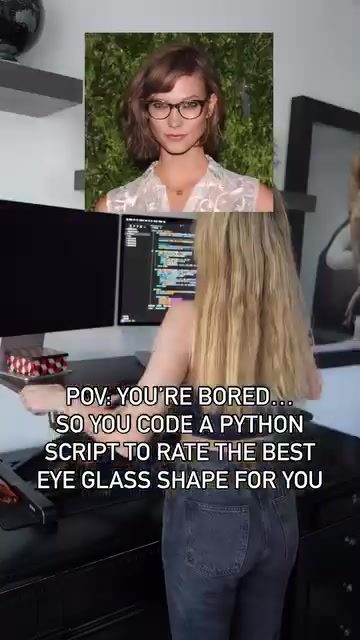
The script utilizes a 'Glasses Try-On App' that overlays different eyeglass shapes onto a user's face in real-time. This app not only helps visualize how different glasses would look but also provides a rating system to quantify the suitability of each shape.
Scoring the Shapes
One of the most innovative aspects of this script is its scoring system. Each eyeglass shape is given a score out of 10, based on how well it complements the user's facial features. For example, scores like 9.7/10, 9.1/10, and 9.2/10 indicate high suitability for the respective shapes. This scoring system provides a clear and objective way to evaluate different options.
The Try-On Experience
The 'Glasses Try-On App' makes the process of trying on different eyeglass shapes interactive and engaging. Users can see how various shapes look on their face in real-time, making it easier to make an informed decision. The app's ability to provide instant feedback through scoring enhances the user experience, making it both fun and practical.
Practical Tips
Getting Started with Python
If you're new to Python, it's essential to start with the basics. Familiarize yourself with Python syntax, data structures, and basic programming concepts. Online tutorials and coding platforms like Codecademy and Coursera offer comprehensive courses that can get you up to speed quickly.
Learning Computer Vision
Computer vision is a specialized field within artificial intelligence. Start by understanding the basics of image processing and machine learning. Libraries like OpenCV and TensorFlow are excellent resources for learning and implementing computer vision projects.
Building Your Script
- Install Necessary Libraries: Ensure you have the required libraries installed, such as OpenCV and TensorFlow.
- Collect Data: Gather a dataset of different facial features and corresponding eyeglass shapes. This data will be crucial for training your model.
- Develop the Algorithm: Write the algorithm that analyzes facial features and recommends the best eyeglass shapes. Make sure to include a scoring system to provide objective feedback.
- Test and Iterate: Test your script with different users to ensure its accuracy and reliability. Gather feedback and make necessary adjustments to improve the algorithm.
Important Takeaways
Personalization is Key
In the realm of personalized recommendations, computer vision and Python scripting offer a powerful combination. By leveraging these technologies, you can create a tool that provides tailored recommendations for eyeglass shapes, making the shopping experience more efficient and satisfying.
Continuous Improvement
The beauty of coding your own solution is the ability to continuously improve it. As you gather more data and feedback, you can refine your algorithm to provide even more accurate and personalized recommendations. This iterative process ensures that your tool remains relevant and effective.
Open Source Community
Sharing your script with the open-source community can lead to valuable feedback and collaboration. By making your code available on platforms like GitHub, you can receive input from other developers, which can help enhance your project and make it more robust.
Conclusion
The intersection of computer vision and Python scripting opens up exciting possibilities for personalized recommendations. Whether you're looking to enhance your coding skills, explore the world of computer vision, or simply find the perfect pair of glasses, this approach offers a practical and innovative solution. Embrace the power of technology to make your eyeglass shopping experience more personalized and enjoyable.
Watch the Reel
Questions readers ask
How does the Python script analyze facial features for customized glasses shapes?
The Python script employs computer vision techniques to analyze key facial features such as the shape of the face, the width of the eyes, the height of the cheekbones, and the width of the nose. It uses this data to determine which eyeglass shapes would complement the user's appearance the best.
Can the script recommend glasses shapes in real-time?
Yes, the script is designed to provide real-time recommendations. Users can see different eyeglass shapes and receive instant feedback on how well each shape suits their face. This real-time feature enhances the personalization process and makes it more interactive.
What are the advantages of using a Python script for personalized glasses shapes over traditional methods?
The primary advantages include efficiency and accuracy. Traditional methods often rely on trial and error, which can be time-consuming. The Python script, however, analyzes facial features quickly and provides tailored recommendations, saving users time and effort.
How can I integrate a glasses recommendation tool into a mobile app?
To integrate a glasses recommendation tool into a mobile app, you would need to develop an interface that allows users to upload a photo or use the camera to capture their face. The Python script can then process this image and provide recommendations, similar to how the Tifintechi app works. The app should display the recommended glasses shapes over the user's face in real-time.
What kind of results can I expect from the glasses shape score provided by the script?
The glasses shape score is a rating that indicates how well a particular eyeglass shape suits your facial features. A higher score means the shape is more complementary to your face, while a lower score suggests it may not be the best fit. This scoring system helps users make informed decisions about their eyewear choices.
How can the script help in trying on different glasses shapes virtually?
The script can overlay different eyeglass shapes onto a user's face in a digital image or video feed, allowing them to 'try on' various styles virtually. This feature is powered by computer vision, which ensures that the glasses are correctly positioned and scaled to the user's face.
Related deep dives
Similar reads based on topic and creator.


Recent articles
Fresh deep dives from the latest Reels we unpacked.




Comments
Be the first to comment.