Protein: Beyond the Numbers
Protein is a crucial component of any balanced diet, but not all protein sources are created equal. Understanding the quality and quantity of protein in various foods can significantly impact your fitness and nutrition goals. Let’s delve into the best and worst protein sources, and how to make the most of your protein intake.
Why This Matters
Protein plays a vital role in maintaining muscle mass, keeping you full, and supporting overall health. However, not all protein sources deliver the same nutritional benefits. Some foods that are marketed as high in protein often fall short due to their high calorie, fat, or carbohydrate content. Knowing the difference between high-quality protein sources and those that are misleading can help you make better dietary choices.
Key Protein Sources
When aiming for high-quality protein, certain foods stand out due to their nutritional value.
Best Protein Sources
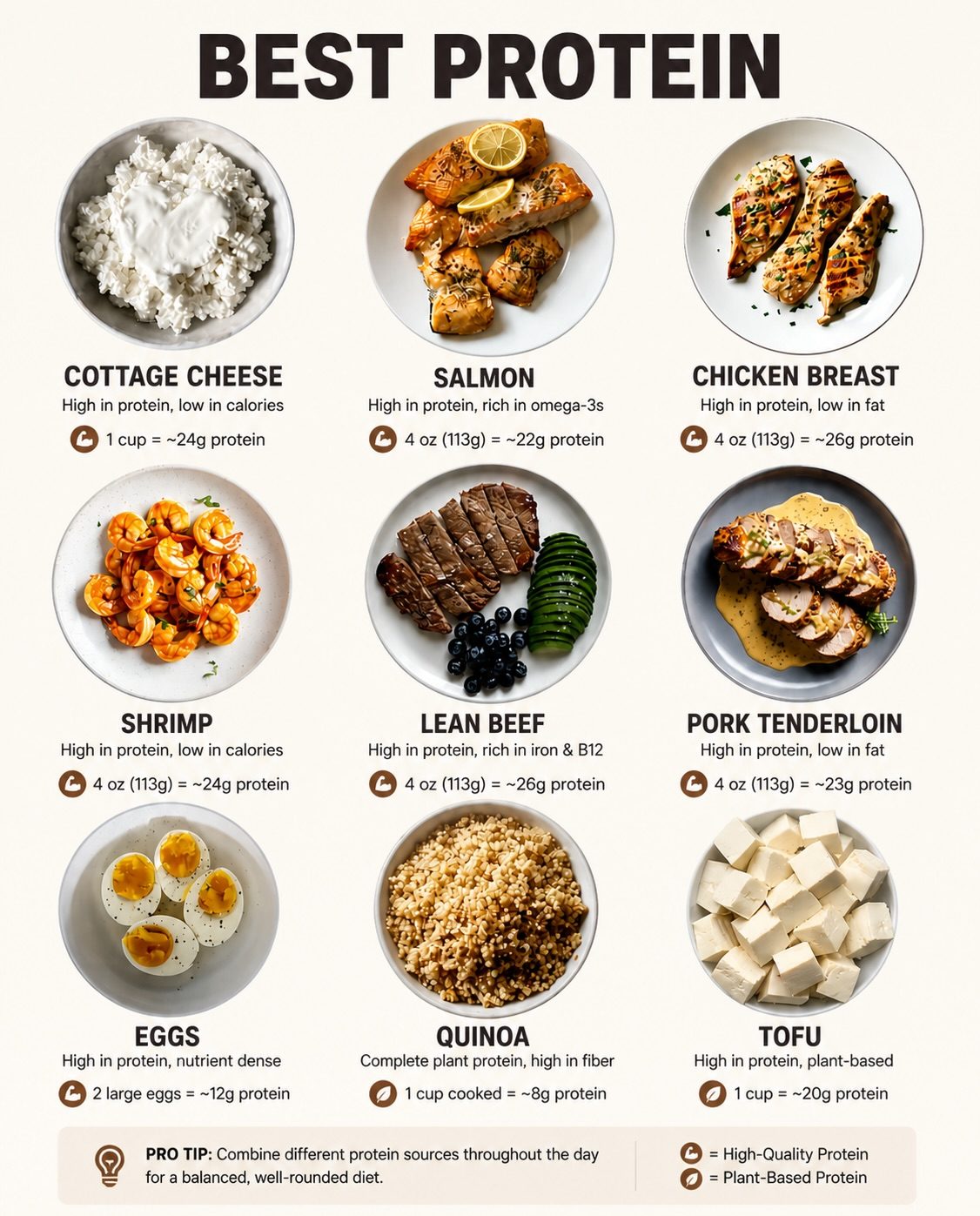
Several foods are renowned for their high protein content and additional nutritional benefits. Here are some of the best options:
- Cottage Cheese: High in protein and low in calories, making it an excellent choice for those watching their calorie intake.
- Salmon: Rich in protein and omega-3 fatty acids, salmon supports heart health and provides essential nutrients.
- Chicken Breast: A staple in many diets, chicken breast is high in protein and low in fat, making it a lean protein source.
- Shrimp: Nutrient-dense and high in protein, shrimp is a versatile seafood option.
- Lean Beef: Provides a good amount of protein along with essential nutrients like iron and vitamin B12.
- Pork Tenderloin: Lean and high in protein, making it a healthy choice for meat lovers.
- Eggs: A complete protein source that is also rich in various nutrients.
- Quinoa: High in protein and fiber, quinoa is a great plant-based option.
- Tofu: A high-quality, plant-based protein source that is versatile and can be used in a variety of dishes.
Quality Over Quantity
When it comes to protein, the quality of the source matters more than the quantity. Focusing on whole food sources of protein ensures that you’re getting a balanced intake of nutrients. Here’s a closer look at some common misconceptions and pitfalls in protein consumption.
Worst Protein Sources
Many foods are often marketed as high in protein but are actually low in protein and high in other, less desirable nutrients.
- Deli Meat, Fried Chicken, and Fast Food: These foods are typically high in fat and low in protein, making them poor choices for those looking to maintain a lean physique.
- Processed Cheese: High in fat and low in protein, processed cheese often contains added sugars and other unhealthful ingredients.
- Protein Bars, Drinks, and Cookies: While convenient, many of these products are high in added sugars and may not deliver the protein content they claim. Brands like Quest and Core Power often fall short in terms of protein-to-calorie ratio.
- Nuts and Peanut Butter: These foods are generally high in fat and relatively low in protein, making them a poor choice for those looking to increase their protein intake without consuming excess calories.
- Cereal and Bread: These foods are high in carbohydrates and low in protein, which can lead to a spike in blood sugar levels and a subsequent crash in energy.
Practical Tips
Making the shift to higher-quality protein sources doesn’t have to be complicated. Here are some practical tips to help you incorporate more nutritious protein into your diet:
- Combine Protein Sources: Vary your protein sources throughout the day to ensure a balanced intake of nutrients. For example, you might have Greek yogurt for breakfast, a chicken salad for lunch, and salmon for dinner.
- Focus on Whole Foods: Opt for whole food sources of protein like lean meats, fish, eggs, dairy, legumes, and tofu. These foods provide a more balanced nutritional profile compared to processed options.
- Check Labels: When purchasing protein bars or shakes, be sure to check the labels for added sugars and other unhealthful ingredients. Look for products that provide a good protein-to-calorie ratio.
- Portion Control: Pay attention to portion sizes, especially when consuming higher-calorie protein sources. While nuts and peanut butter can be part of a healthy diet, they should be consumed in moderation to avoid excess calorie intake.
- Plan Ahead: Having a meal plan can help you stay consistent with your protein intake. Prepping meals in advance ensures that you have healthy, protein-rich options available when you need them.
- Stay Hydrated: Drinking enough water is essential for optimal protein digestion and absorption. Aim for at least 8 glasses of water per day, and more if you’re physically active.
Important Takeaways
Understanding the quality of protein sources is crucial for achieving your fitness and nutrition goals. Here are the key takeaways:
- Focus on whole food sources of protein like lean meats, fish, eggs, dairy, legumes, and tofu.
- Be wary of processed protein sources that may be high in added sugars and low in actual protein.
- Opt for high-quality, nutrient-dense protein sources that support overall health and muscle maintenance.
- Incorporate a variety of protein sources into your diet to ensure a balanced intake of nutrients.
By making these shifts, you can maximize the benefits of protein in your diet while minimizing the intake of unhealthy nutrients.
Conclusion
Protein is an essential part of a balanced diet, but not all protein sources are equal. By focusing on high-quality, whole food sources of protein and being mindful of portion sizes, you can achieve your fitness and nutrition goals more effectively. Whether you’re aiming for fat loss, muscle gain, or overall health, prioritizing quality over quantity in your protein intake can make a significant difference.
Watch the Reel
Questions readers ask
What defines a high-quality protein source?
High-quality protein sources are those that provide all nine essential amino acids your body needs, along with a good balance of calories, fats, and carbohydrates. These typically come from lean meats, poultry, fish, eggs, dairy, and plant-based sources like tofu and lentils. For optimal fitness and nutrition, focus on these complete proteins to maximize muscle recovery and growth.
Are protein bars a reliable source of protein for fitness goals?
While protein bars can be convenient, they are not always the best choice for fitness goals. Many bars are high in sugars and processed ingredients, which can negate their protein benefits. Opt for bars with minimal added sugars and a high protein-to-carb ratio. Check the label for high-quality ingredients, such as whey protein, casein, or pea protein.
How does the protein in chicken and eggs compare to processed foods like protein bars?
Chicken and eggs are excellent lean protein sources for fitness goals, as they are packed with essential amino acids and low in fat. Compared to processed foods, they offer a higher-quality protein profile and no added sugars or preservatives. They also provide additional nutrients like B vitamins and minerals, which support overall health and performance.
What are some high-quality plant-based protein sources for fitness goals?
Tofu, lentils, and chickpeas are outstanding plant-based protein sources. These foods not only offer a good amount of protein but also provide essential nutrients like iron, fiber, and vitamins. Incorporating these into your diet can help you achieve your fitness goals while maintaining a balanced nutrition plan.
Why is the protein in peanut butter not ideal for fitness goals?
Peanut butter is a calorie-dense food with a moderate amount of protein. While it offers some protein, its high fat and calorie content can make it less ideal for those focusing on fitness goals. Additionally, peanut butter often contains added oils and sugars, which can hinder progress. For better protein sources, consider leaner options like chicken, turkey, or plant-based proteins.
How does the protein in cheese and dairy compare to other protein sources?
Cheese and dairy products can be a good source of protein, but they often come with high amounts of fat and calories. Greek yogurt is a leaner dairy option that provides a good balance of protein and lower calories. For those tracking their macros, it's essential to choose lower-fat dairy options to avoid excess calories and fats.
Recent articles
Fresh deep dives from the latest Reels we unpacked.




Comments
Be the first to comment.