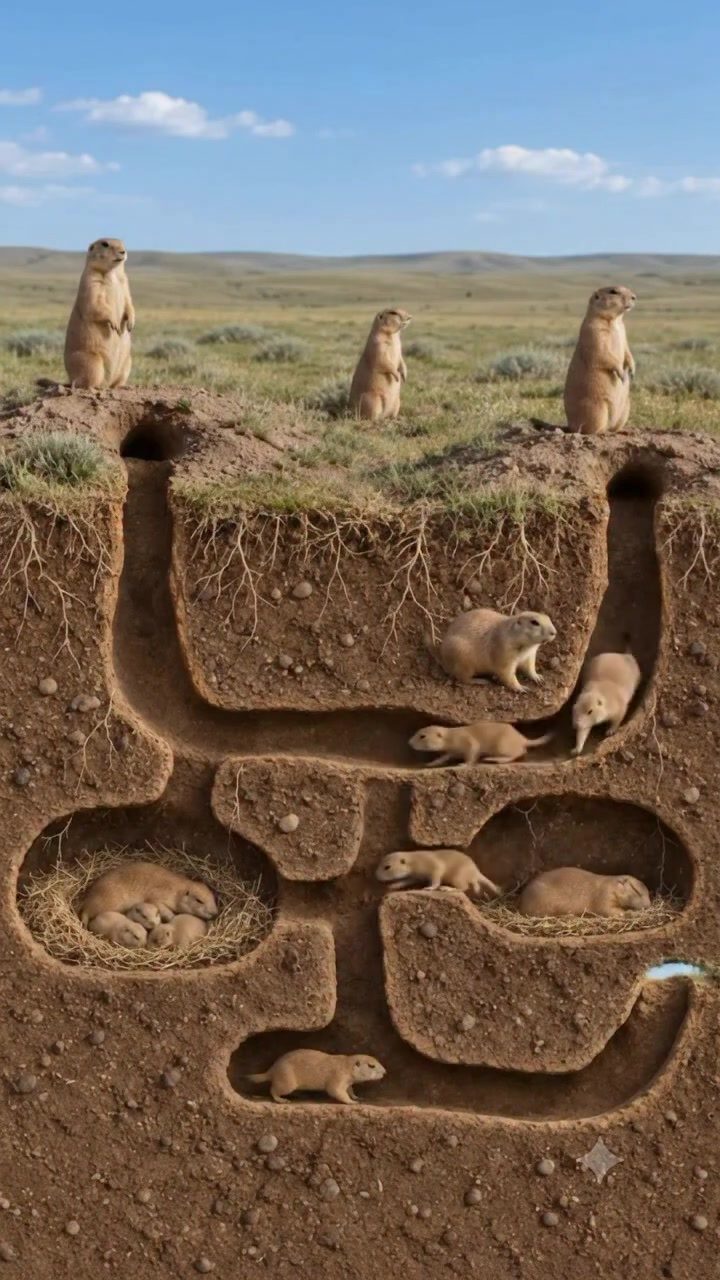
Prairie Dog Burrows: An Architectural Marvel of Nature
Prairie dogs are renowned for nothing so much as their immense sociability; indeed, they often face an existential challenge due to their near-obsession with cooperation. They live in sprawling, sophisticated burrow systems beneath the grasslands of North America. Their burrows are a crucial adaptation to support their collective lifestyle. First, the architecture of a prairie dog burrow is intriguing. It consists of a multitude of interconnected chambers and tunnels, each with its own function. The network provides structural support and capable of keeping predators at bay. Vertical tunnels, often entrance and exit points of the burrow, while horizontal tunnels branching out in multiple directions. The burrows are also critical to the survival of prairie dogs. Such a network of tunnels ensures that prairie dogs can escape predators and even regulate their body temperature and humidity.
A Social Structure Below the Surface
The burrow system is not just an architectural feat; it's also a reflection of the prairie dog's complex social structure. Prairie dogs are highly social animals, and their burrows are designed to accommodate multiple individuals. These animals live in 'towns' or 'colonies' and the burrows are a reflection of their community. In fact, multiple prairie dogs share a single burrow system, often with designated areas for different activities. Each colony maintains sentry duties by ensuring that some prairie dogs are always on guard. In an observatory-like chamber where these guards stay vigilant, they effectively maintain a warning system for predators. This is significant when you consider how organisms adapt to specific threats. One commenter noticed that the sentry duties aren’t based on any hierarchy or dominance. It is more of a collective responsibility to ensure the security of the group. Each burrow system has its specific layout. But they often include separate chambers used for nesting and a separate area for food storage and refuse. There is also a separate entrance for the nursery where baby prairie dogs, or pups, stay with the mother during denial.
The Dark Side of Animal Community
Burrows are definitely an architectural marvel. However, life in these colonies isn’t always peaceful. A look into these systems reveals interpersonal conflicts. Prairie dogs exhibit a unique rivalry with each other. The social structure leads to constant squabbling and mild displays of aggression. This is expected, given the small living space in the burrows. Conflicts tend to erupt over food and shelter. The prairie dog’s life is not all bliss. Surviving in such a burrow system requires immense energy and focus. Though the video didn’t show that, the unseen reality is that prairie dogs are constantly threatened by predators. They often face attacks by coyotes, badgers, and other predators that specifically target them.
The Future of Prairie Dog Burrows
Despite human interference and urbanization, prairies and their inhabitants persist from rural North America to grasslands. This type of urbanization can be a fatal threat to savannahs. As a result, populations are decreasing. However, the resilience of prairie dogs and their remarkable burrow systems offer a glimmer of hope, amidst external threats and turf wars.
Watch the Reel
Related deep dives
Similar reads based on topic and creator.



Recent articles
Fresh deep dives from the latest Reels we unpacked.




Comments
Be the first to comment.