Population Projections: The Future of the World’s Largest Countries
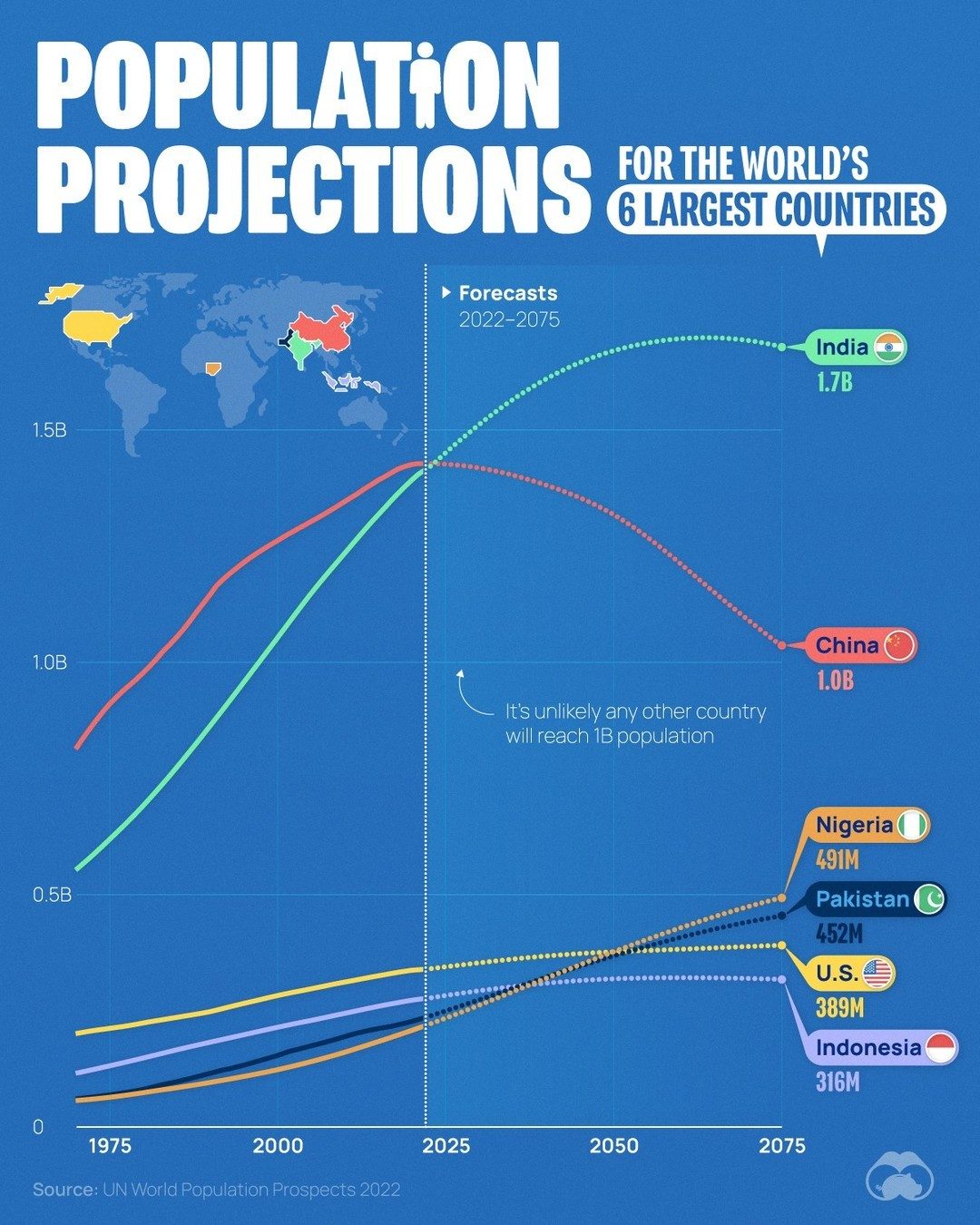
Population growth is a critical factor in shaping the future of countries and the world at large. Understanding the projected population trends for the world’s largest countries provides valuable insights into upcoming socio-economic dynamics. Here, we delve into the population projections for the six largest countries: India, China, Nigeria, Pakistan, the U.S., and Indonesia, based on the latest data from the UN World Population Prospects 2022.
Why This Matters
Population projections influence a wide range of factors, including economic growth, resource allocation, infrastructure development, and social policies. Countries with rapidly growing populations face challenges related to job creation, housing, and public services. Conversely, those with declining or stable populations must adapt to an aging workforce and potential labor shortages. Analyzing these projections helps governments, businesses, and organizations plan for the future.
Main Discussion
China’s Population Transition
China, once the world’s most populous country, is now experiencing a significant population shift. As of 2022, China has a population of approximately 1.4 billion, but its growth has slowed. Projections indicate that China's population will likely peak and then begin to decline. By 2075, the population is estimated to be around 1 billion. This decline is attributed to factors such as a rapidly aging population and a decreasing birth rate, influenced by long-standing family planning policies.
India’s Rising Population
In contrast, India’s population is projected to continue growing at a steady pace. By 2075, India is expected to have the world’s largest population, reaching approximately 1.7 billion. This growth is driven by a relatively younger demographic and higher birth rates. The significant population increase will have profound implications for India’s economy, social services, and environmental sustainability.
Nigeria’s Growing Population
Nigeria, currently the seventh most populous country, is expected to experience rapid growth. By 2075, Nigeria’s population is projected to reach around 491 million. This growth is fueled by high birth rates and a young population. Nigeria’s growing demographic is likely to bring both opportunities and challenges, including the need for robust economic development and infrastructure to support its citizens.
Pakistan’s Steady Growth
Pakistan, another densely populated country, is expected to see steady population growth. By 2075, Pakistan’s population is projected to reach around 452 million. Similar to Nigeria, Pakistan’s growth is driven by high birth rates and a relatively young population. The country will need to focus on economic diversification and social development to support its growing population.
The U.S. Population
The United States, with a current population of around 331 million, is expected to grow to approximately 389 million by 2075. The growth rate in the U.S. is relatively slower compared to countries like India and Nigeria, primarily due to lower birth rates and an aging population. Immigration will continue to play a significant role in shaping the country’s demographic landscape.
Indonesia’s Population Growth
Indonesia, currently the fourth most populous country, is projected to reach around 316 million by 2075. The country’s growth is driven by a combination of high birth rates and a young population. Indonesia’s growing demographic will require strategic planning in areas such as education, healthcare, and employment to ensure sustainable development.
Practical Tips
Government and Policy Makers
Government and policy makers can leverage these projections to develop sustainable policies for infrastructure, healthcare, and education. For example, countries with rapidly growing populations, such as India and Nigeria, should invest in education and job creation. In contrast, countries with declining populations, such as China, might need to focus on supporting an aging population and encouraging higher birth rates.
Businesses and Organizations
Businesses and organizations can use these projections to make informed decisions about market expansion, labor force planning, and resource allocation. For instance, companies in rapidly growing markets, like India and Nigeria, might see increased demand for their products and services. Conversely, those in declining markets, like China, might need to adapt their strategies to accommodate an aging workforce.
Important Takeaways
- China's Population Decline: China's population is expected to peak and begin declining, driven by an aging population and lower birth rates.
- India's Population Growth: India's population will continue to grow, reaching approximately 1.7 billion by 2075, making it the world's most populous country.
- Nigeria and Pakistan’s Rapid Growth: Both countries are projected to experience significant population growth, driven by high birth rates and young demographics.
- U.S. Population Moderate Growth: The U.S. population is projected to grow moderately, reaching approximately 389 million by 2075, influenced by immigration and lower birth rates.
- Indonesia’s Steady Growth: Indonesia’s population will continue to grow, reaching around 316 million by 2075, driven by high birth rates and a young population.
Conclusion
Understanding the projected population trends for the world’s largest countries provides invaluable insights into the future. China’s population decline, India’s rise, and the steady growth of countries like Nigeria, Pakistan, the U.S., and Indonesia will shape global socio-economic dynamics in significant ways. Governments, businesses, and organizations must adapt to these trends to ensure sustainable development and prosperity for all.
Watch the Reel
Questions readers ask
What are the key factors driving the projected population trends in the six largest countries?
The projected population trends in the six largest countries are primarily driven by factors such as birth rates, death rates, and migration patterns. Additionally, improvements in healthcare and living standards, as well as government policies on family planning, significantly influence these trends. For instance, China's declining population is attributed to its long-standing one-child policy, while India's growth is due to higher birth rates and a large young population.
Which country is expected to become the most populous by 2075, and why?
India is projected to become the most populous country by 2075, surpassing China. This shift is largely due to India's sustained high birth rates and a younger age structure, which will lead to a continued increase in population as more people reach reproductive age.
How do population projections influence a nation's economic planning?
Population projections influence economic planning by providing data on future labor force, consumer demand, and resource allocation. For example, countries with growing populations need to focus on job creation and infrastructure development to accommodate their increasing workforce and housing needs. Conversely, countries facing population decline, like China, may need to address labor shortages and an aging population.
What are the potential challenges faced by countries with rapidly growing populations, such as Nigeria and Pakistan?
Countries with rapidly growing populations, like Nigeria and Pakistan, face significant challenges in areas such as job creation, housing, and public service provision. These countries must implement effective policies to ensure that their growing populations have access to adequate healthcare, education, and employment opportunities. Failure to do so could lead to social unrest and economic instability.
Why is understanding global population dynamics important for international relations?
Understanding global population dynamics is crucial for international relations as it affects geopolitical influence, trade, and global security. Rapid population growth in certain regions can lead to increased migration, resource competition, and potential conflicts. Conversely, countries with declining populations may face labor shortages and economic stagnation, impacting global trade and economic partnerships.
Related deep dives
Similar reads based on topic and creator.

Recent articles
Fresh deep dives from the latest Reels we unpacked.




Comments
Be the first to comment.