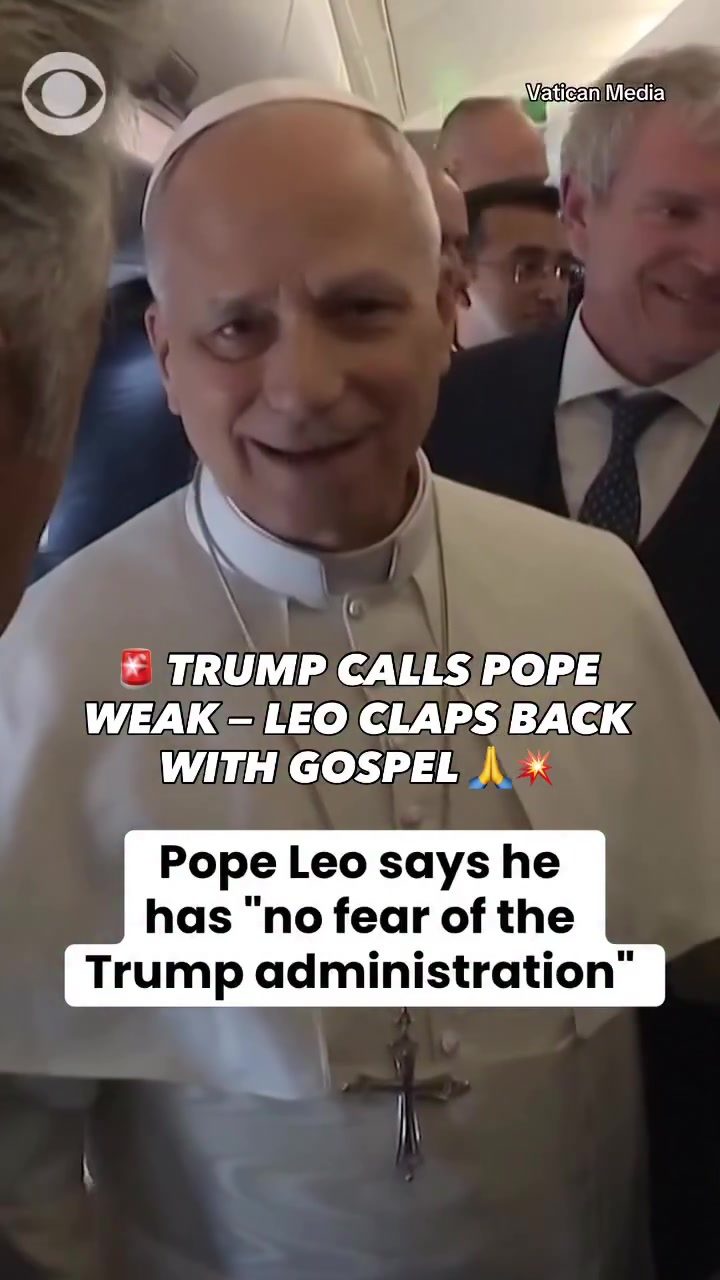
Pope Leo's Response to Trump: A Stand for the Gospel
Pope Leo's recent statement in response to President Donald Trump's criticism sheds light on the Catholic Church's stance on global politics and its unwavering commitment to the Gospel message. The exchange, which unfolded on Truth Social, has sparked a significant dialogue about the intersection of faith and politics.
Context / Why this matters
The exchange between Pope Leo and President Trump is noteworthy for several reasons. Firstly, it highlights the ongoing dialogue between religious leaders and political figures, particularly in the context of international relations and diplomacy. Secondly, it underscores the Vatican's position on global issues, emphasizing the Church's role as a peacemaker rather than a political entity.
Main discussion
The Trump Administration's Criticism
President Trump's comments on Truth Social characterized Pope Leo as "weak on crime and terrible for foreign policy." This critique comes amidst broader debates about the role of religious institutions in shaping global policies. From Trump's perspective, the Church's influence might seem misaligned with his administration's agenda, leading to public criticism.
Pope Leo's Rebuttal
Pope Leo's response was clear and resolute. He asserted, "I have no fear, neither with the Trump administration, nor speaking out loudly about the message of the gospel." Leo’s stance is grounded in the Church's mission: to deliver the Gospel message of peace and unity.
The Pope emphasized that the Church is not involved in politics or foreign policy making. Instead, the Church's primary role is to spread the message of the Gospel and promote peace. He stated, "We are not politicians. We are not willing to make foreign policies. But I do believe that the message of the Gospel, the listeners of the peacemakers, is the message that the world needs to hear today."
The Message of the Gospel
The Gospel's message of peace is a recurring theme in Pope Leo's response. He refers to the verse from the Sermon on the Mount, "Blessed are the peacemakers, for they will be called children of God." This message resonates deeply with the Church's mission and its stance on global issues.
Pope Leo believes that the Gospel's message of peace is more important than political alignments or foreign policies. He connects this message to the current global climate, suggesting that the world needs to hear this message more than ever.
Practical tips
For Political Leaders
Political leaders can learn from Pope Leo's response by understanding the importance of dialogue and mutual respect. Engaging in constructive dialogue with religious leaders can foster better relationships and promote global peace.
For Religious Leaders
Religious leaders can reinforce their mission by focusing on the core values of their faith. For the Catholic Church, this means continuing to spread the message of the Gospel and promoting peace. Engaging in political debates should be secondary to their primary mission.
Important takeaways
The Role of the Catholic Church
The Catholic Church, under Pope Leo's leadership, remains steadfast in its mission to spread the Gospel message. The Church's role as a peacemaker is central to its identity and global influence.
Faith vs. Politics
The exchange between Pope Leo and President Trump highlights the ongoing tension between faith and politics. While political leaders may have different agendas, religious leaders must prioritize their core mission and values.
Conclusion
Pope Leo's response to President Trump's criticism underscores the Vatican's unwavering commitment to the Gospel message and its role as a global peacemaker. The exchange serves as a reminder of the Church's unique position in global politics and its mission to promote peace and unity. Moving forward, both political and religious leaders must respect each other's roles and engage in constructive dialogue.
Watch the Reel
Questions readers ask
What prompted Pope Leo to respond to President Trump?
Pope Leo responded to President Trump after the latter's criticism, which was expressed on the social media platform Truth Social. This exchange highlighted the ongoing dialogue between religious leaders and political figures, particularly in the context of international relations and diplomacy.
What is the core message that Pope Leo is defending?
Pope Leo is defending the Gospel message of peace and unity, which is a central tenet of the Catholic Church. This message emphasizes love, compassion, and global harmony, distinguishing the Church's mission from political agendas.
How does the Vatican view its role in global politics?
The Vatican sees its role as a global peacemaker, focusing on fostering unity and dialogue among nations. This perspective is evident in Pope Leo's response to Trump, where he emphasizes the Church's commitment to peace and unity over political entanglements.
What does the exchange between Pope Leo and Trump reveal about the intersection of faith and politics?
The exchange underscores the complex relationship between faith and politics. It demonstrates how religious leaders and political figures navigate their roles and responsibilities, with Pope Leo reaffirming the Church's mission to promote peace and unity, regardless of political pressures.
What is the significance of this dialogue between Pope Leo and President Trump?
This dialogue is significant because it brings to the forefront the Catholic Church's stance on global politics and its commitment to the Gospel message. It also highlights the Church's role in promoting peace and unity, emphasizing its mission over political agendas.
What is the Catholic Church's message in the context of global politics?
The Catholic Church's message, as reaffirmed by Pope Leo, is one of peace and unity. The Church aims to be a global peacemaker, promoting harmony and understanding among nations, rather than aligning with specific political agendas.
What was Pope Leo's fear as implied in his response to Trump?
Pope Leo's fear, as implied in his response, is the potential misalignment of the Church's mission with political agendas. He emphasizes the need to uphold the Gospel message of peace and unity, which might be compromised if the Church becomes entangled in political conflicts.
Recent articles
Fresh deep dives from the latest Reels we unpacked.




Comments
Be the first to comment.