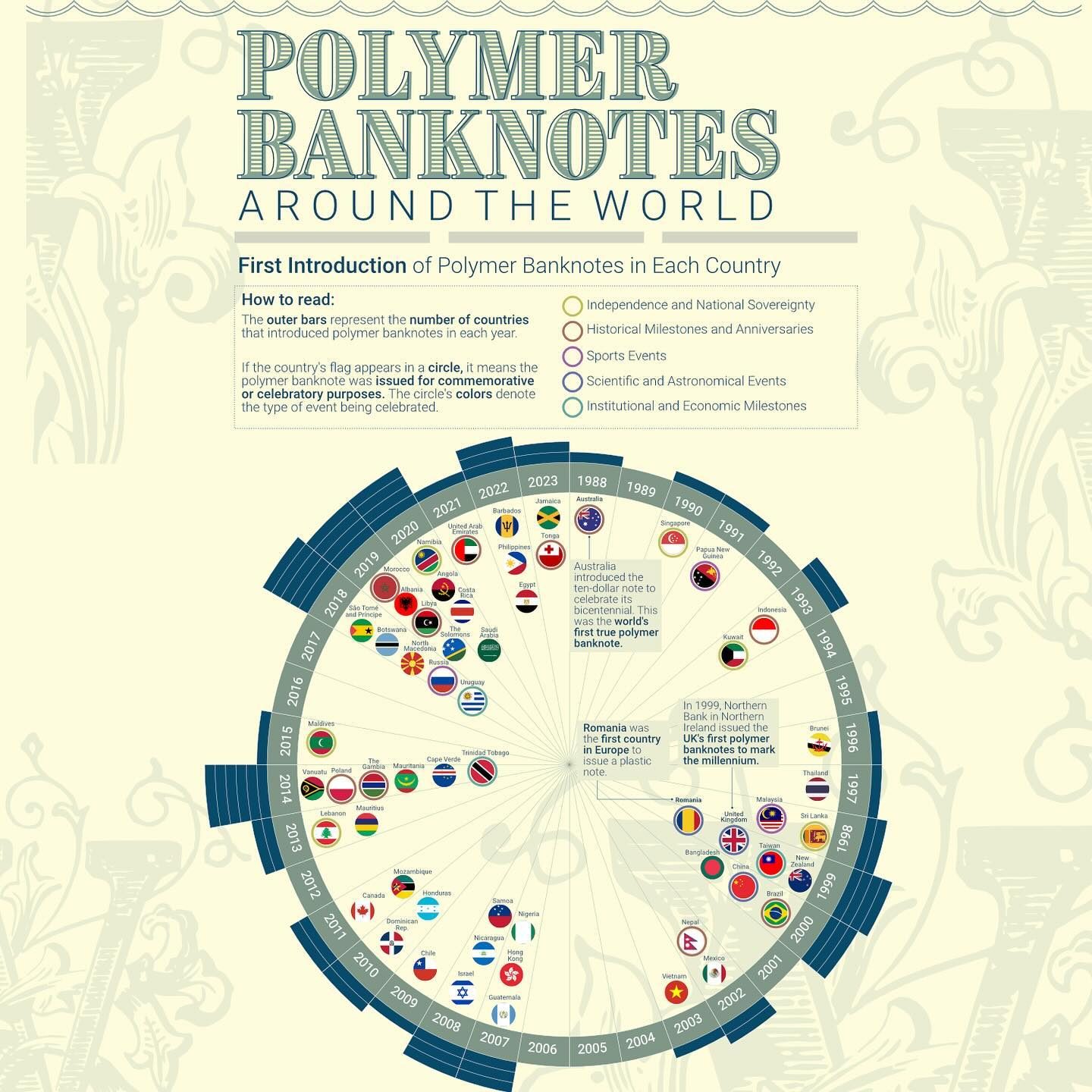
Polymer Banknotes Around the World
Polymer banknotes have become increasingly prevalent around the globe, with nearly 60 countries adopting this innovative currency. The transition from traditional paper banknotes to polymer notes has been driven by several key factors, including the need to combat counterfeiting, reduce production costs, and extend the lifespan of currency. Australia led the way in 1996, introducing the first polymer banknotes.
These polymer notes offer several advantages over their paper counterparts. Firstly, they are more durable and resistant to wear and tear, which means they last longer in circulation. This durability helps to cut production costs over time, as fewer notes need to be replaced. Secondly, polymer banknotes are more difficult to counterfeit, thanks to advanced security features such as transparent windows and holographic images.
Countries around the world have embraced polymer banknotes for various reasons, often commemorating significant national events on the notes. Independence and national sovereignty are common themes, as are historical milestones and anniversaries. Sports events, scientific and astronomical events, and institutional and economic milestones are also frequently featured. The use of color-coded circles in the infographic highlights these different event categories, providing a visual representation of the diverse reasons behind the adoption of polymer currency.
Why This Matters
The shift to polymer banknotes is more than just a technological upgrade; it's a strategic move by governments to enhance the efficiency and security of their monetary systems. By adopting polymer banknotes, countries can ensure that their currency remains secure, durable, and cost-effective. This is particularly important in an era where counterfeiting is a growing concern and where governments are under pressure to manage public finances more effectively.
Main Discussion
The Global Adoption of Polymer Banknotes
Australia's introduction of polymer banknotes in 1996 set a global trend. Following Australia, several other countries began to adopt polymer currency, each with its own unique timeline and motivations. Countries like Romania, Vietnam, and Brazil have all made the switch, each bringing their own cultural and national themes to the design of their polymer notes. Romania, for instance, was one of the earliest adopters, issuing its first polymer banknote in 1996.
Key Benefits of Polymer Banknotes
Polymer banknotes offer several key benefits:
- Enhanced Security: The advanced security features of polymer banknotes make them much harder to counterfeit. This is a critical advantage in an era where technological advancements are making it easier for counterfeiters to replicate traditional paper currency.
- Durability: Polymer notes are more resilient and can withstand repeated folding, crumpling, and washing better than paper notes. This longevity means that they remain in circulation for longer periods, reducing the need for frequent replacement.
- Cost-Effectiveness: The durability and longer lifespan of polymer banknotes translate into significant cost savings for governments. Fewer notes need to be printed, and the overall production costs are lower compared to paper notes.
- Eco-Friendly: Polymer notes are often more environmentally friendly than paper notes. They can be recycled, and their longer lifespan means fewer resources are used in production.
Event Commemorations on Polymer Banknotes
Many countries use the introduction of new polymer banknotes as an opportunity to commemorate significant events or achievements. Independence and national sovereignty are common themes, as seen in various countries' currency designs. For example, some nations feature historical milestones and anniversaries, while others highlight significant sporting events, scientific discoveries, or economic achievements.
Country-Specific Examples
- Australia: As the pioneer, Australia's polymer banknotes often feature iconic landscapes and native wildlife, alongside security features that make them difficult to replicate.
- Romania: Romania was the first European country to issue a polymer banknote, focusing on themes of national heritage and historical milestones.
- Brazil: Brazil's polymer notes often feature cultural symbols and national achievements, reflecting the country's rich heritage and vibrant culture.
- Malaysia: Malaysia introduced polymer notes to combat counterfeiting and to reduce the environmental impact of currency production. The notes feature local wildlife and cultural landmarks, making them a unique blend of security and national identity.
Practical Tips
If you're interested in collecting or understanding the history of polymer banknotes, here are a few practical tips:
- Start with Australia: Australia's polymer banknotes are a great starting point for any collection, given their pioneering role.
- Research: Use resources like Wikipedia and specialized coin and banknote websites to learn more about the history and design of polymer notes from different countries.
- Look for Special Editions: Many countries issue special editions or commemorative notes, which can be particularly valuable and interesting to collect.
- Join a Community: Online forums and clubs dedicated to currency collecting can provide valuable insights and resources.
Important Takeaways
- The adoption of polymer banknotes is a global trend driven by the need for enhanced security, durability, and cost-effectiveness.
- Countries around the world have used polymer banknotes to commemorate significant national events and achievements.
- Polymer notes offer several advantages, including advanced security features, longer lifespan, and environmental benefits.
- Starting a collection or deepening your understanding of polymer banknotes can be a fascinating journey into global history and culture.
Conclusion
The introduction of polymer banknotes has revolutionized the way we think about currency. From Australia to Romania and beyond, countries have embraced this innovation for its practical benefits and as a means to celebrate their unique identities. Whether you're a collector, a history enthusiast, or simply curious about the future of currency, polymer banknotes offer a captivating glimpse into the evolving world of finance and national heritage.
Watch the Reel
Questions readers ask
Which country first introduced polymer banknotes?
Australia was the pioneer in adopting polymer banknotes. The country launched its first polymer currency in 1996, marking a significant milestone in the global adoption of this innovative form of currency.
How many countries have adopted polymer banknotes?
As of now, nearly 60 countries have transitioned to using polymer banknotes. This widespread adoption highlights the benefits and advantages that polymer currency offers over traditional paper banknotes.
What are the main advantages of polymer banknotes over paper notes?
Polymer banknotes offer several key advantages, including enhanced durability, which extends their lifespan in circulation. They are also more difficult to counterfeit, thanks to advanced security features. Additionally, their longevity helps to reduce production costs over time.
Why is durability an important factor in the adoption of polymer banknotes?
Durability is a crucial factor because it reduces the frequency of banknote replacement. Polymer banknotes can withstand wear and tear better than paper notes, which means they last longer and require less frequent replacement, leading to lower long-term production costs.
How do polymer banknotes help in reducing counterfeiting?
Polymer banknotes incorporate advanced security features that make them more difficult to replicate. These features include holograms, clear windows, and microtext, which significantly enhance their resistance to counterfeiting compared to traditional paper notes.
What are some notable milestones in the history of polymer banknotes?
One of the most notable milestones is Australia's introduction of the first polymer banknotes in 1996. Since then, many other countries have followed suit, each highlighting significant national events or achievements with unique polymer currency designs.
How do polymer banknotes benefit a country's economy?
Polymer banknotes benefit a country's economy by reducing the costs associated with banknote production and replacement. Additionally, the increased durability and resistance to counterfeiting contribute to a more stable and secure currency, which can foster trust in the financial system.
Related deep dives
Similar reads based on topic and creator.

Recent articles
Fresh deep dives from the latest Reels we unpacked.




Comments
Be the first to comment.