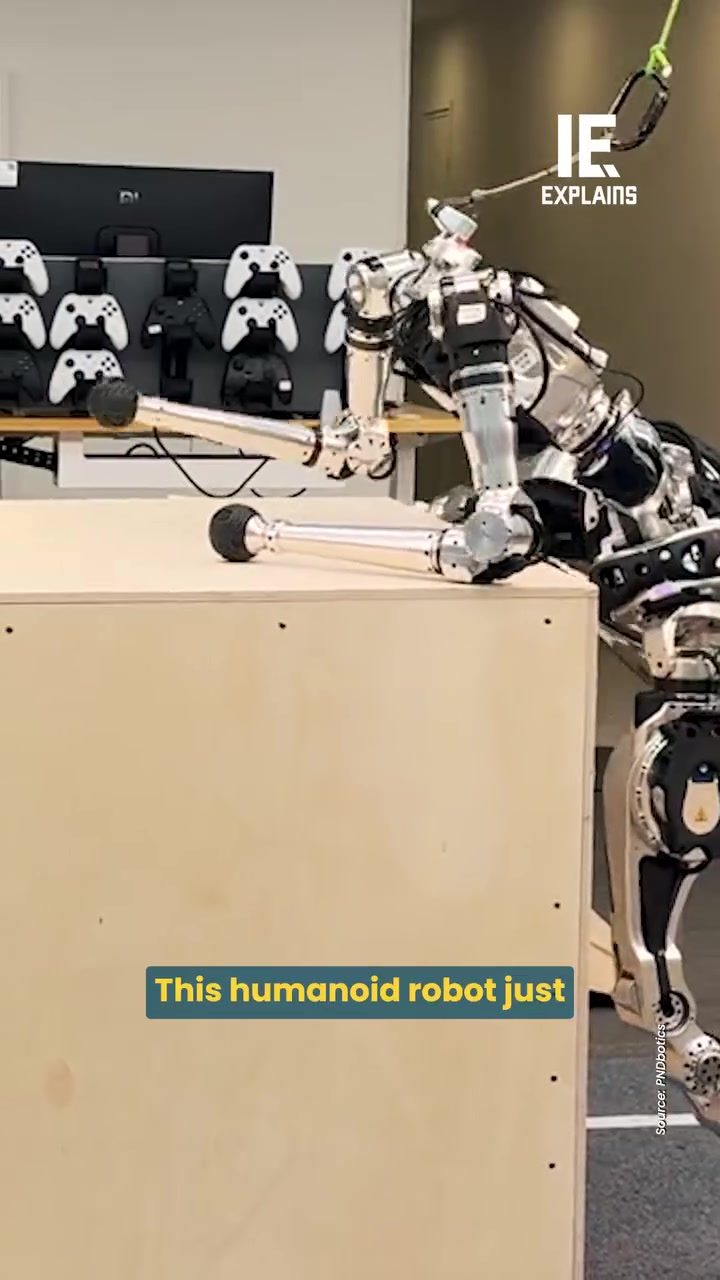
Humanoid Robotics: PND Robotics' Adam Climbs New Heights
Humanoid robots have long been a staple in science fiction, but recent advancements by companies like PND Robotics are turning these fictional dreams into tangible realities. One of the most impressive demonstrations of this progress is the Adam humanoid robot, which has successfully climbed onto a one-meter-high box, a feat that no other full-size humanoid robot has achieved. This accomplishment highlights the cutting-edge capabilities of PND Robotics' engineering and AI integration.
Why This Matters
The ability of a humanoid robot to climb a box that is more than half its own height is more than just a spectacle; it's a significant milestone in robotics. The real world is not flat, and robots that can navigate uneven surfaces, stairs, and ledges can work in environments where humans do. This capability opens up new possibilities for humanoid robots in various industries, from manufacturing to healthcare, where adaptability and versatility are crucial.
Advanced Engineering and AI Integration
Design and Specifications
Adam, the humanoid robot developed by PND Robotics, stands at approximately 1.6 meters tall and weighs around 60 kilograms. These dimensions make it a full-size humanoid, capable of navigating spaces designed for humans. The climb onto a one-meter-high box is a testament to its design and engineering. To achieve this, Adam has to plant a foot, shift its entire body weight onto one leg, and push itself up without tipping over. This maneuver requires precise control over single-leg balance, joint torque, and whole-body coordination.
Force-Controlled Actuators
Under the hood, Adam is powered by force-controlled quasi-direct drive actuators, delivering up to 340 Nm of torque in the leg joints. These actuators are essential for the robot's ability to perform complex movements with precision. The actuators work in conjunction with AI motion policies, which are trained in simulation before being transferred to the real robot. This approach ensures that the robot can execute tasks with a high degree of accuracy and reliability.
Testing and Improvements
Initial Benchmarks
Earlier research and demonstrations showed Adam managing to climb 75 cm boxes. This year, however, the robot has made significant strides, successfully climbing a full meter. This progression is not just about height; it's about improving the robot's overall performance and adaptability. The success of climbing a one-meter box indicates that the robot's design and AI algorithms have been refined to handle more challenging scenarios.
Real-World Applications
But the advancements don't stop at boxes. Adam has also demonstrated its ability to climb real outdoor stairs without any harness or tether. This real-world testing is crucial for understanding how the robot performs in practical, unstructured environments. The ability to navigate stairs and ledges is a significant step forward, as it allows the robot to operate in a wider range of settings, from industrial sites to urban environments.
Practical Tips for Humanoid Robot Development
Developing a humanoid robot capable of such feats involves several key considerations:
Balancing Act
One of the primary challenges in humanoid robotics is maintaining balance, especially when performing complex movements like climbing. Adam's ability to shift its weight and push itself up without tipping over highlights the importance of advanced force control and precise motor coordination.
Simulations and Real-World Testing
Training AI motion policies in simulation before transferring them to the real robot allows for iterative improvements. This approach enables developers to test and refine the robot's movements in a controlled environment before deploying it in the real world, ensuring that the robot can handle a variety of challenges.
Adaptability
Incorporating force-controlled actuators and AI motion policies makes the robot more adaptable. This capability is essential for navigating unpredictable environments, where the robot must respond to changing conditions and obstacles in real-time.
Important Takeaways
The climb of the Adam humanoid robot onto a one-meter-high box is a significant achievement in the field of robotics. It showcases the potential of advanced engineering and AI integration in creating robots that can operate in complex, real-world environments. The capabilities demonstrated by Adam have wide-ranging implications, from industrial applications to healthcare and beyond.
Conclusion
Humanoid robots like Adam are pushing the boundaries of what's possible in robotics. The ability to climb onto a one-meter-high box and navigate outdoor stairs demonstrates the potential for these robots to work in environments designed for humans. As companies like PND Robotics continue to refine their designs and AI algorithms, the future of humanoid robotics looks increasingly promising. The advancements in force control, balance, and adaptability are not just about achieving impressive feats; they're about creating robots that can make a real difference in the world.
Watch the Reel
Questions readers ask
What makes Adam's ability to climb a one-meter box significant?
Adam's feat is significant because it demonstrates advanced torque control and joint coordination, allowing the robot to navigate uneven surfaces and overcome obstacles taller than half its height. This capability is crucial for real-world applications where robots need to adapt to varied and challenging environments.
How does Adam's accomplishment compare to other humanoid robots?
Adam is the first full-size humanoid robot to successfully climb a one-meter-high box, showing it has more advanced climbing capabilities than its counterparts. This achievement underscores the innovative engineering and AI integration at PND Robotics.
What challenges does climbing a box pose to a humanoid robot like Adam?
Climbing a box requires precise control over the robot's torque and intricate coordination of its joints. Additionally, the robot must maintain stability and balance while ascending, making it a complex and demanding task. PND Robotics' success with Adam demonstrates a high level of mastery in these areas.
How might Adam's climbing abilities be useful in industrial settings?
In industrial settings, robots like Adam can navigate uneven terrain, climb over obstacles, and access hard-to-reach areas, making them invaluable for tasks such as maintenance, inspection, or working in environments designed for human workers.
What does Adam's success imply about the future of humanoid robotics?
Adam's success implies a future where humanoid robots are increasingly capable of performing complex tasks in real-world environments. As robots like Adam advance, we can expect to see them taking on more versatile and demanding roles across various industries.
What role did PND Robotics' engineers play in Adam's achievement?
PND Robotics' engineers played a pivotal role by designing and integrating advanced AI and engineering solutions. Their work enabled Adam to possess the necessary capabilities, including precise torque control and joint coordination, to achieve this significant milestone.
How does Adam’s body size and design contribute to its climbing ability?
Adam's full-size humanoid design, combined with its advanced engineering, allows it to face challenges similar to those encountered by human workers. This design enables Adam to navigate and climb in ways that smaller or differently designed robots cannot, making it particularly suited for tasks requiring adaptability and versatility.
Related deep dives
Similar reads based on topic and creator.


Recent articles
Fresh deep dives from the latest Reels we unpacked.




Comments
Be the first to comment.