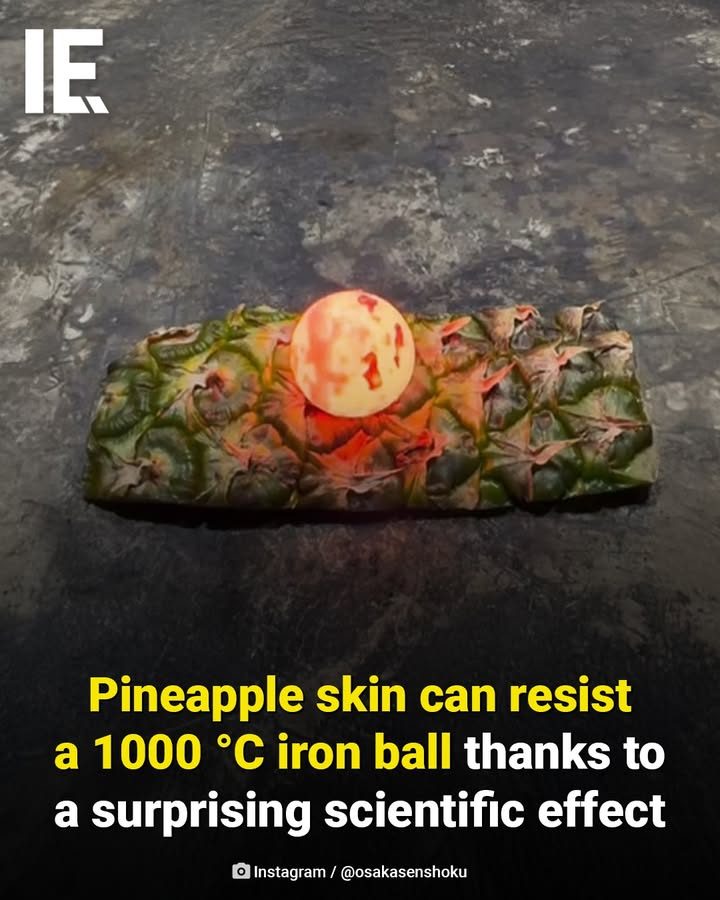
Pineapple Skin: The Surprising Heat-Resistant Properties
Pineapple skin, typically discarded as waste, harbors an astonishing secret: it can withstand extreme heat. This remarkable property is attributed to a scientific phenomenon known as the Leidenfrost effect. Let’s delve into the science behind this intriguing discovery and explore its potential applications.
Context / Why this Matters
Understanding why pineapple skin can resist such high temperatures is not merely a curiosity but could have significant implications for various industries. The heat resistance of pineapple skin could inspire new materials for heat shields and other protective applications.
The Science Behind Pineapple Skin's Heat Resistance
The Leidenfrost Effect
The key to pineapple skin's heat resistance lies in the Leidenfrost effect. This phenomenon occurs when a liquid comes into contact with a surface much hotter than its boiling point. In this case, the moisture in the pineapple skin vaporizes instantly upon contact with a 1000°C iron ball, forming a protective layer of steam. This steam layer insulates the skin, preventing it from burning.
The Role of Moisture
The moisture content in pineapple skin plays a crucial role in this heat-resistant property. When the hot iron ball touches the skin, the moisture vaporizes rapidly, creating the steam layer that shields the skin from the extreme heat. This dynamic process ensures that the pineapple skin remains intact even under such harsh conditions.
Experimental Demonstration
The demonstration involves placing a 1000°C iron ball on the pineapple skin. This extreme heat test showcases the skin's ability to withstand high temperatures without burning. The rapid vaporization of moisture and the formation of the steam layer are key to this resistance, highlighting the unique properties of pineapple skin.
Practical Tips for Exploring Heat Resistance in Food
If you're intrigued by the heat-resistant properties of pineapple skin and want to explore similar effects in other foods, here are some practical tips:
Conducting Your Own Experiments
To conduct your own experiments, you'll need a controlled environment and the right equipment. Ensure you have a heat-resistant surface and a reliable heat source, such as a high-temperature iron ball. Always prioritize safety and follow proper safety protocols when handling high temperatures.
Selecting the Right Foods
While pineapple skin demonstrates remarkable heat resistance, other foods may also exhibit similar properties. Foods with high moisture content are likely candidates. Consider experimenting with other fruits, vegetables, and even meats to see how they react to extreme heat.
Documenting Your Findings
Keep detailed notes and recordings of your experiments. Document the temperature settings, the type of food used, and the outcome of each test. This will help you identify patterns and understand the underlying mechanisms behind heat resistance in different foods.
Important Takeaways
-
Pineapple Skin's Unique Properties: Pineapple skin can withstand extreme heat due to the Leidenfrost effect, which involves the rapid vaporization of moisture to form a protective steam layer.
-
Potential Applications: The heat-resistant properties of pineapple skin could inspire future developments in heat shields and other protective materials. This natural phenomenon offers insights into creating more durable and heat-resistant materials.
-
Experimental Opportunities: Conducting experiments with pineapple skin and other foods can provide valuable insights into heat resistance. Always prioritize safety and document your findings for further analysis.
Conclusion
The heat-resistant properties of pineapple skin are a testament to the wonders of nature and the fascinating world of thermal science. By understanding the Leidenfrost effect and the role of moisture in this phenomenon, we can explore new avenues for developing heat-resistant materials. Whether you're a science enthusiast or a curious cook, experimenting with pineapple skin offers a unique glimpse into the extraordinary properties of everyday foods.
Watch the Reel
Questions readers ask
What is the Leidenfrost effect and how does it relate to pineapple skin?
The Leidenfrost effect is a phenomenon where a liquid, in this case, the moisture in pineapple skin, rapidly vaporizes upon contact with a surface much hotter than its boiling point. This creates an insulating layer of steam, which protects the skin from the extreme heat.
Can pineapple skin really withstand extreme heat like video demonstrations show?
Yes, pineapple skin can withstand extreme heat due to the Leidenfrost effect. For instance, videos show pineapple skin surviving contact with an iron ball heated to 650°F (343°C) without any sign of burning or scorching.
What happens when pineapple skin is exposed to high temperatures?
When pineapple skin is exposed to high temperatures, the moisture within the skin quickly vaporizes, forming a protective layer of steam. This steam layer acts as a barrier, preventing the heat from directly affecting the skin.
What are the potential applications of pineapple skin's heat resistance?
The heat resistance of pineapple skin could inspire the development of new materials for heat shields and other protective applications. This could be particularly useful in industries where extreme heat is a concern, such as aerospace and automotive engineering.
Who discovered the ability of pineapple skin to withstand extreme temperatures?
The discovery of pineapple skin's heat resistance was made by Osaka Senshoku, a student from Japan. They found that the skin could withstand temperatures up to 300°C (572°F) without being damaged, inspiring further research into this intriguing phenomenon.
Related deep dives
Similar reads based on topic and creator.




Recent articles
Fresh deep dives from the latest Reels we unpacked.




Comments
Be the first to comment.