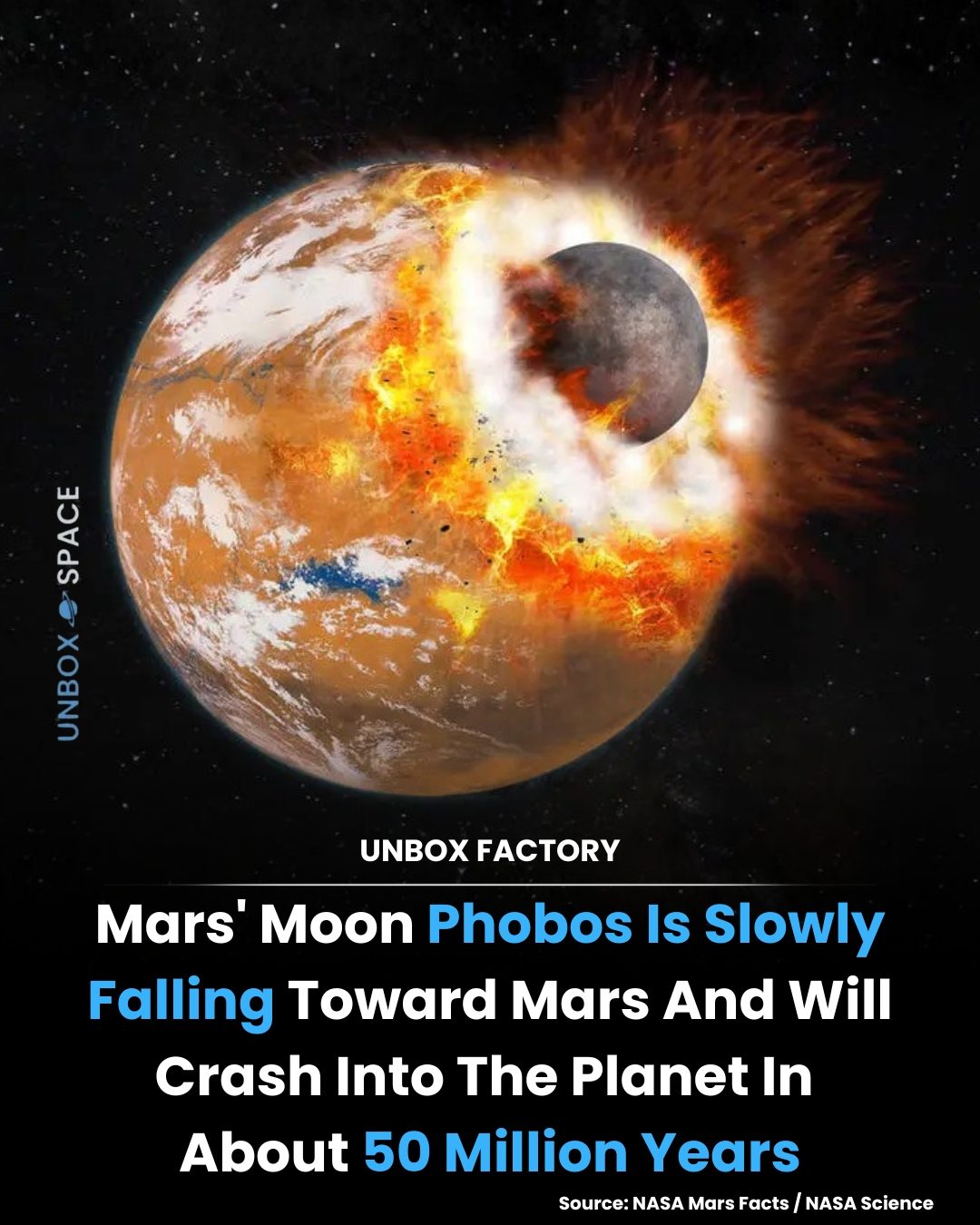
Phobos, the larger of Mars' two tiny moons, is in a unique situation. Unlike most moons, which orbit at a relatively safe distance, Phobos is spiraling inward at a rate of about 1.8 meters per year. This slow but inevitable journey towards Mars will culminate in a dramatic event approximately 50 million years from now. This process is a result of gravitational forces and tidal interactions between Phobos and Mars.
Why This Matters
Mars and Phobos are part of a dynamic, ever-changing solar system. The gravitational tug-of-war between planets and their moons usually results in moons gradually moving away from their planets. However, Phobos' inward spiral is a notable exception. Understanding this phenomenon offers insights into the complex interactions that shape the solar system. The fate of Phobos also provides a glimpse into the potential long-term impacts on Mars, even if the event is millions of years away.
Spiral In, What Will Happen?
Phobos' Orbit and Gravity
Phobos orbits Mars at a distance of just 6,000 km, making it the closest moon to its planet in the solar system. This proximity places it within the gravitational influence of Mars, where tidal forces play a crucial role. These forces cause Phobos to slowly lose altitude, drawing it closer to the Martian surface. The tidal forces are not only pulling Phobos inward but also gradually accelerating its orbital decay.
The Endgame: 50 Million Years from Now
In about 50 million years, Phobos will reach a point where Mars' tidal forces will be too strong for the moon to maintain its integrity. At this stage, Phobos will likely be torn apart by these forces, resulting in one of two possible outcomes. The fragments could either form a debris ring around Mars or crash into the planet's surface in a catastrophic bombardment.
Implications for Mars
If Phobos disintegrates into a debris ring, this new ring system could potentially alter Mars' surface environment and climate. On the other hand, if the fragments crash into Mars, the impact would reshape the planet's surface, creating new geological features and potentially altering its atmospheric composition.
The Science Behind the Event
Tidal Forces
Tidal forces, the gravitational interaction between two celestial bodies, are the driving force behind Phobos' inward spiral. These forces cause a bulge in Mars that pulls Phobos closer, while Phobos' own gravity pulls on Mars, causing the planet to bulge out slightly. This interaction creates a torque that gradually slows the moon's orbital velocity, causing it to spiral inward.
Orbital Dynamics
Phobos' proximity to Mars means it orbits faster than the planet's rotational speed, which is relatively unique. This fact alone makes the gravitational and tidal forces affecting Phobos different from what most moons experience in the solar system, contributing to its inward spiral.
Practical Tips
While the event is millions of years away, understanding gravitational interactions and tidal forces can be practical for space exploration and future missions. Knowing how moons and planets interact can inform the design of spacecraft and orbital stations, ensuring they remain stable and safe from these forces.
Important Takeaways
Phobos’ journey towards Mars is a reminder of the dynamic nature of the solar system. Understanding this phenomenon can offer insights into the broader principles of celestial mechanics and tidal forces. While the event is far in the future, it highlights the importance of considering the long-term effects of gravitational interactions in space exploration and future missions.
Conclusion
The eventual collision or disintegration of Phobos into Mars is a fascinating example of the ever-changing nature of the solar system. The moon's unique descent toward Mars, driven by gravitational forces and tidal interactions, offers valuable insights into celestial mechanics. As we continue to explore and understand the cosmos, these interactions serve as a reminder that even seemingly static celestial bodies are in constant motion and change.
Watch the Reel
Questions readers ask
Why is Phobos moving closer to Mars?
Phobos is moving closer to Mars due to a complex interplay of gravitational forces and tidal interactions. Unlike many other moons, which are pushed away from their planets, Phobos is experiencing a gradual but steady inward spiral, drawing it closer to Mars at a rate of about 1.8 meters per year.
What will happen when Phobos crashes into Mars?
When Phobos crashes into Mars in approximately 50 million years, it will result in a significant and dramatic event. The exact consequences are uncertain, but the impact will likely cause substantial changes to the Martian surface and potentially alter the moon's gravitational influence on Mars.
How do the moons of Mars compare to other moons in the solar system?
Mars has two small moons, Phobos and Deimos, that are quite different from most other moons in the solar system. While many moons are tidally locked and orbit at a safe distance, Phobos' unique death spiral makes it a notable exception to typical celestial interactions.
What causes the dynamic interactions in the solar system?
The dynamic interactions in the solar system, such as the orbit and motion of celestial bodies, are a result of gravitational forces and tidal interactions. These forces can lead to either a gradual increase or decrease in the distance between a moon and its planet, as seen in the case of Phobos and Mars.
What makes Phobos' collision with Mars significant for understanding the solar system?
Phobos' collision with Mars is significant because it showcases the complex and dynamic nature of celestial interactions. By studying this event, scientists can gain a deeper understanding of the gravitational forces and tidal interactions that shape the trajectories of celestial bodies in the solar system.
How long will it take for Phobos to collide with Mars?
Phobos' journey towards Mars is expected to culminate in a collision approximately 50 million years from now. This prolonged process is a result of the gradual yet inexorable gravitational interactions between Phobos and Mars, drawing the moon closer at a rate of 1.8 meters per year.
Related deep dives
Similar reads based on topic and creator.


Recent articles
Fresh deep dives from the latest Reels we unpacked.




Comments
Be the first to comment.