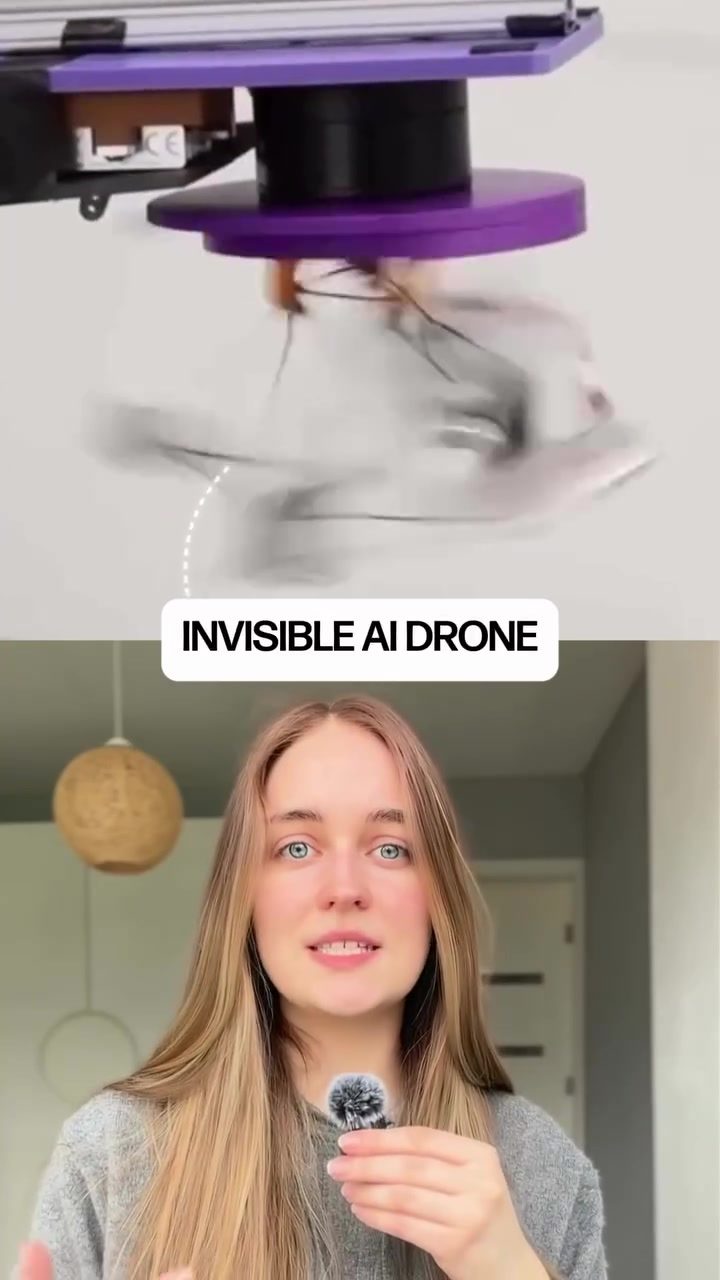
Drone Invisibility: The Phantom Twist by Northwestern University
Drone technology continues to push boundaries, and the Phantom Twist from Northwestern University is a testament to this innovation. This drone is designed to be nearly invisible when in flight, making it a groundbreaking tool for various applications. Let's delve into how this drone achieves its stealthy capabilities and explore its potential uses.
Why this matters
The Phantom Twist is not just another drone; it represents a significant advancement in drone design and functionality. By exploiting a flaw in human vision, this drone can operate discreetly, opening up new possibilities for both research and surveillance. Understanding the technology behind the Phantom Twist can provide insights into future innovations in drone design and their potential applications.
The Science Behind the Phantom Twist
Exploiting Human Vision
The Phantom Twist's invisibility is achieved through a clever manipulation of human vision. The entire drone spins between 15 and 25 times per second. This high-speed rotation takes advantage of a phenomenon known as persistence of vision, where the human eye takes around 100 milliseconds to process visual information. Anything rotating that fast appears as a blur, effectively making the drone nearly invisible to the naked eye. This principle is similar to how a spinning fan blade appears to disappear at high speeds, becoming a blur in perception.
Design and Structure
The drone's intricate design plays a crucial role in its stealth capabilities. The entire structure is held together by thin carbon fiber rods, allowing for a lightweight and robust frame. This material choice is not arbitrary; it enables the drone to be both durable and agile. This design also gives the drone its unique, spider-like appearance, which contribute to its aesthetic appeal.
AI and Computer Optimization
The placement of every component within the drone is optimized by a computer, guided by an AI vision model. This AI model scores how invisible each design looks to human eyes, ensuring that the final product is as stealthy as possible. The optimization process involves evaluating roughly 20,000 possible designs. The winning design is an order of magnitude harder to see than a normal quadcopter, making it a significant leap forward in drone technology.
Single-Motor Operation
One of the most impressive features of the Phantom Twist is its single-motor operation. This motor pushes its thrust at the perfect instant of each rotation to steer the drone, while the spinning keeps it naturally stable. This design not only simplifies the drone's mechanics but also enhances its maneuverability and efficiency. The use of a single motor also reduces the drone's weight and energy consumption, making it more efficient for long-distance flights.
Potential Applications
Wildlife Observation
One of the most exciting applications of the Phantom Twist is in wildlife observation. Traditional drones can often disturb animals, altering their natural behaviors. The Phantom Twist, with its near-invisibility, can observe animals without causing any disruption. This makes it an invaluable tool for researchers and conservationists who need to monitor wildlife without interfering with their habitats.
The drone's ability to fly undetected means that researchers can gather data on animal behavior, migration patterns, and population trends without the animals being aware of their presence. This can provide more accurate and reliable data, leading to better conservation strategies and a deeper understanding of the natural world.
Surveillance
The obvious use case for a nearly invisible drone is covert surveillance. The Phantom Twist can fly over areas without being detected, making it an ideal tool for security and intelligence agencies. Its stealth capabilities make it difficult for anyone to know it is even there, ensuring that surveillance operations can be carried out discreetly and effectively.
Research and Development
The technology behind the Phantom Twist opens up new avenues for research and development in drone design. The principles of persistence of vision and AI-driven optimization can be applied to other drones and even other technologies. This could lead to the development of even more advanced and stealthy drones in the future.
Practical Tips for Using the Phantom Twist
Handling and Deployment
When handling and deploying the Phantom Twist, it is important to follow the manufacturer's guidelines to ensure optimal performance. The drone's unique design and high-speed rotation require careful handling to avoid any damage. It is also crucial to calibrate the drone properly before each flight to ensure that its stealth capabilities are fully utilized.
Battery and Maintenance
Given the drone's single-motor operation and lightweight design, it is important to monitor the battery life closely. Regular maintenance is also essential to keep the drone in optimal condition. This includes checking the carbon fiber rods for any signs of wear and tear and ensuring that the AI vision model is up-to-date with the latest optimization algorithms.
Ethical Considerations
The use of the Phantom Twist, like any surveillance technology, raises ethical considerations. It is important to use the drone responsibly and ethically, respecting privacy and avoiding misuse. The drone's stealth capabilities should be used for legitimate purposes such as wildlife observation and security, rather than for invasive surveillance or harassment.
Important Takeaways
The Phantom Twist by Northwestern University is a revolutionary drone that leverages the principles of human vision and advanced AI to achieve near-invisibility. Its unique design and single-motor operation make it a versatile tool for wildlife observation, surveillance, and research. The technology behind the Phantom Twist has the potential to influence future drone developments, paving the way for even more advanced and stealthy drones. However, it is important to handle and deploy the drone responsibly, and to consider the ethical implications of its use.
Conclusion
The Phantom Twist represents a significant advancement in drone technology, offering unprecedented stealth capabilities. Its unique design and high-speed rotation make it nearly invisible to the human eye, opening up new possibilities for wildlife observation, surveillance, and research. By understanding the science behind the Phantom Twist and its potential applications, we can appreciate the impact of this innovative technology on various fields. As drone technology continues to evolve, the principles and design elements of the Phantom Twist will undoubtedly influence future developments, shaping the future of drone design and applications.
Watch the Reel
Questions readers ask
How does the Phantom Twist achieve its nearly invisible design?
The Phantom Twist exploits a phenomenon known as persistence of vision. By spinning its blades at high speeds, it creates the illusion that the drone is less visible to the naked eye, blending seamlessly into its surroundings.
What makes the Phantom Twist ideal for surveillance purposes?
The Phantom Twist's stealthy design allows it to monitor areas without being easily detected. This makes it perfect for situations where discretion is crucial, such as wildlife monitoring or security operations.
Can the Phantom Twist be used for research purposes beyond surveillance?
Absolutely. The drone's unique design enables it to observe and record data in environments where human presence might be disruptive or impossible, making it a valuable tool for researchers in various fields.
How does the Phantom Twist's design compare to other drones on the market?
Unlike traditional drones, the Phantom Twist is designed with a focus on stealth and invisibility. While other drones may have advanced cameras or longer flight times, the Phantom Twist stands out for its ability to operate discreetly, making it a notable advancement in drone technology.
Are there any limitations to the Phantom Twist's stealth capabilities?
While the Phantom Twist is designed to be nearly invisible to the human eye, it may still be detectable by other means, such as thermal imaging or advanced tracking systems. Its effectiveness is largely dependent on the specific conditions and the technology used to detect it.
What are the potential applications for the Phantom Twist in wildlife monitoring?
The Phantom Twist can be used to observe and record animal behavior without disturbing the wildlife. This makes it an excellent tool for researchers studying animals in their natural habitats, as it allows for non-intrusive data collection.
How does the Phantom Twist's spinning mechanism contribute to its stealth?
The high-speed spinning of the Phantom Twist's blades creates a visual effect that makes the drone appear less visible. This is due to the persistence of vision, where the human eye perceives continuous motion rather than individual frames, making the drone blend into its surroundings.
Related deep dives
Similar reads based on topic and creator.


Recent articles
Fresh deep dives from the latest Reels we unpacked.
Comments
Be the first to comment.