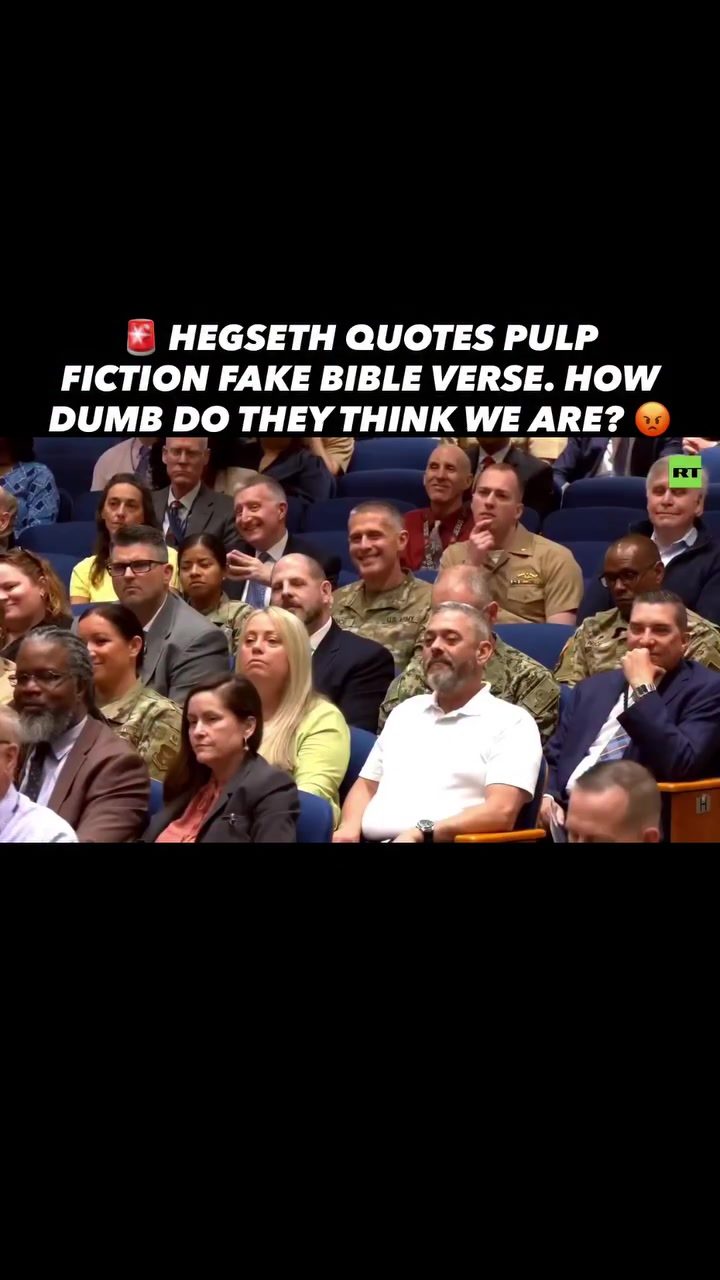
Pete Hegseth's Controversial Use of Pulp Fiction in the Pentagon
Hegseth's decision to quote a fake Bible verse from the movie Pulp Fiction during a speech at the Pentagon has sparked widespread controversy.
Why This Matters
This incident is significant for several reasons. Firstly, it highlights the blurred lines between entertainment and political messaging. Secondly, it raises questions about the appropriateness of using cinematic quotes in serious military and religious contexts. Finally, it underscores the broader implications of how public figures, especially those in high-ranking positions, communicate their ideas and values.
Context and Background
Hegseth, a prominent figure in political and military circles, was at the Pentagon when he delivered a speech that included a controversial quote. The quote in question is from the movie Pulp Fiction, specifically the monologue from Ezekiel 25:17, which glorifies revenge and violence. Hegseth presented this cinematic dialogue as if it were a genuine Bible verse, adding layers of complexity and confusion to his message.
The Monologue and Its Implications
The monologue from Pulp Fiction reads:
And I will strike down upon thee with great vengeance and furious anger those who attempt to capture and destroy my brother. And you will know my callsign is Sandy One when I lay my vengeance upon thee. And you will know my name is the Lord when I lay my vengeance upon thee.
This passage, while powerful in its cinematic context, is deeply problematic when presented as divinely inspired. The movie's context is one of fictional characters and a narrative arc that differs significantly from religious doctrines.
Religious and Military Context
Presenting this quote in a military setting, especially in front of military leaders and service members, is particularly troubling. It suggests a misrepresentation of religious scripture for political gain. This act can be seen as degrading the sanctity of religious texts and using them to justify violent or aggressive actions. The military, which often relies on a strong moral and ethical framework, is not a place for such casual reinterpretations of sacred texts.
Political and Moral Implications
The use of this quote also raises questions about the political and moral integrity of those in power. If a top administration official can so casually misrepresent scripture, what other areas of policy and leadership might be compromised?
The Pentagon as a Setting
The Pentagon, as a symbol of military power and strategic decision-making, is a significant location for this incident. The fact that this happened in such a setting underscores the gravity of the situation. The military often prides itself on discipline, honor, and respect for tradition. By contrast, Hegseth's actions represent a disregard for these values, substituting them with a flippant and misleading use of cinema.
Practical Tips for Public Figures
For public figures, especially those in high-ranking positions, it is essential to understand the importance of accurate representation and the impact of their words. Here are some practical tips to avoid such controversies:
- Know Your Sources: Ensure that any quotes or references you use are accurate and come from reliable sources.
- Respect Context: Understand the context in which a quote or reference is being used. A cinematic quote from Pulp Fiction should not be presented as a biblical verse.
- Consider the Audience: Be mindful of who you are speaking to and the setting in which you are speaking. The Pentagon is a place of serious discussion and decision-making, not a venue for casual cinematic references.
- Maintain Integrity: Ensure that your words and actions reflect the values and principles you stand for. Misrepresenting scripture or any other sacred text undermines your credibility and integrity.
For the Public
- Critical Thinking: Always think critically about the information you receive, especially from public figures. Question the sources and context of their claims.
- Engage in Dialogue: Engage in open and respectful dialogue with others. Share your concerns and questions openly and constructively.
- Stay Informed: Keep up-to-date with the news and developments in your community and the world. Being informed helps you make better judgments about the actions and statements of public figures.
Important Takeaways
- Accuracy Matters: The accuracy of references and quotes is crucial, especially in important settings.
- Respect for Sacred Texts: Religious and sacred texts should be handled with respect and integrity.
- Public Responsibility: Public figures have a responsibility to communicate accurately and respectfully, especially in settings of power and influence.
Conclusion
The incident involving Pete Hegseth's use of a Pulp Fiction quote in the Pentagon highlights the importance of accurate representation and respect for sacred texts. It serves as a reminder for public figures to adhere to high standards of integrity and for the public to engage critically with the information they receive.
Watch the Reel
Questions readers ask
What specific quote from Pulp Fiction did Pete Hegseth use in his speech at the Pentagon?
Hegseth quoted the line, 'And I will strike down upon thee with great vengeance and furious anger those who attempt to poison and destroy my brothers...' from the movie Pulp Fiction, which is often mistakenly attributed to the Bible.
Why was Pete Hegseth's use of a Pulp Fiction quote at the Pentagon controversial?
The controversy stems from the inappropriate use of a cinematic quote in a serious military setting, where a biblical verse might be expected. Also, the quote is not a biblical passage and is about vengeance, which some find blasphemous.
What does this incident reveal about the relationship between entertainment and political messaging?
This incident highlights how entertainment and political messaging can blur, with public figures using cultural references to convey ideas and values to the mass population.
How have others in the Pentagon and public reacted to Pete Hegseth's use of a Pulp Fiction quote?
Reactions have varied, with some finding the quote inappropriate and even blasphemous, while others may view it as a simple mistake, raising discussions about the appropriateness of cinematic quotes in serious contexts.
What is the significance of the quote Hegseth used, 'One who name upon thee'?
The quote comes from the movie Pulp Fiction and is not an actual biblical verse. It is part of a fictional monologue about vengeance, which is why its use in a serious military speech sparked controversy and debate.
What impact might this incident have on future public speeches by military figures?
This incident may encourage more caution among public figures about the use of cultural references in serious contexts. The incident is a reminder of the importance of choosing the right words and the power of language in conveying messages adequately.
Related deep dives
Similar reads based on topic and creator.

Recent articles
Fresh deep dives from the latest Reels we unpacked.




Comments
Be the first to comment.