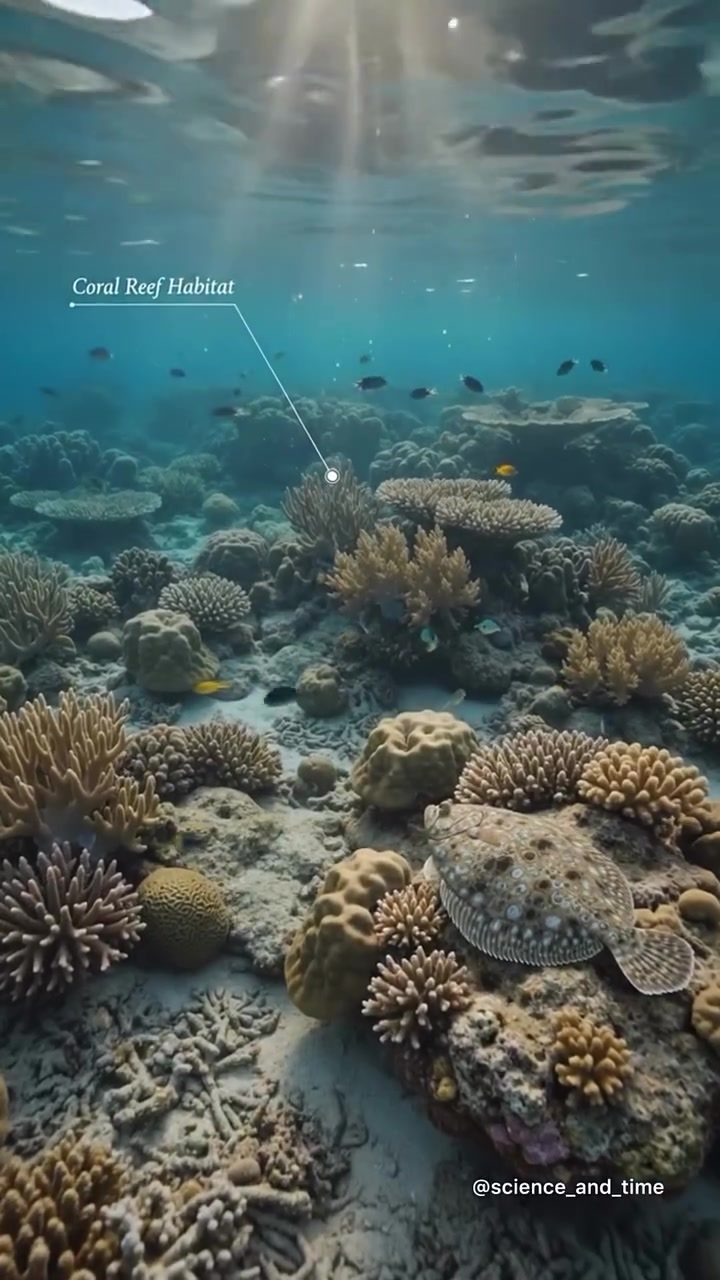
Peacock Flounder: The Ocean's Master of Camouflage
Flatfish, particularly the peacock flounder, are renowned for their extraordinary camouflage abilities. These fish are not just hiding; they are masters of disguise, adapting to their surroundings with remarkable precision.
Why This Matters
The peacock flounder's camouflage is more than just a survival tactic; it's a testament to nature's engineering prowess. By understanding how these fish blend into their environment, we gain insights into advanced camouflage techniques that could inspire innovation in various fields, from military stealth to environmental conservation.
The Peacock Flounder's Camouflage Technique
The peacock flounder's secret weapon is its specialized pigment cells, known as chromatophores. These cells allow the fish to change its color and pattern almost instantaneously, blending seamlessly with its surroundings. When moving from a coral reef to a sandy seabed, the peacock flounder can adjust its appearance to match the new environment. This adaptive coloration helps it evade predators and ambush unsuspecting prey, showcasing nature's remarkable artistry in camouflage.
Chromatophores: The Magic Behind the Camouflage
Chromatophores are specialized cells found in the skin of many animals, including the peacock flounder. These cells contain pigments that can be expanded or contracted, allowing the fish to change its color and pattern. The process is so efficient that the peacock flounder can become almost invisible within seconds, even to fish swimming just above it.
Adapting to Different Habitats
The peacock flounder's camouflage is not a one-size-fits-all solution. As it moves through different habitats, its chromatophores create new colors and patterns to match its surroundings. For instance, in a coral reef, the fish might adopt a mottled, coral-like pattern. In contrast, on a sandy seabed, it might turn a more uniform sandy color. This ability to adapt to various environments makes the peacock flounder a true master of disguise.
Hunting and Survival Strategies
The peacock flounder doesn't just rely on camouflage to survive; it also employs strategic hunting and survival tactics. By remaining perfectly still and hidden, the fish can wait for prey to come within striking range. Once a potential meal is close enough, the peacock flounder can strike in less than a tenth of a second, making it an efficient and deadly predator.
The Peacock Flounder's Unique Eyesight
One of the most intriguing features of the peacock flounder is its unique eyesight. Both eyes are located on one side of its body, allowing it to have a wider field of vision. This adaptation enables the fish to watch almost everything around it while remaining perfectly hidden. The independent movement of its eyes adds an extra layer of vigilance, helping it detect both predators and prey more effectively.
The Peacock Flounder's Impact on Conservation
The peacock flounder's remarkable camouflage and survival skills offer valuable insights for conservation efforts. Understanding how these fish adapt to their environments can help in designing better strategies for protecting marine habitats and the species that depend on them. By studying the peacock flounder, conservationists can learn more about the delicate balance of marine ecosystems and develop more effective ways to preserve them.
Practical Tips for Observing Camouflage in Nature
Observing camouflaged creatures like the peacock flounder can be a fascinating experience. Here are some tips to help you spot these masters of disguise:
-
Patience and Observation: Spend time in natural habitats and observe closely. The more time you spend, the more likely you are to spot camouflaged creatures.
-
Look for Movement: Sometimes, the only clue to the presence of a camouflaged animal is subtle movement. Pay attention to any slight changes in the environment that might indicate an animal's presence.
-
Use Binoculars or Magnifying Glasses: These tools can help you see details that are not visible to the naked eye, making it easier to spot camouflaged creatures.
-
Learn About Local Species: Understanding the types of camouflage used by local species can help you know what to look for. For example, knowing that the peacock flounder blends with coral and sand can guide your search.
Important Takeaways
The peacock flounder's ability to change its color and pattern to match its surroundings is a remarkable example of nature's ingenuity. This adaptive camouflage not only helps the fish survive but also offers valuable insights for various fields, from conservation to military technology.
Conclusion
The peacock flounder is a true master of ocean camouflage, using its specialized chromatophores to blend seamlessly with its environment. Its ability to adapt to different habitats and remain perfectly hidden makes it a fascinating subject of study. By understanding how these fish survive, we can gain valuable insights into nature's engineering and develop more effective strategies for conservation and innovation.
Watch the Reel
Questions readers ask
How quickly can a peacock flounder change its color and pattern?
Peacock flounders can change their color and pattern almost instantaneously, allowing them to blend into their surroundings within seconds. This rapid adaptation is crucial for evading predators and capturing prey effectively.
What are chromatophores and how do they help in camouflage?
Chromatophores are specialized pigment cells found in the skin of peacock flounders. These cells expand and contract to change the fish's color and pattern, enabling it to match its environment. There are different types of chromatophores, each containing specific pigments that contribute to the fish's adaptable camouflage.
Can peacock flounders change their color in different types of water?
Yes, peacock flounders can change their color in various water conditions, including different depths and water clarity. This ability is due to their highly sensitive pigment cells, which respond to changes in light and background, making them effective in a wide range of marine environments.
What is the primary purpose of a peacock flounder's camouflage abilities?
The primary purpose of a peacock flounder's camouflage abilities is to enhance its survival chances. By blending into its surroundings, it can avoid predators and sneak up on prey more effectively, increasing its chances of survival and successful hunting.
How does the peacock flounder's camouflage compare to that of a chameleon?
Both the peacock flounder and the chameleon exhibit remarkable camouflage abilities, but the mechanisms differ. While the chameleon changes color due to the dispersion and aggregation of pigments in its skin, the peacock flounder uses specialized chromatophores to achieve an even more rapid and precise adaptation to its environment.
What role do light and background play in the peacock flounder's color changes?
Light and background are crucial factors in the peacock flounder's color changes. The fish's chromatophores are highly sensitive to light, allowing it to adjust its coloration to match the brightness and pattern of its surroundings, whether it's a sandy ocean floor, a rocky reef, or a muddy seabed.
Can the peacock flounder's camouflage techniques be applied to other fields?
Yes, the peacock flounder's camouflage techniques offer valuable insights that can inspire innovation in various fields. Researchers are exploring applications in military stealth technologies, environmental conservation, and even medical advancements by studying how these fish adapt to their surroundings so effectively.
Related deep dives
Similar reads based on topic and creator.



Recent articles
Fresh deep dives from the latest Reels we unpacked.




Comments
Be the first to comment.