The Rise of Mobile Welding Robots: Patri Robotics' Rove
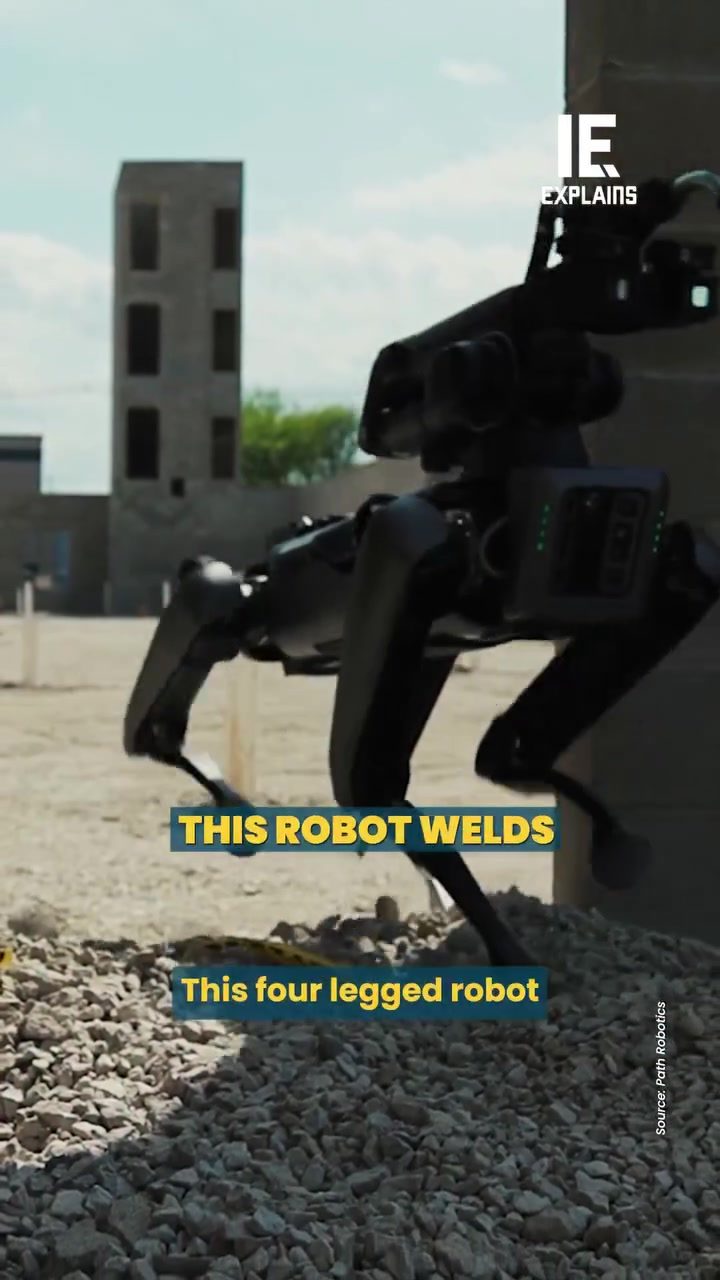
The welding industry is on the brink of a revolution with the introduction of mobile welding robots. Leading this charge is Patri Robotics, who recently launched Rove, a four-legged, AI-powered welding robot designed to address critical challenges in the industry. This innovative machine doesn't just walk; it welds, transforming traditional welding processes and tackling the global shortage of skilled welders. Let’s dive into the details of this groundbreaking technology and its implications for the future of welding.
Why This Matters
The welding industry has long relied on stationary robots, which require parts to be brought to them. This setup can be inefficient, especially in large-scale operations like shipbuilding. Additionally, the world is facing a severe shortage of skilled welders, making traditional methods increasingly impractical. Rove, with its ability to walk to the workpiece, offers a flexible and adaptive solution to these issues.
The Technology Behind Rove
AI-Powered Mobility
Rove is powered by Patri Robotics' physical AI model, Obsidian. This advanced AI allows Rove to navigate complex environments, adapt to changes, and perform precise welding tasks in real-time. Unlike traditional welding robots, Rove is not confined to a fixed cell. Instead, it can move freely to the workpiece, making it ideal for large-scale and variable manufacturing environments.
Computer Vision and Real-Time Adaptation
One of the key features of Rove is its use of computer vision and real-time AI. These technologies enable Rove to see and adapt to its surroundings, even in high-variability, unpredictable environments. This capability was previously considered too unstable for precision welding, but Patri Robotics has successfully overcome this challenge.
Commercial Applications
The technology is already being tested in real-world applications. Saronic Technologies, a company specializing in autonomous naval vessels in Louisiana, is using Rove on its shipyard floor. This early adoption underscores the potential of Rove in transforming the welding process in industries with complex and variable manufacturing needs. The commercial launch of Rove is slated for early 2027, promising to bring this revolutionary technology to a broader range of applications.
Practical Tips for Implementing Mobile Welding Robots
Assessing Your Needs
Before integrating a mobile welding robot like Rove into your operations, it’s crucial to assess your specific needs. Consider the scale of your operations, the complexity of your welding tasks, and the environment in which the robot will operate. Mobile welding robots are particularly beneficial in large-scale manufacturing environments where traditional welding methods may be inefficient.
Training and Support
While Rove is designed to be user-friendly, it’s essential to invest in training and support. Ensure that your team is well-versed in operating and maintaining the robot. Collaborate with the manufacturer to provide ongoing support and troubleshooting to maximize the robot’s efficiency and longevity.
Integration with Existing Systems
Mobile welding robots can be integrated with existing systems, but this requires careful planning. Work with experts to ensure seamless integration, minimizing downtime and maximizing productivity. This includes synchronizing the robot’s operations with your existing workflows and ensuring compatibility with other manufacturing tools and software.
Important Takeaways
Flexibility and Adaptability
Rove’s ability to walk to the workpiece and adapt to its environment makes it a game-changer in the welding industry. This flexibility allows for more efficient and versatile manufacturing processes, especially in large-scale operations like shipbuilding.
Addressing the Welder Shortage
The global shortage of skilled welders is a significant challenge for the industry. Mobile welding robots like Rove offer a practical solution by automating welding tasks, reducing the reliance on human welders, and enhancing productivity.
Future of Robotics in Manufacturing
Rove represents the future of robotics in manufacturing. With its advanced AI capabilities, real-time adaptation, and mobility, it sets a new standard for automation in the welding industry. As technology continues to evolve, we can expect more innovative solutions that further enhance efficiency and productivity.
Cost-Effectiveness
While the initial investment in a mobile welding robot may be high, the long-term benefits can outweigh the costs. Increased efficiency, reduced reliance on skilled labor, and the ability to handle complex tasks make mobile welding robots a cost-effective solution for many manufacturing operations.
Conclusion
Patri Robotics' Rove is a pioneering advancement in the welding industry, offering a mobile, AI-powered solution to traditional challenges. Its ability to navigate complex environments, adapt to changes, and perform precise welding tasks in real-time makes it a valuable asset for large-scale manufacturing operations. As the industry continues to face the challenges of a skilled welder shortage, Rove represents a promising solution that enhances efficiency and productivity, shaping the future of welding and robotics.
Watch the Reel
Questions readers ask
How does Patri Robotics' Rove differ from traditional welding robots?
Rove stands out due to its mobility and adaptability. Unlike stationary robots, Rove can move around complex environments, walking to its work on four legs. This makes it ideal for large-scale operations and industries like shipbuilding where adaptability is key.
What are the benefits of using an AI-powered welding robot like Rove?
AI-powered welding robots like Rove offer several benefits. They can adapt to complex environments, reducing the need for manual intervention, and help mitigate the global shortage of skilled welders by taking over repetitive tasks, increasing efficiency and precision.
In which industries can the Rove mobile welding robot be particularly useful?
Rove is particularly useful in industries that require large-scale welding and have complex environments. This includes shipbuilding, construction, and any industry where parts are too large or difficult to move to a stationary welding robot.
How does Rove's mobility enhance welding processes?
Rove's mobility enhances welding processes by allowing it to move directly to the work, rather than requiring parts to be brought to it. This reduces downtime and increases overall productivity, as the robot can swiftly adapt to different welding tasks and locations.
Can Rove operate in environments where traditional robots cannot?
Yes, Rove's four-legged design and AI capabilities allow it to navigate and operate in complex and challenging environments where traditional robots would struggle. This includes uneven surfaces, tight spaces, and areas with varying heights.
What impact does Rove have on the global shortage of skilled welders?
Rove helps address the global shortage of skilled welders by automating welding tasks, taking over repetitive and time-consuming work. This allows skilled welders to focus on more complex tasks and reduces the overall demand for manual labor.
How does Rove's AI technology improve welding quality and efficiency?
Rove's AI technology improves welding quality and efficiency by enabling the robot to learn, adapt, and optimize its welding techniques over time. This continuous improvement ensures high-quality welds and reduces the risk of human error, resulting in more consistent and reliable results.
Related deep dives
Similar reads based on topic and creator.


Recent articles
Fresh deep dives from the latest Reels we unpacked.




Comments
Be the first to comment.