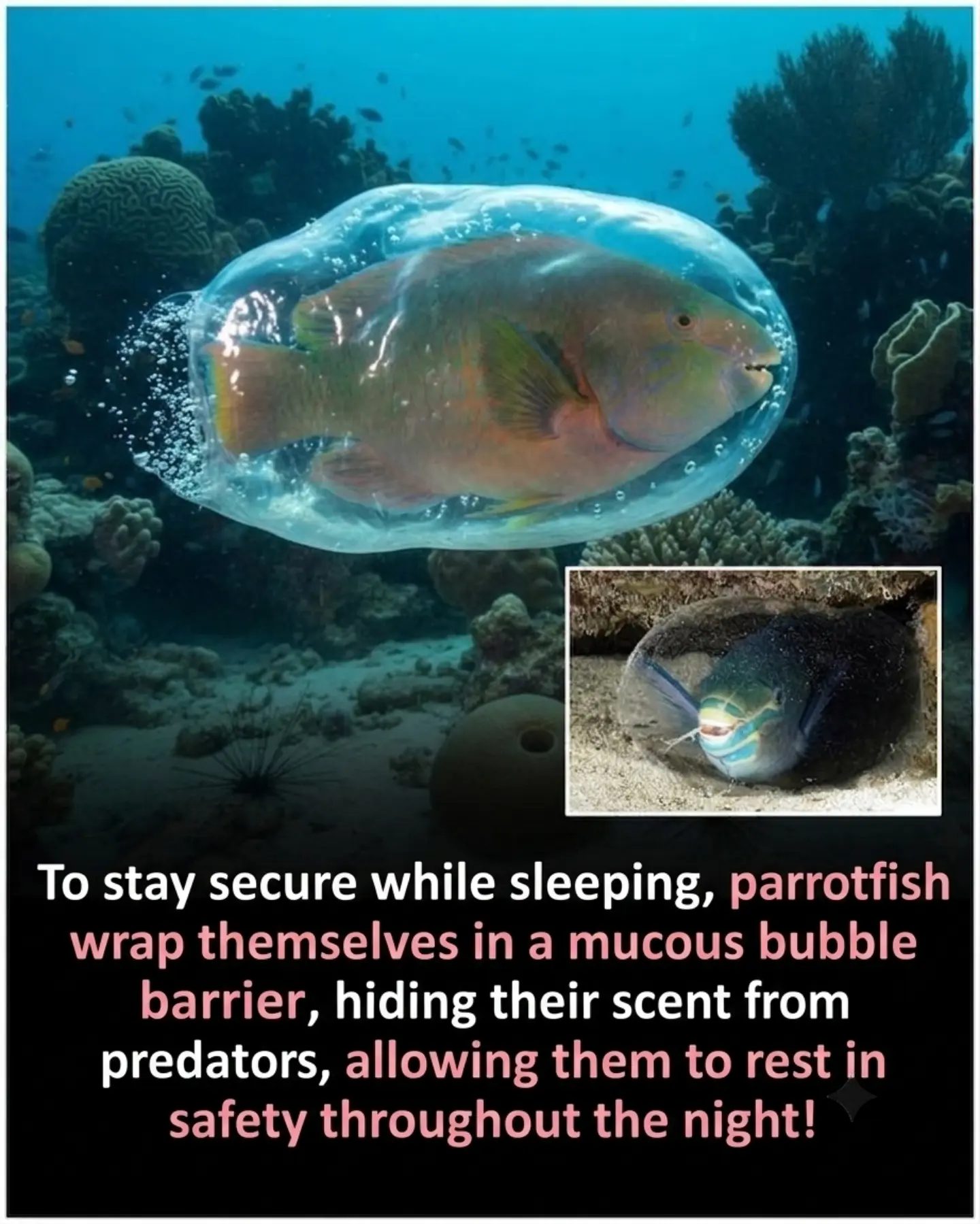
Parrotfish Sleeping Behavior
Parrotfish build their own sleeping bags every night by secreting a transparent cocoon made of mucus. This might sound unusual, but it's a clever adaptation that serves multiple purposes. From concealing their scent to providing an alarm system, the mucus bubble is a testament to nature's ingenuity.
Why This Matters
Understanding the unique sleeping behavior of parrotfish offers insights into the fascinating world of marine life. Their adaptations are not just intriguing; they highlight the importance of protective mechanisms in the underwater ecosystem. This behavior showcases how marine creatures have evolved to survive in a world filled with predators and environmental challenges.
Main Discussion
The Mucus Cocoon
Parrotfish create a mucus cocoon to protect themselves while they sleep. This transparent barrier is more than just a sleeping bag; it's a multi-functional defense mechanism. The mucus acts as a barrier, hiding the fish's scent from predators such as sharks and moray eels. This scent masking is crucial for their survival, especially in the dark, when their visibility is limited.
Scent Masking
The primary function of the mucus cocoon is scent masking. By wrapping themselves in this mucus bubble, parrotfish ensure that their scent is not detectable to predators. This is particularly important at night when visibility is low, and predators rely heavily on their sense of smell to hunt. The bubble effectively locks in the fish's scent, making them virtually undetectable.
Alarm System
The mucus cocoon also serves as a natural alarm system. If a predator attempts to touch the bubble, it immediately breaks, alerting the parrotfish to the danger. This instant response triggers an immediate reaction, allowing the fish to swim away before the predator can launch an attack. This alarm system is a critical adaptation that enhances their survival chances in the coral reefs.
UV Shield
Besides protection from predators, the mucus also acts as a natural sunscreen. The mucus cocoon provides a layer of defense against harmful UV rays, shielding the fish from sun damage. This adds another layer of protection to their already sophisticated defense mechanisms.
The Coral Reef Environment
Coral reefs are bustling ecosystems filled with diverse marine life. Parrotfish are an integral part of this ecosystem, playing a significant role in maintaining the health of the reefs. These fish use their beak-like mouths to graze on algae, helping to keep the coral clean and preventing overgrowth. Their sleeping behavior, with its protective mucus cocoon, allows them to rest securely amidst the vibrant and dangerous underwater world.
Practical Tips
For those interested in marine life and conservation, observing parrotfish in their natural habitat can be a rewarding experience. Here are some practical tips:
Scuba Diving and Snorkeling
- Choose the Right Gear: Ensure you have the proper scuba diving or snorkeling equipment. This includes a mask, snorkel, fins, and a wetsuit suitable for the water temperature.
- Respect Marine Life: Always maintain a safe distance from marine creatures. Avoid touching or disturbing them, as this can disrupt their natural behaviors.
- Timing Your Dive: Plan your dive during the day when visibility is good. Although parrotfish are nocturnal sleepers, observing their daytime behavior can be just as fascinating.
Conservation Efforts
- Support Marine Conservation: Participate in or support organizations that work towards marine conservation. This can include beach cleanups, reef restoration projects, and advocating for policies that protect marine habitats.
- Eco-Friendly Practices: Adopt eco-friendly practices in your daily life, such as reducing plastic use and minimizing your carbon footprint. These practices contribute to a healthier environment for marine life.
Educational Resources
- Read and Learn: Explore books, documentaries, and online resources about marine life. Understanding the intricacies of underwater ecosystems can deepen your appreciation for these fascinating creatures.
- Join Community Groups: Join local diving clubs or marine conservation groups to stay informed about ongoing projects and events. Attend lectures, workshops, and field trips to learn more about marine life.
Important Takeaways
Parrotfish sleeping behavior is a remarkable example of nature's ingenuity. The mucus cocoon they create serves multiple purposes, from scent masking to acting as an alarm system and UV shield. This adaptation is crucial for their survival in the coral reef environment, where predators are abundant.
The behavior of parrotfish highlights the importance of protective mechanisms in marine life. Understanding these mechanisms can inspire further research and conservation efforts, ensuring that these fascinating creatures continue to thrive in their natural habitats.
Conclusion
The sleeping behavior of parrotfish is a testament to nature's incredible adaptations. By creating a mucus cocoon, these fish not only protect themselves from predators but also ensure they rest safely throughout the night. This behavior is a vital part of their survival strategy in the coral reef ecosystem, where they play a crucial role in maintaining the health of the reefs. Observing and understanding these behaviors can deepen our appreciation for the wonders of the underwater world.
Watch the Reel
Questions readers ask
How does the mucus cocoon help parrotfish while they sleep?
The mucus cocoon serves two primary purposes. First, it masks the parrotfish's scent, making it difficult for predators to detect them. Second, it acts as an alarm system by changing in texture when disturbed, alerting the parrotfish to potential threats. This allows the fish to quickly wake up and flee if necessary.
Why do parrotfish need such unique sleeping habits?
Parrotfish inhabit coral reefs, which are teeming with predators. Their unique sleeping habits, particularly the mucus cocoon, are a critical adaptation for survival in this environment. This behavior helps them avoid becoming easy targets for nocturnal predators.
How does a parrotfish create its mucus cocoon?
Parrotfish secrete a transparent, mucous substance from their skin that envelops them, forming a protective bubble, or cocoon. This mucus is designed to be strong yet flexible, providing a barrier between the fish and the surrounding water.
What happens if the mucus bubble is disturbed while the parrotfish is sleeping?
If the mucus bubble is disturbed, it sends a signal to the parrotfish that something is wrong. The change in the mucus's texture acts as a warning, causing the parrotfish to wake up and react to the potential threat, allowing it to flee if necessary.
Are there other fish that use similar sleep protection methods?
While the mucus cocoon is unique to parrotfish, other fish species have their own unique adaptations for sleep protection. Some fish species, for example, dig into the sand or find hiding spots to sleep safely. However, the mucus cocoon is a particularly notable and effective strategy, showcasing its effectiveness in predator avoidance.
Can the mucus cocoon protect parrotfish from all types of predators?
The mucus cocoon is effective against many predators, particularly those that rely on scent to hunt. However, it may not be foolproof against all threats. Some predators, like large fish or marine mammals, might still be able to detect or physically disrupt the cocoon, but the mucus serves as a crucial first line of defense.
How does the mucus cocoon contribute to the overall health of coral reefs?
By protecting parrotfish from predators, the mucus cocoon indirectly supports coral reef health. Parrotfish play a vital role in maintaining coral reef ecosystems by feeding on algae that can harm coral. Their survival, facilitated by the mucus cocoon, ensures that they can continue to perform this essential function.
Related deep dives
Similar reads based on topic and creator.



Recent articles
Fresh deep dives from the latest Reels we unpacked.




Comments
Be the first to comment.