Historical Pandemics
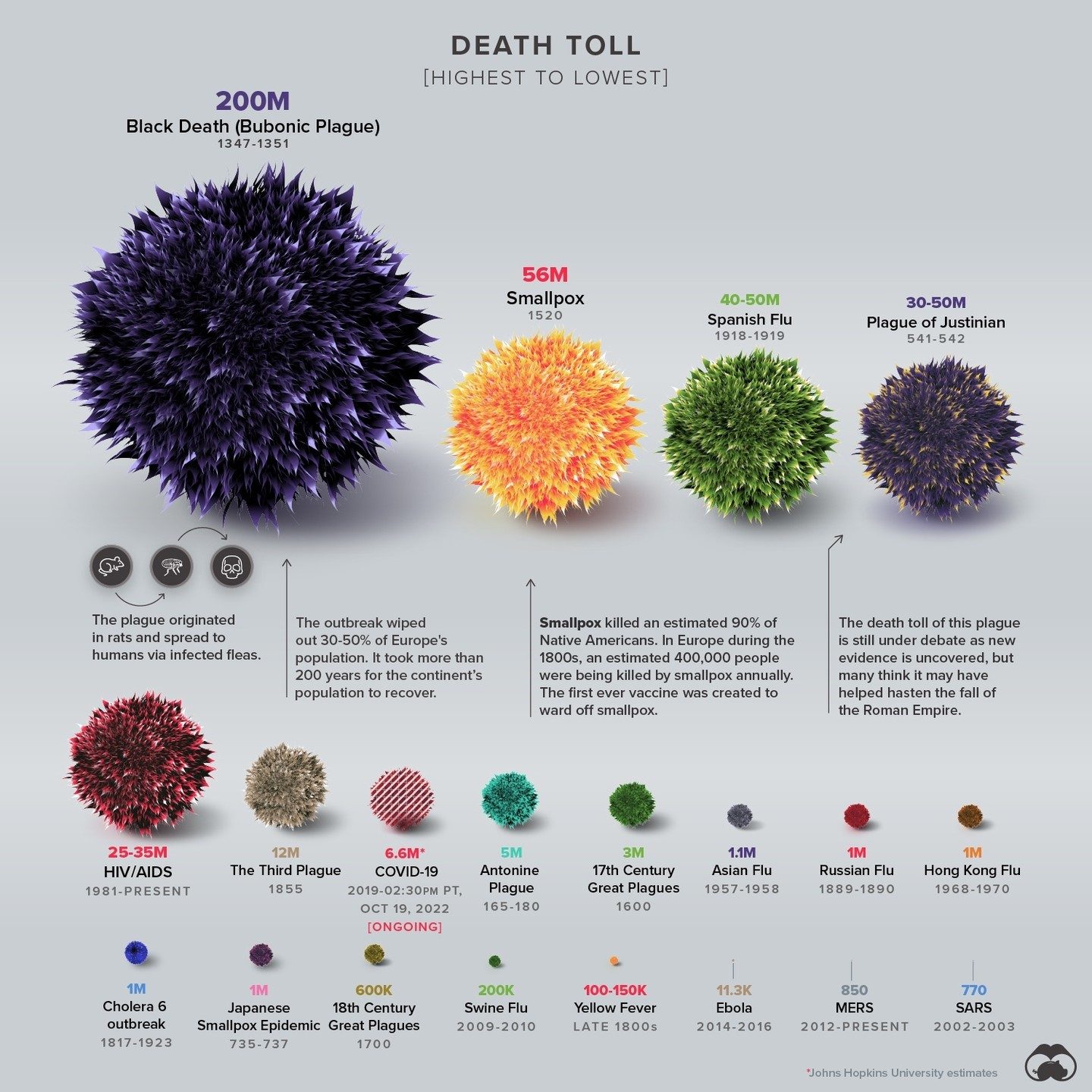
The Black Death, the Plague of Justinian, and the Spanish Flu stand out as some of the worst pandemics in history, each leaving a significant mark on the global population. Johns Hopkins University estimates the death toll of COVID-19 at 6.6 million as of October 19, 2022, adding to the grim legacy of these historical pandemics.
Why This Matters
Pandemics have always been an inevitable part of human history, shaping societies and altering the course of civilization. Understanding the impact of these historical events provides valuable insights into the current COVID-19 pandemic and helps us prepare for future challenges. By examining the death tolls and population impacts, we can appreciate the magnitude of these outbreaks and the resilience of human populations to recover and rebuild.
Comparing Pandemics
Death Toll
The Black Death, also known as the Bubonic Plague, remains the deadliest pandemic in history, with an estimated death toll of 200 million. This staggering figure represents a significant portion of the global population during the 14th century. The Plague of Justinian, which occurred in the 6th century, had a death toll of 770,000, significantly smaller than the Black Death but still catastrophic for the time.
Other notable pandemics include Smallpox, which killed 30-50 million people, and the Spanish Flu of 1919, which resulted in 45 million deaths. More recent outbreaks, such as HIV/AIDS and COVID-19, hold significant impact, with HIV/AIDS claiming around 30 million lives and COVID-19 causing 6.6 million fatalities.
Population Impact
The impact of these pandemics on the global population is measured by the percentage of the population affected. The Black Death, for instance, wiped out over 51% of the population, making it one of the most devastating events in human history. The Plague of Justinian affected 19.1% of the population, while Smallpox impacted 12.1%. The Antonine Plague, which occurred around 200 AD, affected 2.6% of the population, and the Third Plague of the 19th century affected 1%. In contrast, HIV/AIDS has claimed 0.7% of the global population, and COVID-19 has affected 0.8%.
Historical Context
The Black Death is notable for its devastating impact on Europe, where it killed an estimated 200 million people. The outbreak is believed to have wiped out 30-50% of the population, leading to significant economic and social changes. The Plague of Justinian, although less deadly in terms of population impact, is still considered one of the most significant pandemics in history, with estimates suggesting that it played a role in hastening the fall of the Roman Empire.
Smallpox, which was eradicated in the 20th century, had a profound impact on Native American populations, killing an estimated 90%. During the 1800s, smallpox killed over 40,000 people annually in Europe. The development of the first vaccine to combat smallpox marked a significant milestone in medical history.
Recent Pandemics
The Spanish Flu of 1919 affected over 2.5% of the global population, resulting in an estimated 45 million deaths. The outbreak occurred during a period of significant global conflict and economic instability, further exacerbating the pandemic's impact. The Third Plague, which occurred in the 19th century, affected 1% of the population, while HIV/AIDS has claimed 0.7% of the global population. COVID-19, with a death toll of 6.6 million, is the most recent pandemic with a significant global impact, affecting 0.8% of the population.
Practical Tips
Understanding historical pandemics provides valuable insights for managing current and future outbreaks. By learning from past experiences, we can better prepare for future challenges and reduce the impact of pandemics on global populations. Here are some practical tips to consider:
- Stay Informed: Keep up-to-date with reliable sources of information to stay informed about current health risks and preventive measures.
- Follow Public Health Guidelines: Adhere to public health guidelines, including vaccination recommendations, social distancing, and hygiene practices.
- Support Healthcare Systems: Strengthen healthcare systems by supporting research, investing in infrastructure, and training healthcare workers.
- Promote Global Cooperation: Foster international collaboration to share knowledge, resources, and best practices for managing pandemics.
Important Takeaways
Pandemics have shaped human history, leaving a significant impact on populations and societies. Understanding the death tolls and population impacts of historical pandemics provides valuable insights into the current COVID-19 pandemic and future challenges. By learning from past experiences, we can better prepare for future outbreaks and reduce their impact on global populations.
Conclusion
The historical context of pandemics, including the Black Death, the Plague of Justinian, and the Spanish Flu, offers a grim reminder of the devastating impact these events have had on human populations. By examining the death tolls and population impacts, we can appreciate the magnitude of these outbreaks and the resilience of human populations to recover and rebuild. Understanding these historical events provides valuable insights for managing current and future pandemics, including COVID-19, and helps us prepare for future challenges.
Watch the Reel
Questions readers ask
What were the most deadly pandemics in history?
The most deadly pandemics in history include the Black Death, the Plague of Justinian, and the Spanish Flu. These pandemics caused significant loss of life and had profound impacts on global populations.
How do the death tolls of historical pandemics compare to COVID-19?
The death tolls of historical pandemics vary greatly. For example, the Black Death is estimated to have killed 75-200 million people, while the Spanish Flu resulted in 50 million deaths. As of October 19, 2022, Johns Hopkins University estimates the death toll of COVID-19 at 6.6 million. This highlights the devastating impact of pandemics throughout history.
What was the impact of the Black Death on global populations?
The Black Death, which occurred in the 14th century, had a catastrophic impact on global populations. It is believed to have killed 75-200 million people in Eurasia and North Africa, significantly altering the demographic and cultural landscape of the affected regions.
How many people died from the Spanish Flu?
The Spanish Flu, which occurred from 1918 to 1920, resulted in an estimated 50 million deaths worldwide. This pandemic was particularly devastating due to its high infection and mortality rates, as well as its impact on young and healthy individuals. This flu pandemic added to the devastation of World War I.
What is the significance of studying historical pandemics?
Studying historical pandemics helps us understand the patterns and impacts of infectious diseases. By examining the death tolls and global effects of past pandemics, we can better prepare for and respond to current and future outbreaks, such as COVID-19. This knowledge is crucial for developing effective strategies to mitigate the impact of pandemics on society.
What does the first year of a pandemic look like?
The first year of a pandemic is typically characterized by rapid spread and high mortality rates. During this phase, public health systems are often overwhelmed, and there is a scramble to develop effective treatments and vaccines. The Spanish Flu, for example, saw a sharp rise in deaths in its first year, with many people succumbing to the virus in a matter of days, causing global panic.
What can we learn from the global pandemic estimated deaths?
Comparing the estimated deaths from global pandemics provides a clearer picture of their severity. For instance, the estimated 6.6 million deaths from COVID-19, as reported by Johns Hopkins University, underscores the significant impact of this pandemic, even if it does not reach the scale of historical pandemics. This comparison highlights the importance of public health measures and international cooperation in mitigating the effects of such outbreaks.
Related deep dives
Similar reads based on topic and creator.




Recent articles
Fresh deep dives from the latest Reels we unpacked.




Comments
Be the first to comment.