AI and the Future of Work
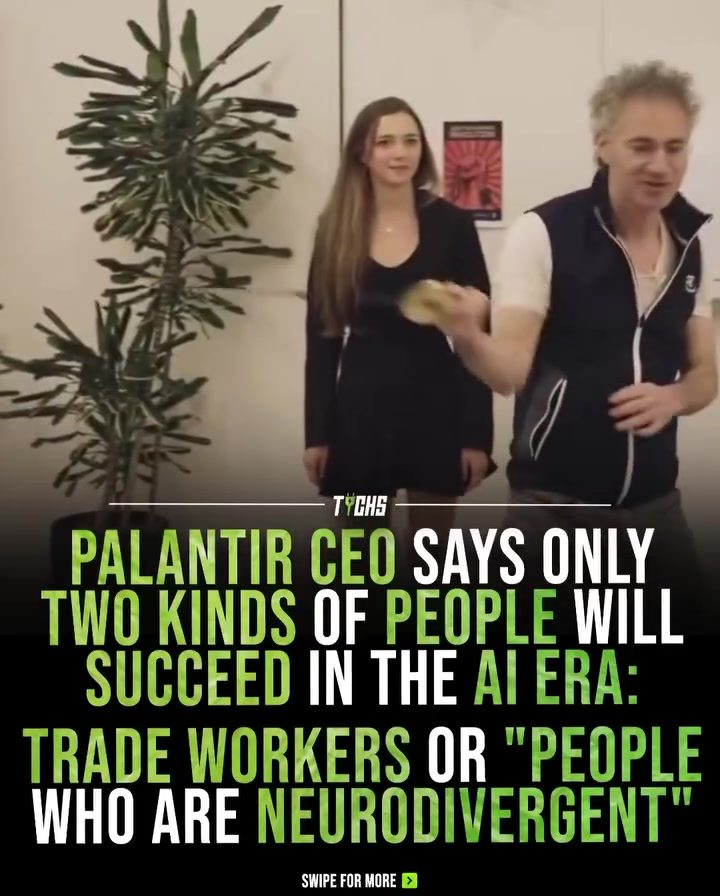
The future of work is rapidly evolving, particularly with the rise of artificial intelligence (AI). Palantir's CEO, Alex Karp, predicts that the AI era will significantly reshape the job market, with automation taking over repetitive office tasks. According to Karp, the individuals who will thrive in this new landscape are those with hands-on trade skills and neurodivergent individuals who think differently.
Why this matters
The shift towards AI-driven automation is not just a trend; it's a seismic change that will affect nearly every industry. Understanding which skills and mindsets will be most valuable in this new era is crucial for both individuals navigating their careers and organizations planning for the future. By focusing on trade workers and neurodivergent individuals, Karp highlights a shift away from traditional office roles and towards more specialized, adaptable skills.
Main discussion
The Role of Trade Workers
Trade workers, those with hands-on skills in fields like construction, manufacturing, and technical maintenance, are poised to gain a significant advantage in the AI era. These roles often require practical knowledge and problem-solving abilities that are difficult to automate. As AI takes over more administrative and data-entry tasks, the demand for skilled tradespeople is likely to increase.
Skills in Demand
Trade workers possess a unique set of skills that are highly valued in an AI-driven world. These include:
- Practical Problem-Solving: Trade work often involves on-the-spot troubleshooting and adaptive solutions, skills that are not easily replicated by machines.
- Manual Dexterity: Many trades require fine motor skills and physical dexterity, which are difficult for AI to replicate.
- Job-Specific Knowledge: Trade workers often have deep, specialized knowledge in their fields, making them indispensable for certain tasks.
- Adaptability: Trade workers are often called on to adapt to new situations and environments, which is a valuable skill in a rapidly changing job market.
The Advantages of Neurodiversity
Neurodivergent individuals, those with conditions like dyslexia, autism, or ADHD, bring unique perspectives and strengths to the workplace. These individuals often think outside the box, which can be a significant advantage in a world where AI excels at pattern recognition and routine tasks.
Unique Strengths of Neurodivergent Individuals
Neurodivergent individuals often possess the following strengths:
- Creativity and Innovation: Many neurodivergent individuals think in unconventional ways, which can lead to innovative solutions and fresh ideas.
- Attention to Detail: Conditions like dyslexia can lead to heightened attention to detail, which is invaluable in fields requiring meticulous work.
- Pattern Recognition: While AI excels at pattern recognition, neurodivergent individuals often see patterns in ways that others might overlook, offering a different perspective.
- Specialized Skills: Neurodivergent individuals often develop highly specialized skills, making them experts in niche areas.
The Future of Recruitment
Karp’s insights reflect a broader shift in recruitment and talent management. Companies are increasingly recognizing the value of diverse perspectives and skills. This means that the traditional emphasis on college degrees and conventional career paths is giving way to a more inclusive approach that values hands-on experience and unique thinking.
The Importance of Inclusive Hiring
Inclusive hiring practices are more important than ever. By actively recruiting neurodivergent talent and creating opportunities for individuals who skip the traditional college route, companies like Palantir are setting a new standard for diverse and effective recruitment.
The Evolution of Workplace Culture
The shift towards AI and automation will also require a fundamental change in workplace culture. Companies must foster environments where diverse skills and thinking styles are valued and supported. This includes providing training and support for employees who may face unique challenges in an AI-driven workplace.
Creating Supportive Work Environments
Supportive work environments are crucial for the success of neurodivergent individuals and trade workers. This can involve:
- Flexible Work Arrangements: Offering flexible work hours and remote work options can help neurodivergent individuals manage their conditions more effectively.
- Mentorship and Training: Providing specialized training and mentorship programs can help trade workers adapt to new technologies and tools.
- Inclusive Leadership: Leaders must be trained to recognize and value the unique strengths of neurodivergent individuals and trade workers, fostering a culture of inclusivity.
Practical tips
For Individuals
If you’re looking to thrive in the AI era, consider the following tips:
- Develop Hands-On Skills: If you have the opportunity, pursue training in trade skills. These skills are likely to remain in high demand.
- Embrace Your Uniqueness: If you are neurodivergent, recognize your unique strengths and seek out opportunities where they can be fully utilized.
- Stay Adaptable: Keep learning and adapting to new technologies and tools. The ability to pivot and adapt will be crucial in the ever-changing job market.
For Organizations
For organizations, the key to success in the AI era will be embracing diversity and inclusivity:
- Diverse Recruitment: Actively seek out candidates with diverse backgrounds and skills, including those who have not followed traditional career paths.
- Support Neurodivergent Talent: Create supportive environments for neurodivergent individuals, including flexible work arrangements and dedicated training programs.
- Value Trade Skills: Recognize the value of trade skills and provide opportunities for these workers to develop their expertise further.
Important takeaways
- AI Will Reshape the Job Market: Automation will take over repetitive office tasks, necessitating a shift in the types of skills that are valued.
- Trade Workers and Neurodivergent Individuals Hold a Competitive Edge: These individuals possess unique skills and perspectives that are highly valuable in an AI-driven world.
- Inclusive Recruitment is Key: Companies must embrace diverse talent pools and create supportive work environments to thrive in the AI era.
Conclusion
The rise of AI is transforming the job market, and it’s crucial to understand the types of skills and mindsets that will succeed in this new landscape. Palantir CEO Alex Karp highlights the importance of trade workers and neurodivergent individuals, who bring unique strengths and perspectives to the workplace. By embracing diversity and inclusivity, both individuals and organizations can thrive in the AI era.
Watch the Reel
Questions readers ask
How will AI affect traditional office roles according to Palantir's CEO?
Alex Karp, the CEO of Palantir, anticipates that AI will automate many repetitive office tasks, leading to a decline in traditional office roles. He suggests that the future job market will prioritize more practical and resilient expertise.
What specific skills will be valuable in the AI-driven job market?
Karp highlights that hands-on trade skills will be particularly valuable. These skills are adaptable and specialized, making them crucial for the evolving job market. He also emphasizes the importance of neurodivergent perspectives, as they offer unique problem-solving approaches.
What is the significance of neurodivergent individuals in the future of work?
Neurodivergent individuals think differently and can offer innovative solutions to problems, which is why Alex Karp believes they will thrive in the AI era. Their unique perspectives will be highly sought after in an AI-driven job market.
Why are trade skills considered resilient in the face of AI advancements?
Trade skills are considered resilient because they involve practical, hands-on work that is not easily automated. These skills often require specialized knowledge and adaptability, which are qualities that will be highly valued in a job market reshaped by AI.
How can organizations prepare for the transition in the job market due to AI?
Organizations should prioritize the development of hands-on trade skills and neurodivergent perspectives within their workforce. By fostering these skills and perspectives, organizations can better navigate the AI-driven changes in the job market and remain competitive.
What is the main takeaway from Palantir's CEO regarding the future of work?
Alex Karp emphasizes that the future of work will be heavily influenced by AI, with a shift towards valuing practical, hands-on expertise and unique cognitive perspectives. He urges individuals and organizations to adapt and focus on developing these specialized skill sets.
Recent articles
Fresh deep dives from the latest Reels we unpacked.




Comments
Be the first to comment.