Something to overcome obstacles
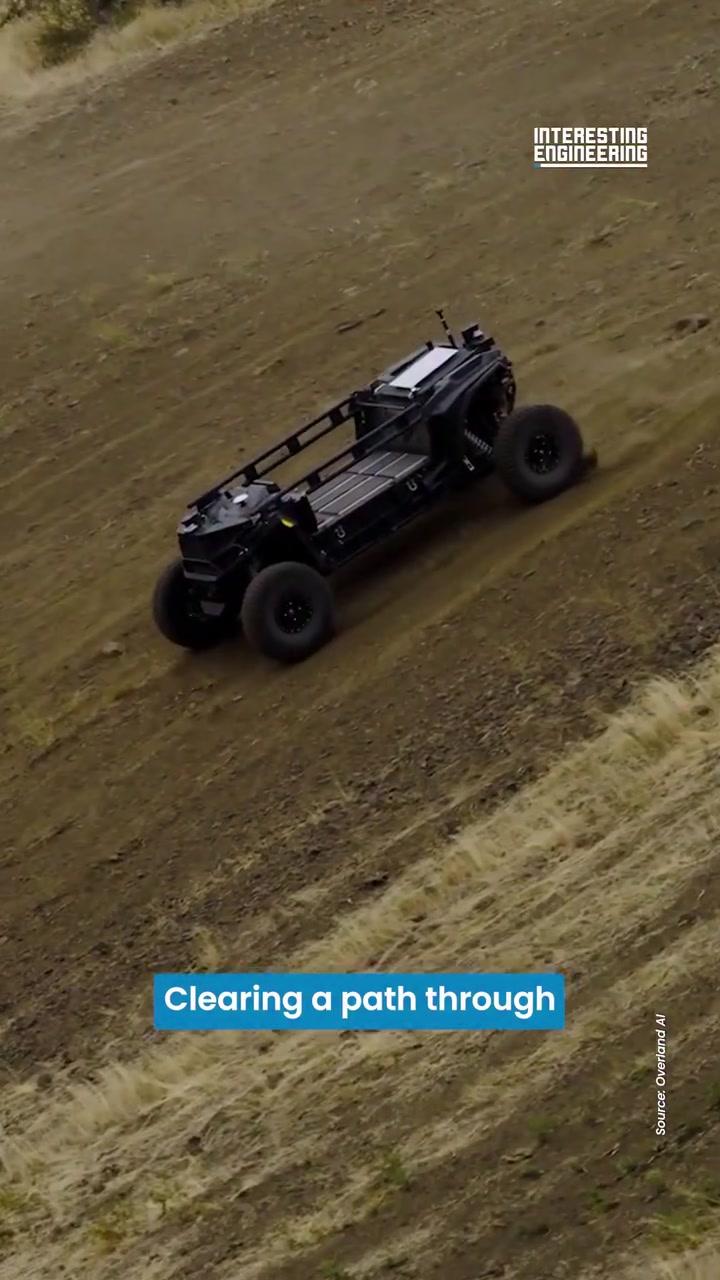
Military engineers face deadly danger when neutralizing minefields and other obstacles. Overland AI, a Seattle-based company just won a $20 million contract to develop autonomous robots that will handle such hazardous tasks. Combining 3D perception and advanced mobility, Overland AI’s vehicle navigates autonomously. It can also carry equipment normally handled by soldiers, demonstrating a distinctive capability in the autonomous vehicle market.
Miss kind of deadlier challenges
Overland AI's autonomous vehicle is part of a broader military trend toward remote and robotic warfare. The U.S. Army's Engineer Autonomous Breaching Capability Program highlights a shift in military strategy. This move represents a response to the growing complexity and danger of modern battlefield obstacles. As aerial warfare has seen decades of drone and pilotless aircraft innovation but ground warfare technology has lagged. Overland AI's technology does not stop at autonomous navigation. The robotic vehicle operates without GPS or prior maps, relying on real-time terrain analysis. This makes it suitable for conditions like night, rain, and fog.
How it works
However, it is more than just a single robot. Overland AI's system operates in swarms. One soldier can control a squad of these robots from a single screen. Communication and coordination are thus made possible among the robots.
How it gets to its destination
Navigation is the autonomous vehicle's core strength. The vehicle uses "overdrive software", which was developed through DARPA's RACER off-road autonomy program. It allows it to operate without GPS or prior maps, making unprecedented self-reliance possible. Overland AI's vehicles are equipped to navigate various terrains. Overland AI’s flagship vehicle can travel 100 miles on a single charge and reach speeds up to 35 miles per hour. It is able to clear paths through barriers like minefields and barbed wire, which are usual in military operations.
Why it works
Overland AI's innovative technology is not just an academic achievement—recently tested. Overland AI's vehicle demonstrated its path-clearing capabilities at the African Lion exercise in Morocco. The vehicle successfully launched a rocket which cleared a concertina wire obstacle, which is an especially demanding mission otherwise completed by 2 soldiers. Future plans include integrating ground robots, drones, and electronic warfare gear into a comprehensive breaching package. This expansion will increase its usefulness in military operations. A contract, valued at $14.3 million, was awarded to Overland AI for converting heavy commercial trucks into driverless breachers.
How it fits with the soldiers
Soldiers can use it
Overland AI's autonomous vehicle is designed to augment military capabilities, not replace human soldiers. The technology frees soldiers to focus on other critical tasks, while the autonomous vehicle handles the more dangerous ones. Overland AI's vehicle can launch weapons and clear obstacles, making it a versatile tool in combat situations.
Soldiers can operate it
The vehicle's software enables one soldier to control a whole team of robots from a single screen. This centralized control reduces the risk to soldiers and improves operational efficiency.
Operation tests for the undetected*
It was successfully tested in various terrains, including grassy fields, wooded areas, and sandy landscapes. The vehicle has demonstrated its ability to operate autonomously in these challenging environments.
How it leaves the rest
Overland AI's vehicle is equipped with a remote weapon station. This allows it to engage targets from a safe distance, further reducing the risk to soldiers.
Maneuvering into the field
What if you want to test an autonomous vehicle for your own military unit’s needs? The Overland AI vehicle can travel 100 miles on a single charge, making long-range missions feasible. It also delivers the speed you need with a top speed of 35 miles per hour, which is great for quickly moving across diverse terrain.
Tactics for taking it out
- Train the human: Before deployment, soldiers should undergo extensive training to operate the vehicle effectively from the single controllers screen. This training should cover all aspects of the vehicle's capabilities, including navigation, obstacle clearing, and weapon deployment.
- Plan missions: Before deploying the vehicle, plan your missions carefully, considering factors such as terrain, obstacles, and enemy presence.
Safest road isn't always possible
The future of warfare is likely to see an increasing role for autonomous systems. From reconnaissance to combat, autonomous vehicles can reduce the risk to soldiers and increase operational efficiency. The Overland AI vehicle is a significant step in this direction, demonstrating the potential of autonomous technology in military operations.
Watch the Reel
Questions readers ask
What specific tasks can Overland AI's autonomous vehicles perform that would normally be handled by soldiers?
Overland AI's autonomous vehicles can navigate autonomously and perform tasks such as clearing minefields, carrying equipment, and launching weapons. These tasks are typically dangerous and are usually handled by soldiers, but the vehicles can do them without putting human lives at risk.
How does Overland AI's vehicle navigate without GPS or prior maps?
Overland AI's vehicle uses 'overdrive software' developed through DARPA's RACER off-road autonomy program. This software allows the vehicle to analyze the terrain in real-time, making it capable of navigating through various conditions like night, rain, and fog without relying on GPS or pre-existing maps.
Can these autonomous vehicles operate in swarms, and if so, how are they controlled?
Yes, Overland AI's system can operate in swarms, with one soldier able to control a squad of these robots from a single screen. This setup allows for efficient communication and coordination among the robots, enhancing their overall effectiveness in military operations.
What is the range and speed of Overland AI's flagship autonomous vehicle?
Overland AI’s flagship vehicle can travel up to 100 miles on a single charge and reach speeds up to 35 miles per hour. This makes it capable of covering significant distances and navigating various terrains efficiently, which is crucial for military operations.
How does Overland AI's vehicle handle obstacles like minefields and barbed wire?
Overland AI's vehicle is equipped to clear paths through barriers like minefields and barbed wire. It demonstrated this capability at the African Lion exercise in Morocco, where it successfully launched a rocket to clear a concertina wire obstacle, a task that would otherwise require two soldiers.
What are the future plans for integrating Overland AI's technology into military operations?
Future plans include integrating ground robots, drones, and electronic warfare gear into a comprehensive breaching package. This expansion will increase the technology's usefulness in military operations, making it a more versatile tool for the army.
How does Overland AI's vehicle augment military capabilities without replacing human soldiers?
Overland AI's autonomous vehicle is designed to handle the more dangerous tasks, such as clearing obstacles and launching weapons, freeing soldiers to focus on other critical tasks. This way, the technology augments military capabilities by taking on high-risk jobs, while soldiers can concentrate on strategic and tactical decisions.
Related deep dives
Similar reads based on topic and creator.


Recent articles
Fresh deep dives from the latest Reels we unpacked.


Comments
Be the first to comment.