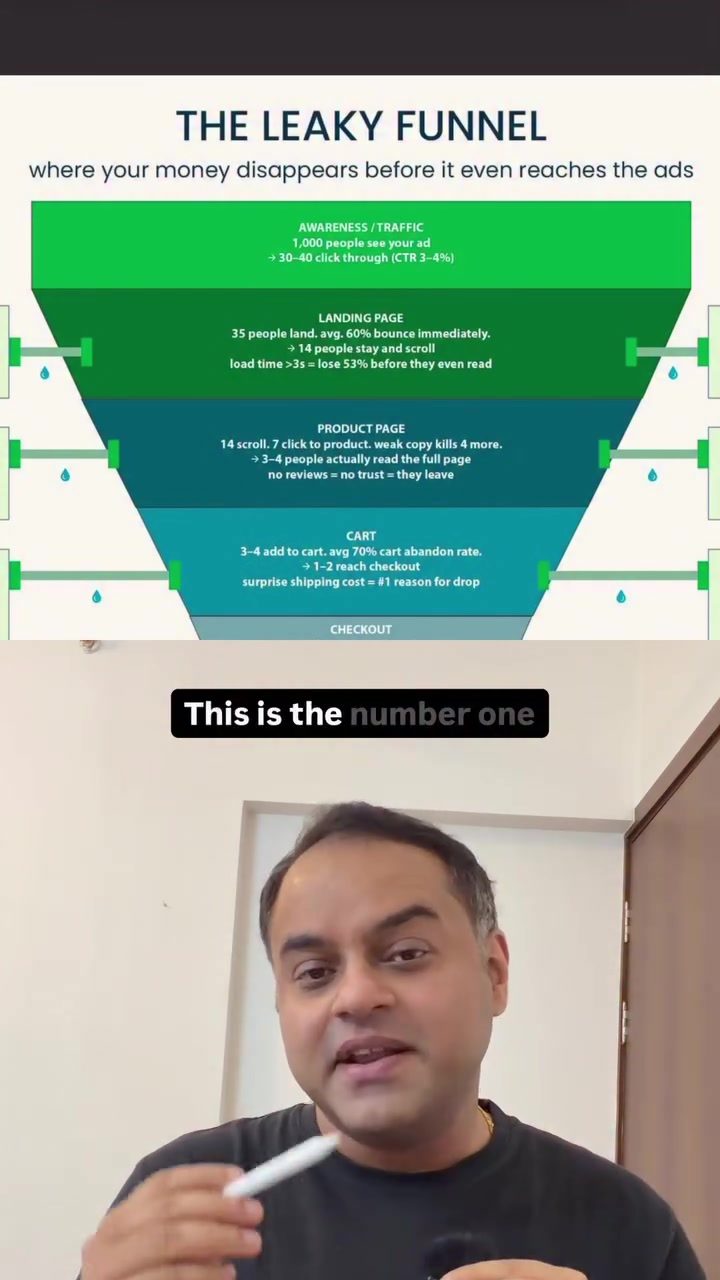
Leaky Funnel
Understanding the leaky funnel is crucial for businesses aiming to optimize their marketing efforts and maximize sales. The concept of a leaky funnel highlights where potential customers drop off throughout the purchasing journey, from initial awareness to the final purchase. By identifying and addressing these drop-off points, businesses can significantly improve their conversion rates and overall revenue.
Why This Matters
The leaky funnel is a critical concept for marketers because it directly impacts the effectiveness of advertising spend. If a significant portion of potential customers are dropping off at various stages of the funnel, businesses are essentially losing money. The first stage of the funnel, awareness, is where the journey begins. However, if your funnel is leaky, you might be spending a lot on ads without seeing a proportional increase in sales. Understanding and fixing the leaks in your funnel is essential for optimizing your return on investment (ROI) and ensuring that your marketing efforts are as effective as possible.
Awareness (Traffic)
The first stage of the funnel is awareness, where your ad campaigns reach a broad audience. For instance, if 1,000 people see your ad, only 30 to 40 people will click through, given a typical click-through rate (CTR) of 3-4%. This means that out of 1,000 impressions, only 35 people will land on your website. This initial drop-off is a significant point of loss, and optimizing your ads to attract more clicks is crucial. Effective targeting, compelling ad copy, and engaging visuals can help improve your CTR and reduce the initial leak in your funnel.
Landing Page
Once potential customers click through to your landing page, the next challenge is to keep them engaged. The average bounce rate for e-commerce websites is around 50-60%, meaning only 40% of visitors will stay and scroll. If your landing page takes more than 3 seconds to load, you could lose up to 53% of these visitors before they even read your content. A slow load time can be a significant barrier, so ensuring your page loads quickly is essential. Additionally, a well-designed landing page with clear calls to action and engaging content can help retain more visitors.
Product Page
For those who do stay on your landing page, the next step is to guide them to your product page. Out of 14 visitors who stay and scroll, only 7 will click through to the product page. Weak copy and a lack of reviews can cause a significant drop-off at this stage. Potential customers need compelling product descriptions and social proof, such as customer reviews and ratings, to build trust and encourage them to explore further. Ensuring your product pages are informative, visually appealing, and trustworthy is vital for reducing drop-offs at this stage.
Cart Page
After visiting the product page, customers may add items to their cart. However, the average cart abandonment rate is around 70%. This means that out of 3-4 people who add items to their cart, only 1-2 will proceed to the checkout. Surprise shipping costs and other unexpected fees are common reasons for cart abandonment. To minimize this leak, ensure your shipping costs are clearly communicated upfront and consider offering free shipping or flexible payment options.
Checkout
The final stage before purchase is the checkout process. If there is any friction here, such as a lack of payment options or a complicated checkout form, customers may drop off. At this stage, you might only have 1-2 customers left, and any additional barriers can result in a lost sale. Simplifying the checkout process, offering multiple payment options, and ensuring a seamless user experience are critical for converting these final customers.
Practical Tips
Optimizing your funnel to reduce leaks involves several practical steps. Here are some tips to help you address the common drop-off points:
Optimize Ad Campaigns
- Improve Targeting: Use advanced targeting options to reach the most relevant audience for your product.
- Enhance Ad Copy: Create compelling ad copy that resonates with your target audience and encourages them to click through.
- Engaging Visuals: Use high-quality, visually appealing images and videos to capture attention and drive clicks.
Enhance Landing Pages
- Fast Load Times: Ensure your landing pages load quickly to keep visitors engaged.
- Clear Calls to Action: Use prominent, clear calls to action to guide visitors to the next step.
- Engaging Content: Provide valuable, engaging content that keeps visitors interested and encourages them to explore further.
Improve Product Pages
- Compelling Copy: Write persuasive product descriptions that highlight the benefits and features of your products.
- Customer Reviews: Include customer reviews and ratings to build trust and credibility.
- Visual Appeal: Use high-quality images and videos to showcase your products effectively.
Reduce Cart Abandonment
- Transparent Pricing: Clearly communicate all costs, including shipping, upfront to avoid surprises.
- Flexible Payment Options: Offer multiple payment options to cater to different customer preferences.
- Retargeting Campaigns: Implement retargeting campaigns to reach customers who abandoned their carts and encourage them to complete their purchase.
Important Takeaways
Addressing the leaky funnel is about more than just increasing ad spend; it's about optimizing each stage of the customer journey. Here are the key takeaways:
- Acknowledge the Leaky Funnel: Recognize that a significant portion of potential customers drop off at various stages, and addressing these leaks is critical for improving sales.
- Fix the Awareness Stage: Optimize your ad campaigns to improve CTR and attract more clicks.
- Enhance the Landing Page: Ensure fast load times, clear calls to action, and engaging content to keep visitors on your site.
- Improve Product Pages: Provide compelling copy, customer reviews, and visually appealing content to build trust and encourage exploration.
- Reduce Cart Abandonment: Clearly communicate all costs, offer flexible payment options, and implement retargeting campaigns to recover lost sales.
- Streamline Checkout: Simplify the checkout process, offer multiple payment options, and ensure a seamless user experience to convert the final customers.
By focusing on these areas, you can significantly improve your conversion rates and maximize the effectiveness of your marketing efforts.
Conclusion
The leaky funnel is a common issue that can significantly impact your sales and marketing efforts. By understanding the drop-off points and implementing strategies to address them, you can optimize your funnel and achieve better results. Whether it's optimizing your ad campaigns, enhancing your landing pages, improving product pages, reducing cart abandonment, or streamlining the checkout process, each step contributes to a more efficient and effective marketing strategy. Addressing the leaky funnel is not just about identifying where customers are dropping off; it's about creating a seamless, engaging, and trustworthy customer journey that converts.
Watch the Reel
Recent articles
Fresh deep dives from the latest Reels we unpacked.




Comments
Be the first to comment.