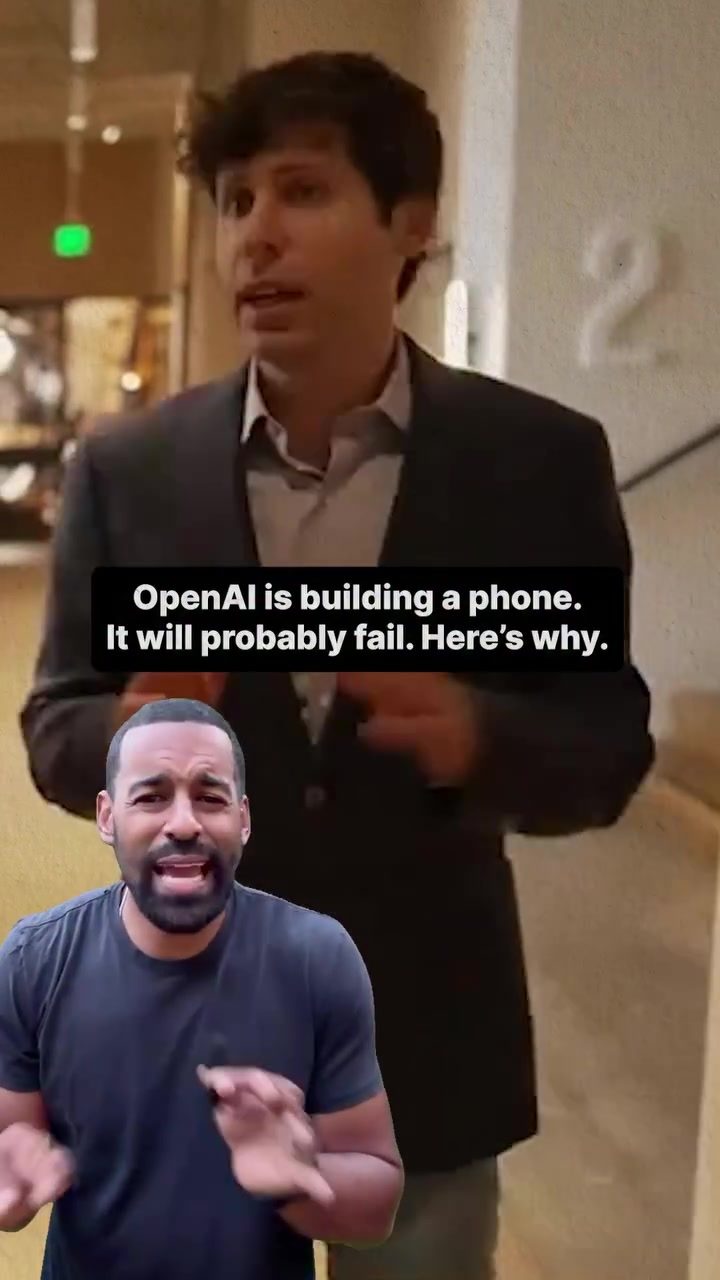
OpenAI's Phone Project: A Deep Dive
A new era is unfolding in the tech world, with OpenAI reportedly entering the hardware market with a smartphone. The company has hired legendary designer Jony Ive, who is renowned for his work on Apple's iconic iPhone. While this move signals a significant shift in OpenAI's strategy, it also raises crucial questions about the project's potential success and the broader implications for the tech industry.
Why This Matters
In recent years, technology has evolved at an unprecedented pace, with artificial intelligence and software advancements revolutionizing various industries. However, the tech landscape is becoming increasingly competitive, and companies are exploring new avenues to maintain their edge. This is why OpenAI's foray into hardware, particularly smartphones, is noteworthy. The project's success or failure could set a precedent for other AI companies and influence the future trajectory of the tech industry.
The Shift to Hardware
The New Playbook
AI companies are shifting their focus from software to hardware. Google's recent launch of a new product line (though the specific details were not provided) indicates that hardware is becoming a key battleground. OpenAI's hiring of Jony Ive and its reported plans to build a phone are part of this broader trend. The competitive landscape is evolving, and companies are recognizing that hardware can provide a significant competitive advantage.
The Challenges Ahead
However, the path to success in the hardware market is fraught with challenges. Tech companies are no longer protected by the technological moats they once enjoyed. Models are becoming commoditized, and software can be replicated overnight. This commoditization means that the real barrier to entry is often the brand itself, not the technology.
The Power of Branding
Apple's Dominance
Apple stands as a quintessential example of a brand that has successfully leveraged its status symbol to dominate the market. The iPhone, Mac, iPad, watch, and AirPods all reinforce each other, creating a cohesive ecosystem that enhances user experience and loyalty. This interconnected ecosystem is a significant factor in Apple's success and a lesson that OpenAI must study closely.
The Branding Gap
OpenAI's current project feels more like a spinoff rather than an original innovation. Hiring Jony Ive, a designer closely associated with Apple, to beat Apple is akin to trying to cover a Whitney Houston song to outshine the original. The attempt to replicate rather than innovate could lead to a lack of originality and public perception issues.
The Green Bubble Ick
Apple's brand extends beyond hardware; it influences user perceptions and behaviors. For example, the green bubble in text messages, synonymous with non-iPhones, still evokes a negative reaction from many iPhone users. This psychological barrier is another obstacle that OpenAI must navigate if it hopes to gain market acceptance.
The Path to Success
Beyond the iPhone
To truly succeed, OpenAI needs to understand that competing with Apple by building a better iPhone is not the answer. Instead, they should focus on inventing a category that makes the iPhone irrelevant. Modern smartphones are essentially libraries of apps, but the future device could be a single, intelligent agent that handles multiple tasks seamlessly. This agent could book appointments, send messages, answer questions, and even buy products, eliminating the need to open individual apps.
The Future of Devices
The future of smartphones lies in devices that act as intelligent agents. Imagine a device that books your appointments, sends messages, answers questions, and buys products without you needing to open individual apps. This is the kind of innovation that could render the iPhone obsolete the moment you hold it.
Practical Tips for Tech Companies
Focus on Innovation
Innovation is the key to success. Rather than competing head-on with established brands, focus on creating new categories that address unmet needs. This approach can help you carve out a unique space in the market and avoid direct competition with juggernauts like Apple.
Leverage Branding
Branding is crucial in the tech industry. While technology is important, it is often the brand that creates a lasting impression and fosters customer loyalty. Invest in building a strong brand that resonates with your target audience and sets you apart from the competition.
Explore New Categories
Don't be afraid to explore new categories. The tech industry is constantly evolving, and there are always new opportunities to be discovered. By focusing on innovation and creating new categories, you can stay ahead of the competition and achieve long-term success.
Important Takeaways
- Hardware is becoming a key battleground for tech companies.
- The real barrier to entry in the tech industry is often the brand, not the technology.
- OpenAI's phone project faces significant challenges due to its perceived lack of originality and the dominance of Apple's brand.
- The future of smartphones lies in devices that act as intelligent agents, eliminating the need for individual apps.
- To truly succeed, companies should focus on innovation and creating new categories that address unmet needs.
Conclusion
The tech industry is on the cusp of a significant shift, with companies like OpenAI exploring new avenues to maintain their competitive edge. While OpenAI's foray into the smartphone market is a bold move, it also highlights the challenges and opportunities that lie ahead. By focusing on innovation, leveraging branding, and exploring new categories, tech companies can navigate this evolving landscape and achieve long-term success.
Watch the Reel
Questions readers ask
What makes OpenAI's entry into the smartphone market significant?
OpenAI's entry into the smartphone market is notable because it marks a strategic shift for a company primarily known for AI software. By hiring renowned designer Jony Ive, OpenAI aims to rival industry giants like Apple, potentially setting new standards for AI integration in hardware.
How might OpenAI's smartphone challenge Apple's dominance?
OpenAI's smartphone could challenge Apple's dominance by leveraging advanced AI capabilities. While Apple excels in design and user experience, OpenAI's strengths in AI and software innovation may lead to unique features that differentiate their product in the competitive smartphone market.
What is the impact of Jony Ive joining OpenAI's phone project?
Jony Ive's involvement in OpenAI's phone project is a significant move, as he is known for his pivotal role in designing the iconic Apple iPhone. His expertise in industrial design will likely elevate the aesthetic and usability of OpenAI's smartphone, helping it to compete with established high-end devices.
What are the potential benefits of AI integration in a smartphone?
AI integration in a smartphone can lead to personalized user experiences, improved functionality, and enhanced security features. For instance, AI can power advanced photo editing tools, intelligent assistants, and adaptive interfaces, making the device more intuitive and efficient.
How will OpenAI's foray into hardware affect the tech industry?
OpenAI's entry into the hardware market could spur innovation and competition, driving other tech companies to explore similar integrations of AI and hardware. This could lead to a new wave of tech products that seamlessly blend advanced software capabilities with cutting-edge hardware design.
Related deep dives
Similar reads based on topic and creator.



Recent articles
Fresh deep dives from the latest Reels we unpacked.


Comments
Be the first to comment.