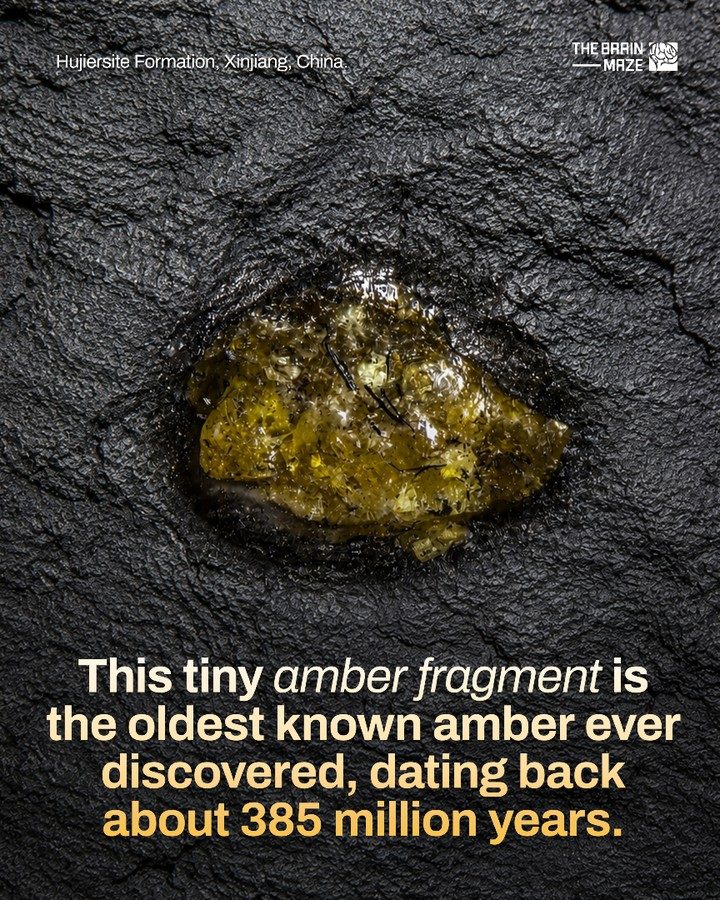
Ancient Amber Discovery
The discovery of the world's oldest known amber, dating back approximately 385 million years, has captivated the scientific community. Found in ancient coal deposits in the Hujiersite Formation of Xinjiang, China, this tiny fossilized resin fragment has revealed that early vascular plants were already producing complex protective resin long before the emergence of modern forests and dinosaurs. This finding challenges our understanding of plant evolution and provides new insights into the early history of plant life on Earth.
Why This Matters
The significance of this discovery extends far beyond the age of the amber. By dating back to a time when vascular plants were just beginning to evolve, this amber offers a unique window into the early development of plant life. Moreover, understanding the evolution of plant resin production can provide valuable information on how early plants adapted to environmental challenges. This discovery encourages us to rethink the timeline of plant evolution, highlighting the need for further research on how plants developed protective mechanisms over millions of years.
Understanding Amber and Its Significance
What is Amber?
Amber is a fossilized tree resin that has been preserved for millions of years. Over time, the resins undergo a process of transformation, turning into the hard, translucent substance we recognize as amber. This process of transformation is what allows us to study ancient plant life and the environments in which these plants thrived.
The Hujiersite Formation
The Hujiersite Formation in Xinjiang, China, is a rich geological site that has yielded numerous significant fossils. The amber fragment discovered in this formation is not the first fascinating find from this region; however, it is one of the most historically significant due to its age. The ancient coal deposits in which the amber was found provide a unique glimpse into the pre-dinosaur era, a time when the Earth's landscape and ecosystems were vastly different from what they are today.
The Evolution of Plant Resin
The discovery of the 385 million-year-old amber provides crucial insights into the evolution of plant resin. Early vascular plants produced complex protective resin, which acted as a defense mechanism against pests and environmental stressors. This finding suggests that the development of resin production was an early adaptation strategy, allowing plants to protect themselves and thrive in diverse environments. The process of resin production in plants has evolved over millions of years, leading to the diverse types of resins we see today.
Practical Tips for Amber Enthusiasts
If you're an amber enthusiast or a geology buff, here are some practical tips for exploring and appreciating amber:
Where to Find Amber
Amber can be found in various regions around the world, including the Baltic Sea region, the Dominican Republic, and certain parts of the United States. However, the Baltic region is particularly renowned for its high-quality amber deposits. Always ensure you have the necessary permits and follow local regulations when collecting amber.
How to Recognize Authentic Amber
Recognizing authentic amber can be challenging, especially for beginners. Here are a few tips to help you authenticate amber:
- Weight: Amber is typically lighter than glass or plastic. It has a lower density, making it feel lighter than it appears.
- Appearance: Authentic amber often has impurities and small air bubbles. Purer-looking amber may be synthetic.
- Heat Test: Amber softens when heated, and it may smell like pine. Be cautious with this test, as it can be destructive.
- Expert Consultation: If you're unsure, consult an expert or a reputable dealer.
Important Takeaways
Amber is more than just a beautiful gemstone; it's a testament to the Earth's ancient history. The discovery of the world's oldest amber, dating back 385 million years, is significant because:
- It provides a unique window into the early development of plant life.
- It challenges our current understanding of plant evolution and adaptation.
- It highlights the protective mechanisms early plants used to survive environmental stressors.
The Hujiersite Formation in China has once again proven to be a treasure trove of ancient fossils. This recent discovery adds to the wealth of knowledge we have about the Earth's geological and biological history, encouraging further research and exploration.
Conclusion
The discovery of the world's oldest known amber in the Hujiersite Formation of Xinjiang, China, is a remarkable milestone in the study of ancient plant life. Dating back 385 million years, this tiny fossilized resin fragment offers valuable insights into the early development of vascular plants and their protective mechanisms. It also underscores the importance of continuing to explore and preserve our geological heritage. Whether you're a scientist, a geology enthusiast, or simply curious about the natural world, the story of this ancient amber is a testament to the enduring power of discovery and the mysteries that still lie hidden within the Earth's crust.
Watch the Reel
Questions readers ask
Where was the world's oldest amber discovered?
The world's oldest amber was discovered in the Hujiersite Formation of Xinjiang, China. This region is known for its ancient coal deposits, which preserved the 385 million year old amber.
How does this amber discovery change our understanding of plant evolution?
The discovery of 385 million year old amber reveals that early vascular plants produced complex protective resin much earlier than previously thought. This finding challenges existing theories by showing that these adaptations were present long before the emergence of modern forests and dinosaurs.
What is the significance of the amber being 385 million years old?
The age of the amber places it in a time when vascular plants were just beginning to evolve. This makes it a unique find, offering a glimpse into the early development of plant life and the protective mechanisms that helped them thrive.
What can the oldest amber tell us about ancient plant adaptations?
The amber provides a rare insight into the strategies that early plants used to protect themselves. The presence of resin, which can trap and preserve other organisms, shows that these plants had developed complex defense mechanisms to support their survival in a challenging environment.
What is the importance of amber resin in understanding prehistoric plant life?
Amber resin is crucial as it provides a tangible record of ancient plant life. By examining the chemical composition and structure of the resin, scientists can gain insights into the types of plants that existed during the pre-dinosaur era and the environmental conditions they faced.
Related deep dives
Similar reads based on topic and creator.



Recent articles
Fresh deep dives from the latest Reels we unpacked.




Comments
Be the first to comment.