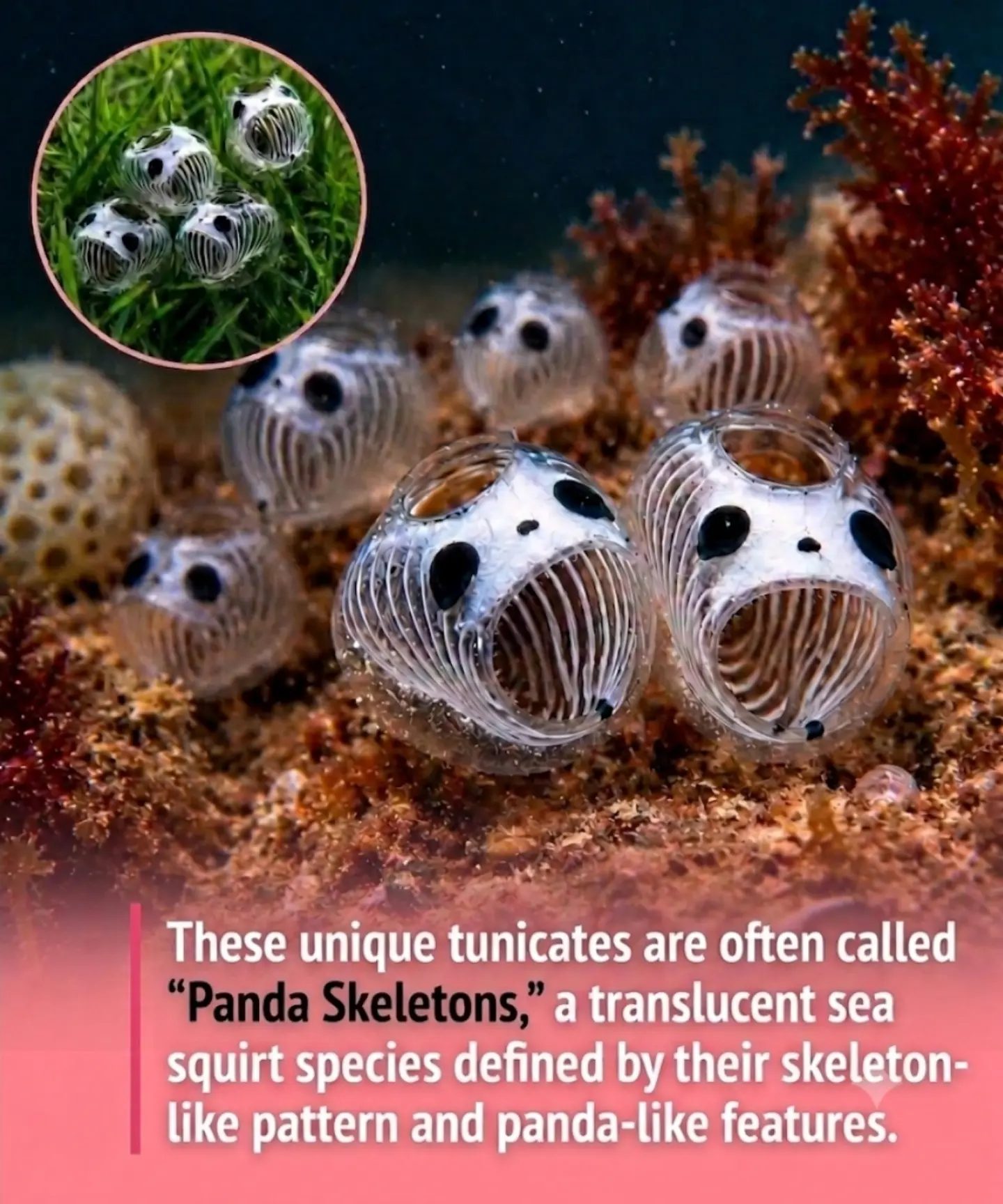
The Panda Skeleton Tunicate: A Fascinating Discovery in the Depths of Okinawa
The panda skeleton tunicate (Clavelina ossipandae) is a remarkable marine invertebrate that has recently garnered significant attention. These tiny creatures, native to the coral reefs off Kume Island in Okinawa, Japan, were officially described by scientists in 2024.
Why This Matters
The discovery of the panda skeleton tunicate is not just another addition to the vast array of marine species. These tunicates play a crucial role in marine ecosystems and offer unique insights into the intricate web of life underwater. Their distinctive appearance and ecological significance make them a subject of great interest for marine biologists and nature enthusiasts alike.
Main Discussion
Discovery and Classification
The panda skeleton tunicate is a species of colonial ascidian, more commonly known as a sea squirt. These tunicates were first formally classified by Japanese scientists in 2024, following a viral social media breakthrough. The unique appearance of these tunicates, with their skeleton-like pattern and panda-like features, quickly captured public imagination and led to their formal classification.
Physical Characteristics
Measuring approximately 2 centimeters in length, these translucent tunicates are defined by their striking appearance. The white "rib-like" structures visible through their translucent bodies are not bones, but horizontal blood vessels running through their gills. The distinctive black frontal spots, reminiscent of a giant panda's eyes and nose, are unique pigmentation patterns. The evolutionary function of these spots remains unknown, adding to the mystery of these fascinating creatures.
Habitat and Ecology
Panda skeleton tunicates thrive in areas with strong ocean currents at depths of 10 to 20 meters. They are filter feeders, extracting plankton and organic particles from seawater. This process contributes directly to the maintenance of localized water quality and marine biodiversity, making these tiny creatures an essential part of their ecosystem.
Ecological Role
As filter feeders, panda skeleton tunicates play a vital ecological role. By extracting plankton and organic particles from seawater, they help maintain the water quality and support marine biodiversity. Their role in the ecosystem underscores the importance of even the smallest marine organisms in maintaining the health of our oceans.
Practical Tips
While the panda skeleton tunicate is not a typical subject for practical tips, there are a few things to keep in mind if you're interested in observing or learning more about these creatures:
- Responsible Observation: If you're planning to observe these tunicates in their natural habitat, always practice responsible diving and snorkeling techniques. Avoid touching or disturbing the corals and marine life.
- Support Conservation Efforts: Support organizations that work towards the conservation of marine ecosystems. This helps protect not only the panda skeleton tunicates but also the entire marine environment.
- Stay Informed: Keep up with the latest research and discoveries related to these tunicates. The scientific community is continually learning more about their ecological role and unique features.
Important Takeaways
The panda skeleton tunicate is a remarkable example of the diversity and complexity of marine life. Their unique appearance and ecological significance highlight the importance of continued research and conservation efforts. By understanding and protecting these creatures, we can contribute to the preservation of marine biodiversity and the health of our oceans.
Conclusion
The discovery of the panda skeleton tunicate has shed new light on the fascinating world of marine invertebrates. These tiny, translucent creatures, with their distinctive panda-like features, play a crucial role in their ecosystem. As we continue to learn more about them, it's essential to appreciate their ecological significance and support efforts to protect their habitat. The panda skeleton tunicate is a testament to the wonders of the natural world and the importance of preserving it for future generations.
Watch the Reel
Questions readers ask
What makes the panda skeleton tunicate stand out among other marine creatures in Okinawa?
The panda skeleton tunicate is unique due to its distinctive 'panda-like' appearance, with a translucent body and dark spots that resemble a panda's fur. This feature, combined with its ecological role in nutrient cycling, makes it a fascinating subject for study.
Where can panda skeleton tunicates be found in Okinawa?
Panda skeleton tunicates are native to the coral reefs off Kume Island in Okinawa, Japan. This specific location is significant for their discovery and understanding of their habitat and behavior.
What role do panda skeleton tunicates play in marine ecosystems?
These tiny creatures contribute to marine ecosystems by filtering seawater, removing small particles and microorganisms, and thus playing a crucial role in nutrient cycling.
What is the significance of the panda skeleton tunicate's recent discovery?
The discovery of the panda skeleton tunicate has garnered significant attention as it sheds light on the intricate web of life underwater, offering unique insights into the biodiversity and ecological processes in Okinawa's coral reefs.
Why might marine biologists be particularly interested in studying panda skeleton tunicates?
Marine biologists are drawn to panda skeleton tunicates because of their unique appearance and the potential insights they can offer into marine ecology. The species' role in nutrient cycling and its place in the Okinawa coral reef ecosystem make them a valuable subject for research.
What are some distinctive features of the panda skeleton tunicate's appearance?
The panda skeleton tunicate is a translucent marine invertebrate with a distinctive 'panda-like' pattern, featuring dark spots that contrast with its light body. These features make it easily recognizable and visually striking.
What other marine creatures might the panda skeleton tunicate resemble?
Due to their elongated, somewhat squid-like body shape and unique spots, panda skeleton tunicates might be mistaken for other squid-like marine creatures at first glance, however, their true identity is revealed by their distinctive panda-like markings and translucent appearance.
Related deep dives
Similar reads based on topic and creator.




Recent articles
Fresh deep dives from the latest Reels we unpacked.




Comments
Be the first to comment.