The Ocean's Vertical Jungle
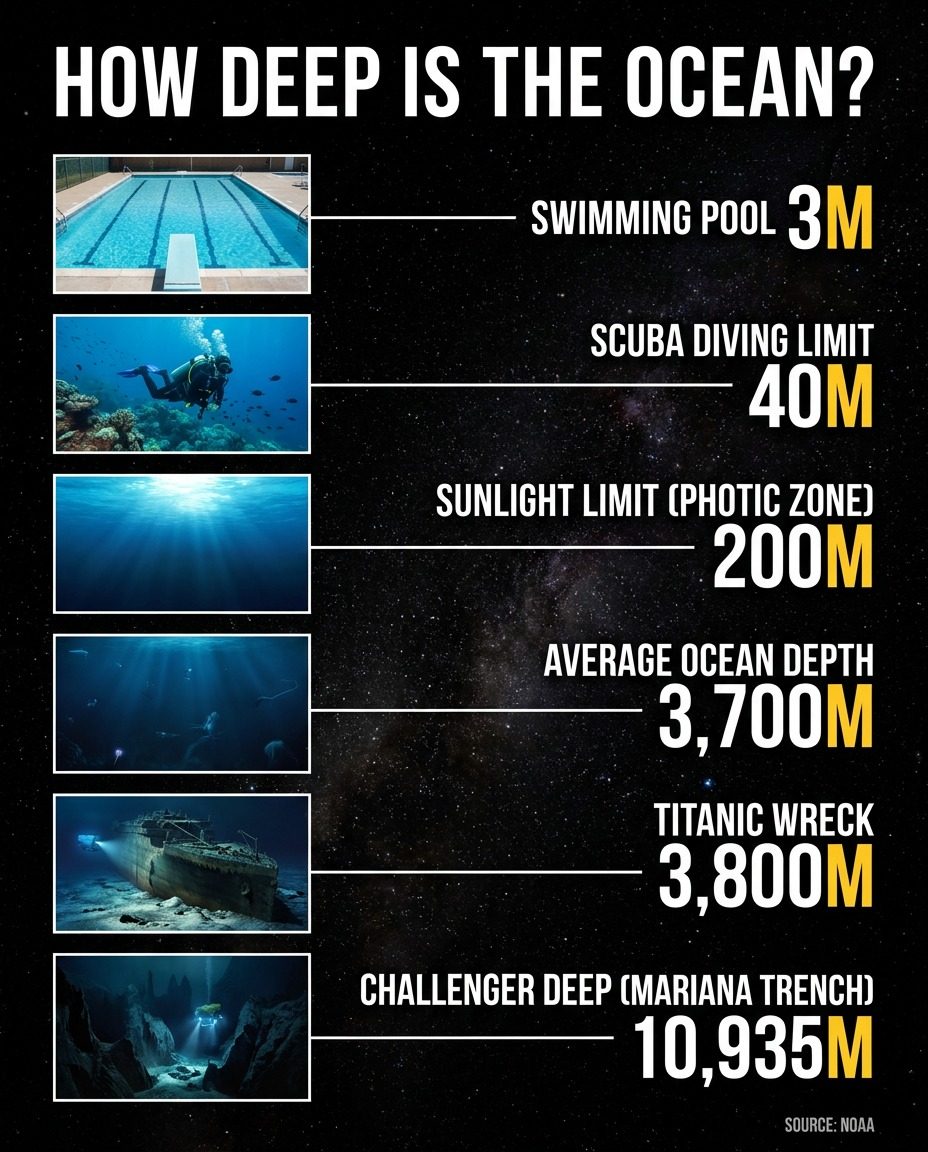
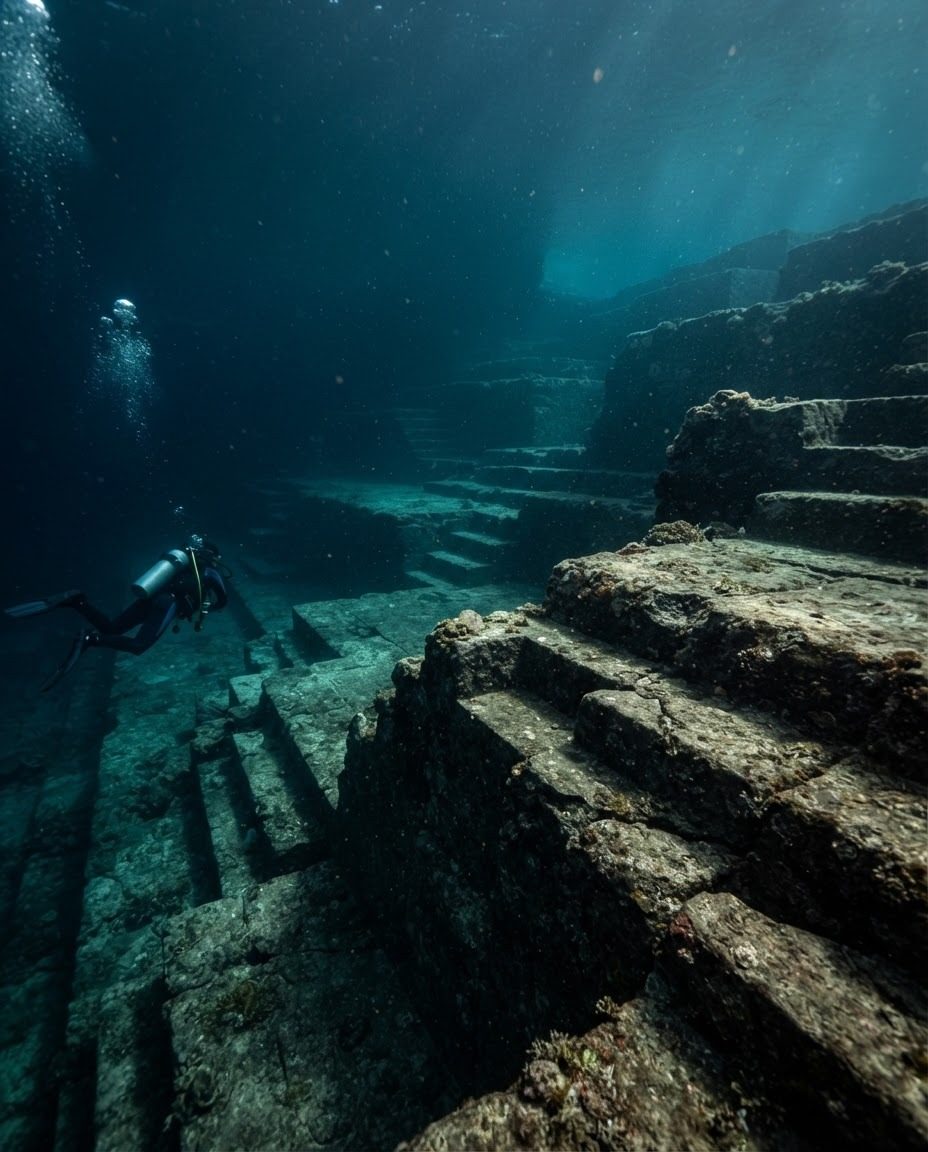
Beneath the waves, depth is not merely a measurement but a gradient of life, light, and extremes. The ocean's floor begins mere meters below us and plummet and descend as much as 11 kilometers at its lowest. The first few meters are easy to first grasp: our poolside depth, just 3 meters. Here, light bends around our feet, and ripples gather just like cloth on a washing line. Only the uppermost layer of the ocean, where sunlight can penetrate, supports abundant marine life like corals, kelp forests, and the fish that inhabit them. This is the photic zone, extending to about 200 meters, where photosynthesis can still occur. Beyond this, the water becomes colder and darker, eventually falling into the deepest, most extreme place, the Challenger Deep. This is why this vertical layering is the remarkable zone. The ocean's layers can be broadly divided into three key zones: the shallowest zone, which is the sunlit zone, alongside the mid ocean depth. The ocean zone ranges between 200 meters and 1 kilometer. Here, the ocean's depth is between about 200 and 1,000 meters, so vessel captivated deep underwater sights. Beyond just 1 kilometer, the sun doesn't reach. Life here is scarce, and the titanic wreck lies at the bottom, with the ship's prow pointing down into an ocean of darkness.They only light this point in the middle of ocean at 14°15'N latitude and 138°48' longitude. Only 3,800 meters underwater. There are tiny ecosystems in the world of life around the black expanse of the ocean that humans are familiar with, far less explorers, however, the exploration of the Challenger Deep is a testament to the mysteries that still lie hidden within the ocean's depths. Divers have explored the Challenger Deep in the Mariana Trench, the deepest known point in the world's oceans, at 10,935 meters. The trench's extreme conditions—near-freezing temperatures, immense pressure, and pitch-black darkness—make it one of the most challenging environments on Earth. Despite these harsh conditions, life persists in the form of extremophile organisms, such as amphipods and snailfish, which have adapted to survive in this unforgiving place. The deepest point on Earth remains one of the most remote and poorly understood regions of our planet.
The Photoc Zone
The photic zone—the sunlit layer where most marine life thrives—extends from the surface to about 200 meters. This is where the vast majority of marine organisms live and play, the ocean ecosystem. It's estimated in this depth between 80–90% of all marine organisms reside. Below 200 meters, high levels of light make photosynthesis impossible. This is why marine life in the deep ocean relies primarily on organic matter sinking from the photic zone above. Only certain areas in the ocean are richly populated by life; these areas depend on the depth of sunlight, and this depth is quite important. If the surface area of the ocean, about 71% of the Earth’s surface, is exposed to sunlight, then the photic zone only covers 374987000 square kilometers.
Extremophiles and the Abyssal Plain
Despite the harsh conditions, life thrives in the depths of the ocean. Extremophile organisms, such as amphipods and snailfish, have evolved unique adaptations to survive in the extreme pressures and near-freezing temperatures of the deep sea and thrives in the dark. At depths of 2,000 to 6,000 meters, the abyssal plain is a vast, featureless expanse of sediment that covers many deep ocean floors. The Mariana Trench is a particularly enigmatic example of this phenomenon. This vast, uneven region's remote islands show temperatures rise with respect to depth. Within the abyss, a range of temperatures have been observed with a median temperature globally of 280–295K. They can range from 250K in the abyss to 295K at 600–800 meters. The boundaries of the Challenger Deep reveal that the ocean is anything but monolithic. The pressure of deep-sea trenches also increases with depth, allowing these tnirs and trenches to house extreme lifeforms.
Watch the Reel
Related deep dives
Similar reads based on topic and creator.
Recent articles
Fresh deep dives from the latest Reels we unpacked.
Comments
Be the first to comment.