Nutrition Profiles of Everyday Foods
Diving into the nutrition profiles of everyday foods reveals surprising differences, even within the same category. Understanding these variations can help make more informed choices about what to eat.
Why This Matters
Nutrition is a critical part of overall health, and knowing the nutritional differences between similar foods can help tailor diets to specific needs. Whether aiming for a high-protein diet, monitoring fat intake, or managing calorie consumption, recognizing these distinctions is key.
Eggs
Brown vs. White Eggs
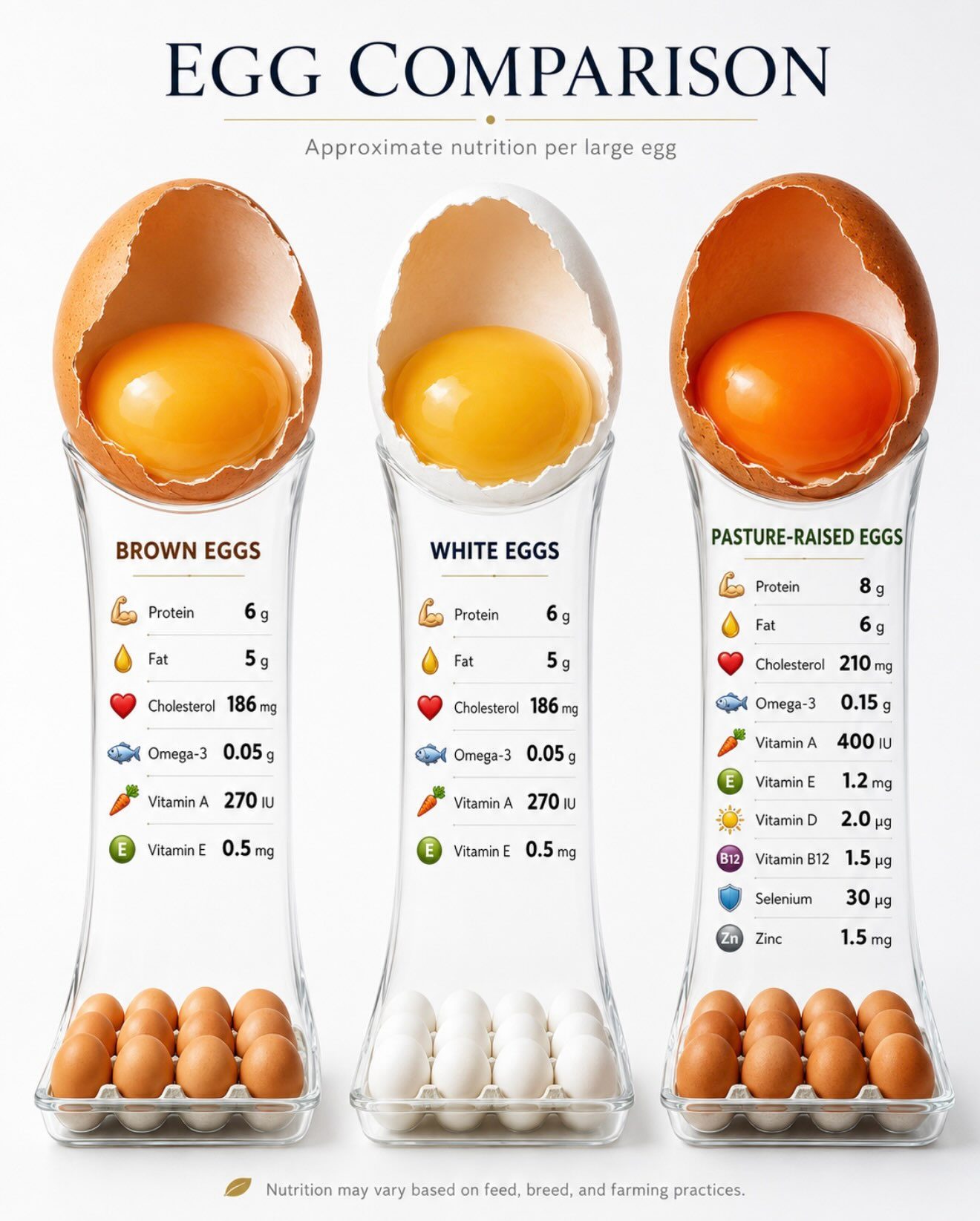
Brown and white eggs may differ in appearance, but nutritionally, they are very similar. The color of the shell depends more on the breed of the hen than on the nutritional quality of the egg. Both types contain approximately 6 grams of protein and 5 grams of fat per large egg.
Pasture-Raised Eggs
Pasture-raised eggs, on the other hand, can vary significantly in their nutritional content. These eggs often contain higher levels of omega-3 fatty acids and selenium due to the hens' diet and farming conditions. Pasture-raised eggs typically have about 8 grams of protein, making them a richer source of certain nutrients.
Milk
Whole, 2%, and Skim Milk
Milk comes in various fat percentages, each with its own nutritional profile. Whole milk, 2% milk, and skim milk all provide similar amounts of protein and carbohydrates. The primary difference lies in fat and total calorie content. Whole milk, with its higher fat content, may feel more satisfying, while skim milk offers the same protein with fewer calories.
Cheese
Cheddar, Mozzarella, and Parmesan
Cheese is a versatile and flavorful food, but the nutritional content varies greatly among different types. Cheddar, mozzarella, and parmesan cheeses all provide a good dose of protein and calcium, but their calorie, fat, and sodium contents differ significantly. Here’s a quick breakdown:
- Cheddar Cheese: Rich and flavorful, cheddar cheese has around 115 calories, 9 grams of protein, and 9 grams of fat per ounce.
- Mozzarella Cheese: Lighter in texture, mozzarella cheese has about 85 calories, 6 grams of protein, and 6 grams of fat per ounce.
- Parmesan Cheese: This hard, concentrated cheese is flavorful and calorie-dense, with approximately 110 calories, 10 grams of protein, and 7 grams of fat per ounce.
Parmesan cheese, in particular, can go a long way due to its strong flavor, making it a useful addition to meals where a small amount can enhance taste without significantly increasing calorie intake.
Beef
Sirloin vs. Ribeye
When it comes to beef, the cut matters. Sirloin is typically leaner and higher in protein per calorie, making it a healthier choice for those watching their fat intake. Ribeye, on the other hand, contains more fat and is usually more calorie-dense.
Ground Beef
Ground beef is versatile and convenient, but its nutritional content can vary based on the lean-to-fat ratio. Lean ground beef is a good source of protein and can be a healthier option, but it's important to check the label to understand the specific nutritional profile.
Cottage Cheese
Fat-Free, Low-Fat, and Full-Fat
Cottage cheese offers a variety of options to fit different dietary needs. Fat-free, low-fat, and full-fat cottage cheeses can all be part of a balanced diet.
- Fat-Free Cottage Cheese: This version has around 80 calories, 14 grams of protein, and 0 grams of fat per half cup, making it a good choice for those watching their fat intake.
- 2% Low-Fat Cottage Cheese: With about 90 calories, 12 grams of protein, and 2.5 grams of fat per half cup, this option offers a middle ground.
- 4% Full-Fat Cottage Cheese: This richer version has approximately 110 calories, 12 grams of protein, and 5 grams of fat per half cup, providing a creamier texture and potentially more satisfying experience.
Cottage cheese can also be high in sodium, so it’s important to check the label if sodium intake is a concern.
Yogurt
Regular, Greek, and Skyr
Yogurt comes in various forms, each with its own nutritional profile. Regular yogurt, Greek yogurt, and skyr can differ greatly in protein and sugar content. Plain Greek yogurt and skyr are often higher in protein, making them a good choice for those looking to increase protein intake. Flavored varieties may contain more added sugar, so it's important to check the label and choose based on personal taste and dietary goals.
Practical Tips
When choosing foods, consider the specific nutritional needs and goals. For example, opt for pasture-raised eggs or lean ground beef if aiming for higher protein and lower fat. Use parmesan cheese sparingly to add flavor without excessive calories. Always check the label for accurate nutritional information, as variations can occur based on brand and farming practices.
Important Takeaways
- Brown and white eggs are nutritionally similar; pasture-raised eggs may offer additional nutrients.
- Whole milk is more satisfying, while skim milk is lower in calories.
- Cheese types vary significantly in calories, fat, and sodium.
- Beef cuts differ in lean-to-fat ratios; choose based on dietary needs.
- Cottage cheese and yogurt offer various options to fit different dietary goals.
Conclusion
Understanding the nutritional differences between similar foods can help make more informed choices about what to eat. Whether aiming for a high-protein diet, monitoring fat intake, or managing calorie consumption, recognizing these distinctions is key. Always check the label for accurate nutritional information, as variations can occur based on brand and farming practices. With this knowledge, it's easier to tailor diets to specific needs and enjoy a balanced, nutritious diet.
Watch the Reel
Questions readers ask
What are the key nutritional differences between eggs and cheese?
Eggs and cheese differ significantly in their nutritional profiles. Eggs are a complete protein source, containing all essential amino acids, and are lower in calories and fat compared to cheese. Cheese, on the other hand, provides more calcium and is higher in fat, particularly saturated fat.
How does the milk fat percentage in cheese affect its nutritional content?
The milk fat percentage in cheese directly impacts its nutritional content. Full-fat cheeses have higher levels of calories, total fat, and saturated fat compared to low-fat or non-fat cheese brands, which are designed to reduce these components. This can be key for those monitoring their fat intake.
What are the nutritional benefits of choosing cottage cheese over eggs?
Cottage cheese is lower in calories than eggs, and it's also higher in protein, with around 14 grams per 1/2 cup. It's also a good source of calcium and phosphorus. However, it has a higher sodium content, so it may not be the best choice for those on a low-sodium diet. Also, it may not be suitable for those looking for a quick, convenient breakfast option.
How do farming methods impact the nutritional content of eggs and dairy products?
Farming methods can influence the nutritional content of eggs and dairy products. For instance, chickens raised on pasture may produce eggs with higher omega-3 fatty acids. Similarly, dairy products may vary in their nutritional content, depending on the cow's diet and the farming practices employed, such as grass-fed versus grain-fed.
Which has more protein, eggs or cheese, and how does it compare to cottage cheese?
One large egg contains about 6 grams of protein, while an ounce of cheddar cheese contains around 7 grams. Cottage cheese is particularly high in protein, with around 14 grams per 1/2 cup. Therefore, cottage cheese is a particularly good source of protein, especially for those looking to increase their protein intake.
Are there any significant nutritional differences between different types of cheese?
Yes, different types of cheese vary in their nutritional content. For example, hard cheeses like cheddar have a higher fat and calorie content compared to soft cheeses like mozzarella. Additionally, processed cheeses often contain more sodium and fewer nutrients compared to natural cheeses.
How do the calories in eggs compare to those in cheese and cottage cheese?
One large egg contains about 70 calories, while an ounce of cheddar cheese has around 115 calories. Cottage cheese is lower in calories, with around 110 calories for 1/2 cup. Therefore, cottage cheese may be a better option for those watching their calorie intake, compared to a serving of cheese, while eggs are lower in calories compared to both.
Recent articles
Fresh deep dives from the latest Reels we unpacked.




Comments
Be the first to comment.