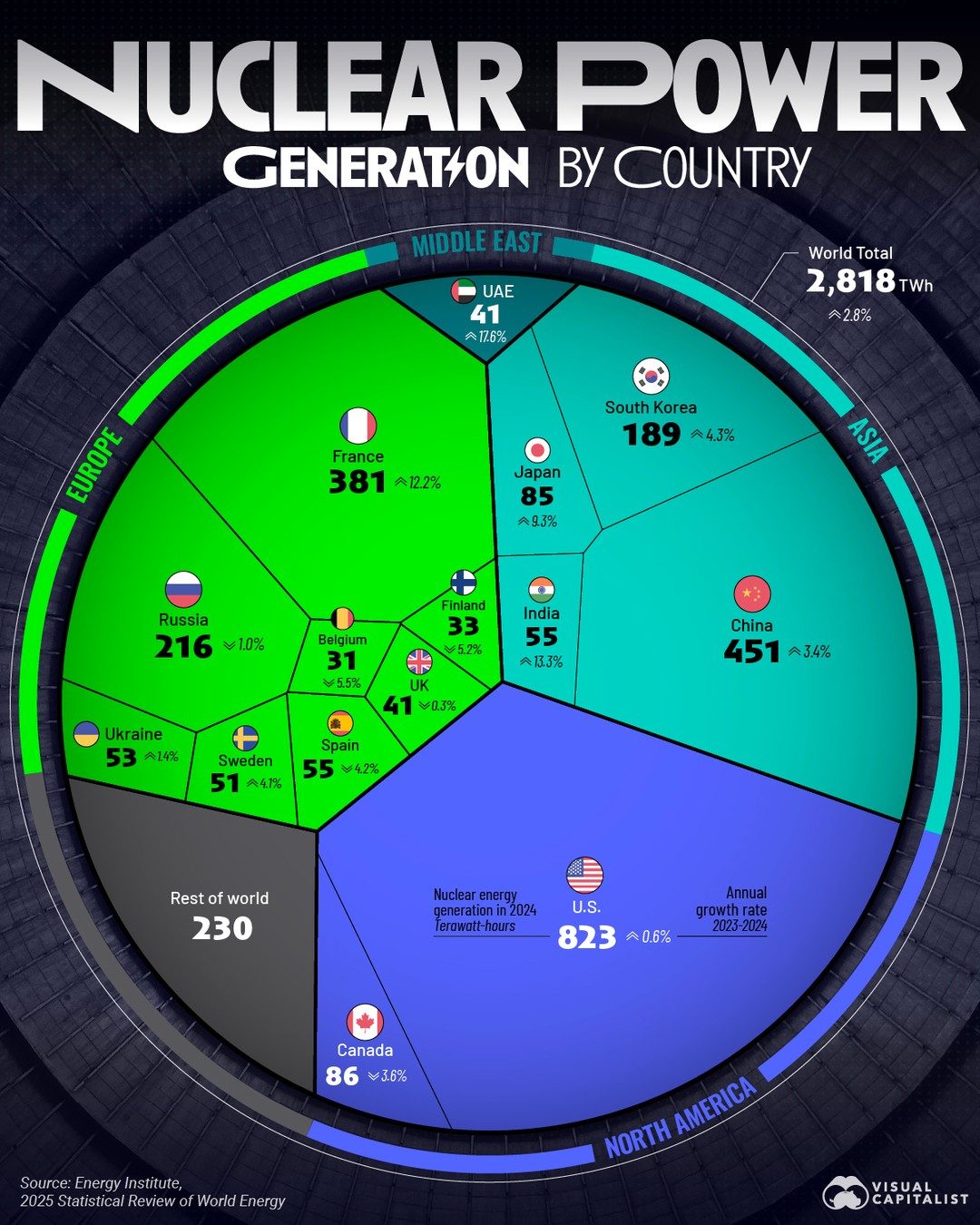
Nuclear Power Generation by Country
Nuclear power is a significant component of the global energy mix, with various countries contributing to its generation. Understanding the distribution of nuclear power generation by country offers insights into the world's energy landscape and the role of nuclear energy in meeting electricity demands.
Context / Why this matters
The global energy landscape is diverse, and nuclear power plays a crucial role in many countries' energy mixes. The data on nuclear power generation by country in 2024 provides a snapshot of how different nations contribute to global nuclear energy production. This information is valuable for understanding energy trends, identifying key players in nuclear energy, and assessing the future of nuclear power in the global energy sector.
Main discussion
Global Nuclear Power Generation
The total nuclear power generation worldwide in 2024 stands at 2,818 TWh. This substantial figure highlights the importance of nuclear energy in meeting global electricity demands. The annual growth rate of nuclear power generation from 2023 to 2024 is projected to be 0.6%. This modest growth indicates a relatively stable nuclear energy sector, but it also underscores the need for continuous investment and innovation to maintain and potentially increase nuclear power output in the future.
Key Contributors to Nuclear Power Generation
Several countries stand out as major contributors to global nuclear power generation. China leads the way with 451 TWh, followed by the United States, which accounts for nearly 30% of global nuclear power generation. Other significant contributors include South Korea, Russia, and Finland. The United Kingdom, Ukraine, Spain, and Sweden also play notable roles, each contributing to the global nuclear energy mix.
Regional Insights
Asia
Asia is a significant player in nuclear power generation, with China topping the list. China's 451 TWh contribution is a testament to its investment in nuclear energy as a reliable source of electricity. South Korea and Japan are also key contributors, generating 189 TWh and 33 TWh, respectively. These countries leverage nuclear energy to support their industrial and residential electricity needs.
Europe
In Europe, countries like Russia, Finland, and the UK are significant nuclear power generators. Russia's contribution stands at 216 TWh, making it a leading producer in the region. Finland follows with 55 TWh, while the UK generates 55 TWh. Belgium, Ukraine, Spain, and Sweden also contribute to the European nuclear energy landscape, with Ukraine generating 53 TWh, Spain producing 55 TWh, and Sweden generating 51 TWh. These countries rely on nuclear energy to ensure a stable and diverse energy supply.
Rest of the World
The rest of the world, which includes countries not explicitly mentioned in the data, generates 230 TWh of nuclear power. This figure highlights the global reach of nuclear energy and its role in meeting electricity demands in various regions.
Annual Growth Rate
The annual growth rate of nuclear power generation from 2023 to 2024 is projected to be 0.6%. This modest growth rate suggests a stable but not rapidly expanding nuclear energy sector. Continued investment in nuclear technology, safety measures, and innovative solutions will be crucial for sustaining and potentially increasing nuclear power generation in the future.
Practical tips
For those interested in understanding and leveraging nuclear power generation data, consider the following practical tips:
-
Stay Informed: Keep up-to-date with the latest nuclear power generation statistics and trends. This information can help you make informed decisions about energy investments, policy-making, and sustainability efforts.
-
Evaluate Regional Contributions: Analyze the contributions of different regions and countries to global nuclear power generation. This analysis can provide insights into regional energy dynamics and the role of nuclear energy in meeting electricity demands.
-
Assess Growth Potential: Understand the annual growth rate of nuclear power generation and evaluate the potential for future growth. This assessment can help you identify opportunities for investment, innovation, and policy development in the nuclear energy sector.
-
Explore Data Sources: Utilize reliable sources like the Energy Institute's Statistical Review of World Energy for accurate and comprehensive data on nuclear power generation. This information can support your research, analysis, and decision-making in the energy sector.
-
Compare Energy Sources: Compare nuclear power generation data with data on other energy sources. This comparison can help you understand the broader energy landscape and the role of nuclear energy within it.
Important takeaways
- Nuclear power generation is a critical component of the global energy mix, with a total of 2,818 TWh generated worldwide in 2024.
- Key contributors to global nuclear power generation include China, the United States, South Korea, Russia, and Finland.
- The annual growth rate of nuclear power generation from 2023 to 2024 is projected to be 0.6%, indicating a stable but not rapidly expanding sector.
- Asia and Europe are significant players in nuclear power generation, with countries like China, South Korea, Russia, and Finland leading the way.
- The rest of the world also contributes to global nuclear power generation, highlighting the global reach of nuclear energy.
- Understanding nuclear power generation data can provide valuable insights into energy trends, regional contributions, and future growth potential.
Conclusion
Nuclear power generation by country offers a detailed look at the global energy landscape and the significant role of nuclear energy in meeting electricity demands. By examining the contributions of key countries, understanding the annual growth rate, and evaluating regional insights, you can gain a comprehensive understanding of the nuclear energy sector. This knowledge is invaluable for investing in the energy mix, developing sustainable energy policies, and driving innovation in nuclear technology.
Watch the Reel
Questions readers ask
Which country is the leading producer of nuclear power in 2024?
China tops the list in 2024, contributing significantly to global nuclear power generation. This prominence is driven by the country's extensive nuclear power infrastructure and strategic investments in nuclear energy.
How much nuclear power did the United States generate in 2024?
The United States generated 799 TWh of nuclear power in 2024, making it one of the largest contributors to global nuclear energy production. This output underscores the U.S.'s role as a key player in the global nuclear power landscape.
What is the significance of South Korea's nuclear power production in 2024?
South Korea generated 159 TWh of nuclear power in 2024, ranking it among the top nuclear power producers worldwide. This highlights South Korea's commitment to nuclear energy as a significant component of its energy mix.
How does Russia's nuclear power generation compare to other countries in 2024?
Russia produced 215 TWh of nuclear power in 2024, placing it as a major contributor to global nuclear energy. This output reflects Russia's substantial nuclear infrastructure and its role in the international nuclear energy market.
What trends can be observed in Japan's nuclear power generation in 2024?
Japan generated 59 TWh of nuclear power in 2024, showing a gradual recovery in its nuclear power production following the 2011 Fukushima Daiichi disaster. This trend indicates Japan's ongoing efforts to integrate nuclear power back into its energy mix.
How does the global nuclear power generation in 2024 compare to previous years?
The global nuclear power generation in 2024 reached 2818 TWh, reflecting a steady increase over previous years. This growth is attributed to new nuclear power plants coming online and existing ones operating at higher capacities.
Related deep dives
Similar reads based on topic and creator.



Recent articles
Fresh deep dives from the latest Reels we unpacked.




Comments
Be the first to comment.