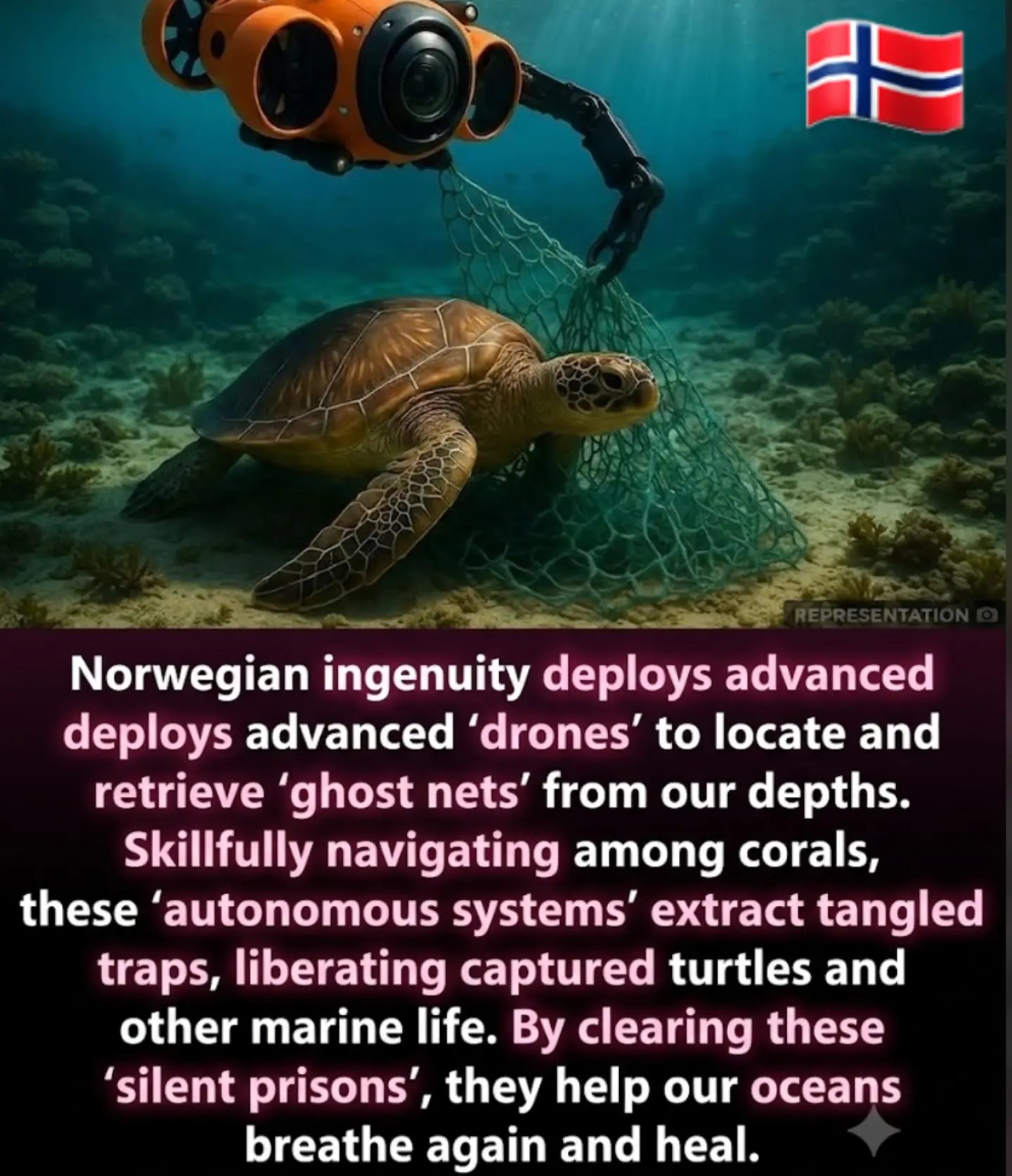
Marine Conservation with Drones
Drones are revolutionizing marine conservation by tackling a significant but overlooked problem: ghost nets. These are commercial fishing nets that have been lost, abandoned, or discarded at sea. They pose a severe threat to marine life, as they continue to catch and kill animals for decades without human intervention.
Ghost nets drift through ocean currents or settle on reefs, ensnaring sea turtles, seals, dolphins, and fish. The ongoing entrapment not only harms individual animals but also disrupts entire marine ecosystems.
Why This Matters
The impact of ghost nets on marine life is profound. They represent a silent, continuous threat that can go unaddressed for years. This is where drones come into play. Equipped with advanced technology, drones are being used to locate and retrieve these ghost nets, offering a practical solution to a widespread problem.
The Norwegian Initiative
Norway has been at the forefront of leveraging drone technology in marine conservation. They use Autonomous Underwater Vehicles (AUVs) and specialized drones equipped with high-resolution side-scan sonar and AI-powered computer vision to detect submerged, tangled gear in deep water.
These autonomous systems navigate through complex underwater environments, such as coral reefs, to extract tangled traps. They are designed to minimize ecological damage, ensuring that the process of removing ghost nets does not further harm sensitive marine habitats.
The Technology Behind Marine Drones
The drones used in this conservation effort are equipped with sophisticated technology that allows them to operate efficiently and effectively. Here are some key components:
- High-Resolution Side-Scan Sonar: This tool provides detailed images of the ocean floor, helping drones to pinpoint the exact locations of ghost nets.
- AI-Powered Computer Vision: This technology enhances the drones' ability to identify and distinguish ghost nets from other underwater structures, ensuring precision in their retrieval.
- Robotic Arms and Specialized Tools: These allow the drones to detach and retrieve ghost nets without causing additional ecological damage. This is particularly important in sensitive areas like coral reefs, where even the slightest disruption can have lasting effects.
The Benefits of Using Drones
The use of drones in marine conservation offers several distinct advantages:
- Efficiency: Drones can cover large areas quickly, making them ideal for locating ghost nets scattered across vast ocean floors.
- Precision: Advanced technology allows drones to navigate through complex underwater environments with high precision, minimizing the risk of collateral damage.
- Sustainability: By reducing the need for human divers, drones make the process of retrieving ghost nets more sustainable and less risky.
Main Discussion
Drones are transforming marine conservation by addressing the problem of ghost nets. Their precision, efficiency, and sustainability make them a valuable tool in the ongoing effort to protect marine life and restore ocean health.
Detection and Retrieval
The detection and retrieval process involves several stages. The first step is to locate the ghost nets, which are often submerged and difficult to spot. Drones equipped with high-resolution side-scan sonar and AI-powered computer vision can identify these nets with remarkable accuracy.
Once located, the next challenge is to retrieve the nets without causing further damage. This is where the drones' robotic arms and specialized tools come into play. They are designed to carefully extract the nets from sensitive environments, ensuring that the marine ecosystem is not disrupted.
Restoring Marine Habitats
Removing ghost nets has an immediate and positive impact on marine life. It restores habitats that have been disrupted by these tangled traps, allowing marine species to thrive once again. By freeing captured animals and preventing further entrapment, these efforts contribute to the overall health and sustainability of ocean ecosystems.
The Role of Innovation
Ongoing innovation in drone technology will continue to enhance marine conservation efforts. Advances in AI, sonar, and robotic technology will make drones even more effective in locating and retrieving ghost nets. This technology promises a more sustainable and efficient approach to preserving marine life.
Practical Tips
If you're interested in contributing to marine conservation, here are some practical tips:
- Stay Informed: Keep up-to-date with the latest developments in marine conservation and drone technology. Understanding the latest innovations can help you support effective conservation efforts.
- Support Research and Development: Advocating for increased funding and resources for marine conservation research and development can accelerate the adoption of new technologies.
- Get Involved: Participate in local conservation efforts, such as beach cleanups and awareness campaigns. These activities help raise awareness and engage communities in the fight against marine pollution.
Important Takeaways
Using drones to locate and retrieve ghost nets is a game-changer in marine conservation. Norway's pioneering work in this area demonstrates the potential of technology to address complex environmental challenges. By enhancing the efficiency, precision, and sustainability of marine conservation efforts, drones are helping to restore and protect vital marine ecosystems.
Conclusion
The use of drones in marine conservation represents a significant advancement in the fight against ghost nets. By leveraging advanced technology and innovative solutions, drones are making a tangible difference in restoring ocean health. As we continue to develop and refine these tools, the future of marine conservation looks increasingly promising. The ongoing efforts to liberate marine life from the silent threat of ghost nets are a testament to human ingenuity and our commitment to preserving the natural world.
Watch the Reel
Questions readers ask
What are ghost nets and how do they affect marine life?
Ghost nets are fishing nets that have been lost, abandoned, or discarded in the ocean, often continuing to trap and kill marine animals for many years. They pose a significant threat to marine life, including sea turtles, seals, and fish, and can disrupt entire marine ecosystems.
How do Norwegian drones help in the removal of ghost nets?
Norwegian drones are equipped with advanced technology that enables them to locate and retrieve ghost nets. This process involves aerial monitoring to identify the abandoned fishing gear and subsequent retrieval to prevent further harm to marine life.
What kinds of marine animals are most affected by ghost nets?
A variety of marine animals are affected by ghost nets, including sea turtles, seals, dolphins, and fish. These animals can become trapped and drown, leading to significant population declines in some cases.
Can underwater drones be used for ghost net removal?
Yes, underwater drones, in conjunction with aerial drones, can be effective in locating and removing ghost nets. These drones can navigate beneath the surface to identify and retrieve nets that are submerged or entangled in underwater structures.
Why is the removal of ghost nets important for marine conservation?
Removing ghost nets is crucial for marine conservation because it directly reduces the ongoing harm to marine animals and helps restore the health of marine ecosystems. Ghost nets are a persistent threat, and their removal can mitigate long-term damage to marine life.
Recent articles
Fresh deep dives from the latest Reels we unpacked.




Comments
Be the first to comment.