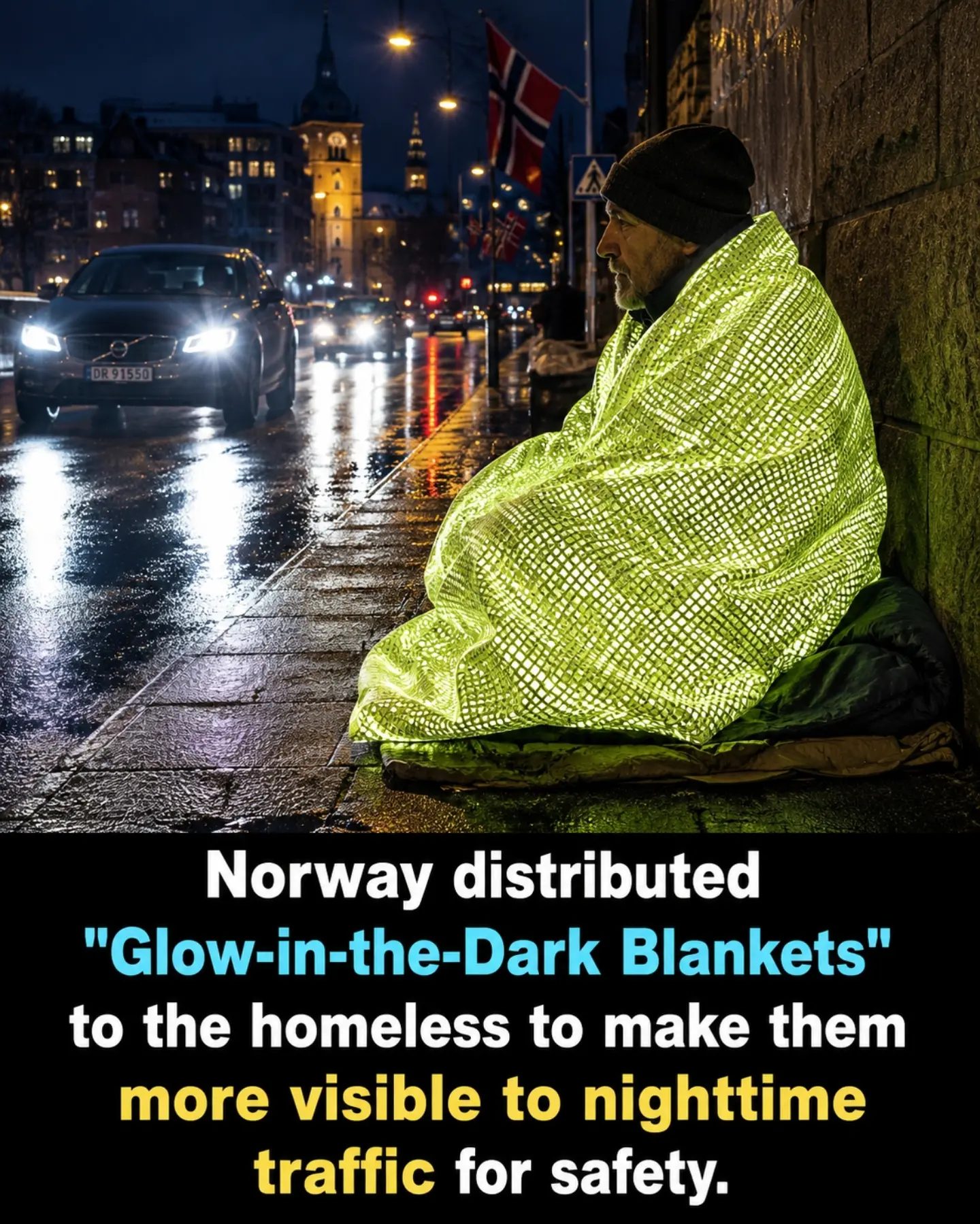
Safety Blankets for the Homeless
The distribution of glow-in-the-dark, reflective blankets to the homeless by Norway is an initiative that stands out for its practicality and immediate impact on safety. This program is designed to enhance the visibility of individuals experiencing homelessness, particularly during nighttime, making them more noticeable to drivers and thus reducing the risks associated with being on the streets.
Why this matters
Homelessness is a complex issue that affects countless individuals, leaving them in vulnerable situations. One of the most pressing concerns is safety, especially at night. The risks of being overlooked by drivers or getting hit by vehicles are substantially higher in low-visibility conditions. The use of reflective, glow-in-the-dark blankets addresses this critical need by significantly improving visibility.
Main discussion
The Design and Function of Reflective Blankets
Reflective blankets, often designed in bright yellow, are made from materials that have the unique ability to glow in low-light conditions. This feature is crucial for making individuals more visible to nighttime traffic. The glow-in-the-dark properties of these blankets are activated when exposed to light, whether from the sun during the day or artificial light at night, ensuring that the wearer remains visible throughout the darkest hours.
The Impact on Safety
The primary benefit of these blankets is the enhanced visibility they provide. For drivers, the bright, reflective material makes it much easier to spot a person on the side of the road, reducing the likelihood of accidents. This initiative doesn't just help the homeless individuals themselves; it also fosters a safer environment for everyone on the road. The reflective properties ensure that even from a distance, a person wrapped in such a blanket is hard to miss.
The Initiative in Norway
Norway's distribution of these blankets is part of a broader effort to support its homeless population. By addressing safety concerns, the initiative helps to mitigate some of the immediate risks faced by individuals experiencing homelessness. This kind of support is crucial in reducing the overall vulnerability of this population. The initiative’s success has shown that practical interventions can have a tangible impact on safety and well-being.
Public Perception and Community Support
The initiative has garnered positive reactions from the public. Many viewers appreciate the practicality and direct impact of this initiative. The visual imagery of a person wrapped in a bright, reflective blanket on a wet sidewalk at night drives home the stark reality of being homeless and the importance of such interventions. The initiative not only provides a practical solution but also serves as a reminder of the human side of homelessness, fostering empathy and support within the community.
Practical Tips
While the initiative in Norway is a commendable example, it’s important to consider how similar efforts can be implemented in other regions. Here are some practical tips for supporting homeless individuals:
- Distribute Reflective Gear: Blankets, vests, and other reflective gear can significantly enhance visibility. Local organizations and governments can organize drives to collect and distribute these items.
- Community Awareness: Raising awareness within the community can lead to greater support and empathy. Workshops and awareness campaigns can highlight the importance of visibility and safety for individuals experiencing homelessness.
- Collaborate with Local Businesses: Partnering with local businesses can provide resources and support. For example, businesses can donate reflective gear, host collection drives, or sponsor community events.
- Policy Advocacy: Advocating for policies that support the homeless community is crucial. Encourage local governments to allocate resources for safety initiatives and other forms of support.
Important Takeaways
- The use of reflective, glow-in-the-dark blankets is a practical and effective way to enhance the safety of homeless individuals.
- Visibility is a critical factor in reducing the risks associated with being on the streets, especially at night.
- Public support and community involvement are essential for the success of such initiatives.
- Practical interventions like the distribution of reflective gear can have a tangible impact on the safety and well-being of the homeless population.
Conclusion
The distribution of glow-in-the-dark, reflective blankets to the homeless by Norway is a testament to the power of practical interventions in addressing immediate safety concerns. By enhancing visibility, these blankets provide a straightforward solution to a pressing issue, offering a measure of protection and support to individuals experiencing homelessness. This initiative serves as a model for other regions, demonstrating the importance of community involvement and practical solutions in addressing complex social issues.
Watch the Reel
Questions readers ask
How do the glow-in-the-dark blankets work to improve safety for the homeless?
The blankets are designed with reflective materials that absorb light during the day and glow in the dark, enhancing the visibility of individuals wrapped in them during nighttime. This makes homeless people more noticeable to drivers, significantly reducing the risk of accidents.
Who is behind this initiative and where is it being implemented?
This initiative is spearheaded by the Norwegian government and is currently being implemented across Norway. The program aims to distribute these safety blankets to homeless individuals in urban and rural areas to enhance their safety.
Can these blankets be used for purposes other than safety?
While the primary purpose of these blankets is to enhance nighttime visibility and safety, they also provide warmth and comfort, which are crucial for individuals experiencing homelessness. The reflective material can also help in emergencies, making it easier to locate someone in need of assistance.
How effective are glow-in-the-dark, reflective blankets in reducing road accidents?
Studies have shown that reflective materials can significantly increase the chances of being seen by drivers, particularly in low-light conditions. By making homeless individuals more visible, the blankets can greatly reduce the likelihood of accidents involving pedestrians.
Are there plans to expand this initiative to other countries?
While the initiative is currently focused on Norway, the success of the program could inspire similar efforts in other countries. The concept is simple, cost-effective, and has the potential to save lives, making it a viable solution for other nations facing similar challenges.
How can I support or donate to this initiative?
Supporting this initiative typically involves contacting local government offices and charities to inquire about needs and donation opportunities. Financial contributions, volunteering, or donating additional supplies can all help sustain and expand the program.
Recent articles
Fresh deep dives from the latest Reels we unpacked.




Comments
Be the first to comment.