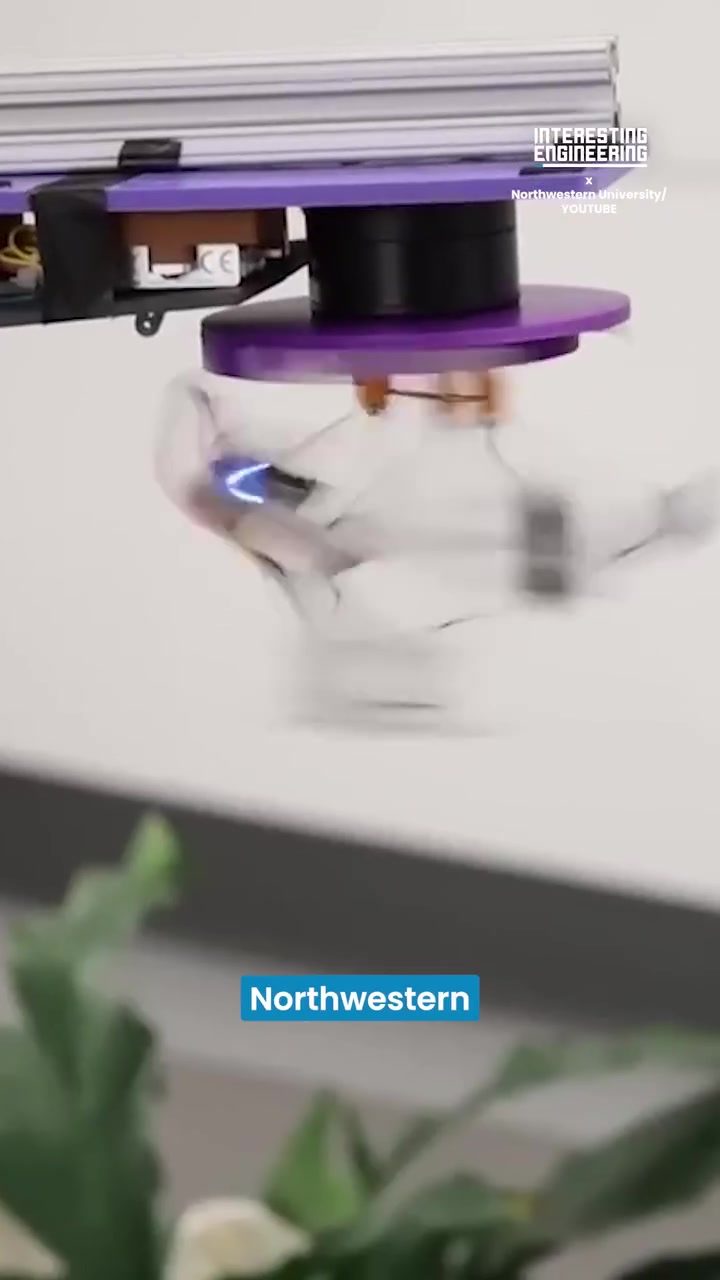
Drone Harness Design: The Phantom Twist
The Phantom Twist is a revolutionary drone developed by engineers at Northwestern University. This innovative drone harnesses motion blur to significantly reduce its visibility during flight, making it an ideal choice for low-disruption aerial operations. The drone spins at an astonishing 25 times per second, creating a blur effect that makes it nearly invisible to the naked eye.
Why This Matters
The Phantom Twist's unique design addresses a critical need in the drone industry: the ability to operate covertly without drawing unwanted attention. This is particularly important for applications such as wildlife monitoring, environmental research, and surveillance. By minimizing its visual signature, the Phantom Twist can perform its tasks more effectively and unobtrusively. Additionally, this technology can have significant implications for military and security operations, where stealth is a crucial factor.
Main Discussion
The Science Behind Motion Blur
Motion blur is a visual effect that occurs when an object moves too quickly for the human eye to process accurately. In the case of the Phantom Twist, this effect is intentionally amplified to make the drone nearly invisible. The drone's rapid spinning, up to 25 times per second, creates a blur that obscures its shape and makes it indistinguishable from its surroundings. This is a clever application of a well-known optical phenomenon, enhancing the drone's stealth capabilities.
AI-optimized Design
The Phantom Twist's design is not just a stroke of engineering genius; it is the result of advanced AI optimization. The AI algorithms have fine-tuned the drone's structure and movement patterns to make it around 10 times less visually noticeable than conventional quadcopters. This level of optimization ensures that the drone can operate in a variety of environments without being easily detected.
Bio-inspired Engineering
The Phantom Twist's bio-inspired design is another key feature that sets it apart. The drone utilizes leg-like structures, resembling those found in insects and other small flying creatures. These structures provide stability and maneuverability, allowing the drone to navigate complex environments with ease. The bio-inspired design not only enhances the drone's performance but also makes it more visually appealing and efficient.
Practical Applications
The Phantom Twist's low-visibility capabilities make it suitable for a wide range of applications. In environmental research, for example, the drone can be used to monitor wildlife without disturbing the animals. In military and security operations, the drone's stealth features can provide a significant advantage, allowing it to gather intelligence without being detected. Additionally, the drone can be used for tasks such as aerial photography and videography, where unobtrusive operation is essential.
Challenges and Considerations
While the Phantom Twist offers many advantages, there are also challenges and considerations to keep in mind. Operating at high speeds can be energy-intensive, potentially reducing the drone's flight time. Additionally, the rapid spinning motion may pose challenges for stabilization and control, requiring advanced algorithms and sensors to maintain stability. Despite these challenges, the Phantom Twist represents a significant advancement in drone technology and a promising step toward more covert aerial operations.
Practical Tips
If you're considering using a drone like the Phantom Twist for your projects, here are some practical tips to keep in mind:
- Understand the Environment: Assess the environment where the drone will be used. Low-visibility capabilities are most effective in environments where the drone can blend in with the surroundings.
- Optimize Flight Time: Since high-speed operation can be energy-intensive, plan your flights carefully to maximize efficiency and minimize downtime.
- Advanced Control: Make sure you have the necessary technology and expertise to control and stabilize the drone effectively, given its high-speed operation and unique design.
- Legal Considerations: Always comply with local laws and regulations regarding drone use, especially in sensitive areas or for specialized applications.
Important Takeaways
The Phantom Twist drone from Northwestern University represents a groundbreaking advancement in drone technology. By harnessing motion blur and AI-optimized design, it offers unparalleled stealth capabilities, making it ideal for a variety of applications. Its bio-inspired design and advanced engineering make it a versatile and effective tool for low-disruption aerial operations.
Conclusion
In conclusion, the Phantom Twist drone's ability to become nearly invisible during flight opens up new possibilities for covert and unobtrusive aerial operations. Its innovative design and advanced features make it a valuable tool for researchers, environmentalists, and security professionals alike. As drone technology continues to evolve, the Phantom Twist stands out as a prime example of how cutting-edge engineering can push the boundaries of what is possible.
Watch the Reel
Questions readers ask
How does the Phantom Twist drone achieve invisibility?
The Phantom Twist drone achieves invisibility through rapid spinning. By rotating 25 times per second, it creates a motion blur effect that makes it nearly undetectable to the human eye, minimizing its visual signature during flight.
What are the primary uses of the Phantom Twist drone?
The Phantom Twist is designed for covert operations in both civilian and military contexts. Its low-visibility flight makes it suitable for tasks such as wildlife monitoring, environmental research, and surveillance where minimizing disruption is crucial.
How is the Phantom Twist drone optimized for flight?
The drone's flight is optimized using advanced AI, allowing it to spin at precisely 25 rotations per second. This AI optimization ensures that the drone can maintain its invisibility while carrying out its missions effectively.
Who developed the Phantom Twist drone?
The Phantom Twist drone was developed by a team of engineers at Northwestern University. These engineers focused on creating a drone that could maximize motion blur to enhance its covert capabilities.
What makes the Phantom Twist drone ideal for military operations?
The Phantom Twist's ability to spin rapidly and become nearly invisible makes it an excellent choice for military operations that require stealth. Its low-visibility design allows it to perform tasks without drawing attention, enhancing its effectiveness in covert missions.
Can the Phantom Twist drone be used for environmental research?
Yes, the Phantom Twist drone is well-suited for environmental research due to its low-disruption flight capabilities. By minimizing its visibility, it can observe and monitor environmental conditions without disturbing wildlife or natural habitats.
How does the spinning mechanism of the Phantom Twist drone work?
The spinning mechanism of the Phantom Twist is designed to rotate the drone's entire body at high speeds. This rapid rotation creates a visual blur, making the drone nearly invisible to human observers and allowing it to perform tasks without being easily detected.
Related deep dives
Similar reads based on topic and creator.


Recent articles
Fresh deep dives from the latest Reels we unpacked.




Comments
Be the first to comment.