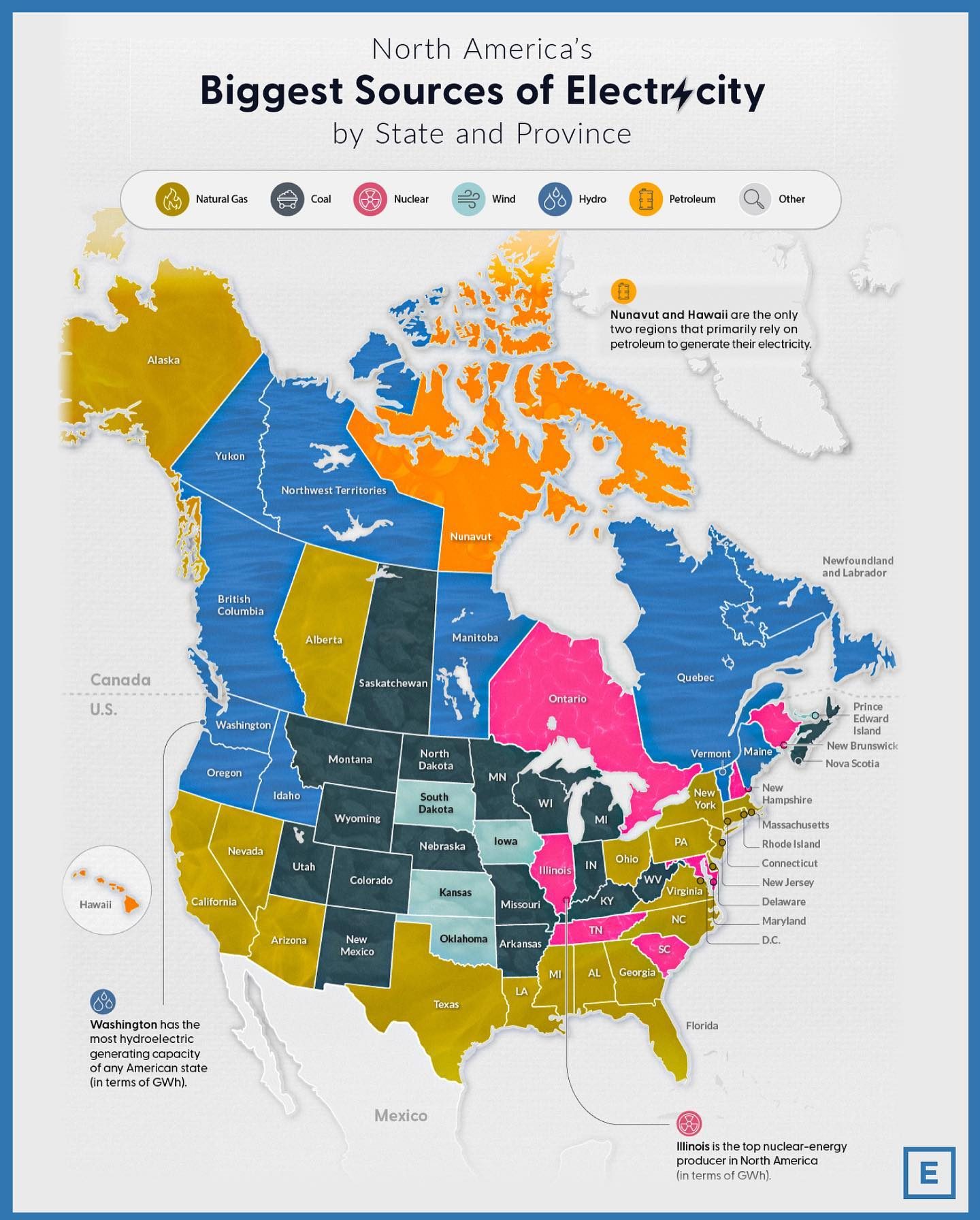
Electricity Generation by State
In North America, the sources of electricity vary significantly between the United States and Canada. The United States primarily relies on natural gas, coal, and nuclear power, whereas Canada heavily depends on hydro and nuclear power. This differences in energy sources can be attributed to geographical features, resource availability and historical policies. Let's dive deeper into the primary electricity sources in each state and province.
Context / Why This Matters
Understanding the variation in electricity generation across North America is crucial for several reasons. It provides insights into each region's energy policies, resource availability, and environmental impact. Furthermore, this knowledge is vital for policymakers, energy planners, and investors looking to optimize energy production, enhance grid reliability, and promote sustainability.
Main Discussion
The US Energy Landscape
Natural Gas
Natural gas is a cornerstone of the US energy mix. It is abundant, versatile, and cleaner than coal. States like Texas, Pennsylvania, and Louisiana are significant natural gas producers. Natural gas is used to generate electricity, heat homes, and power industries. Its flexibility makes it a reliable source for base load and peak demand.
Coal
Coal has been a traditional energy source in the United States. States like Wyoming, West Virginia, and Kentucky are major coal producers. Despite environmental concerns, coal still plays a significant role in electricity generation, particularly in regions with abundant coal reserves. However, its use has been declining due to stricter environmental regulations and the increasing competitiveness of natural gas and renewable energy.
Nuclear Power
Nuclear power is a vital component of the US energy portfolio, providing a significant portion of the nation's electricity. Illinois is the top nuclear-energy producer in North America. Nuclear power plants generate a substantial amount of electricity with relatively low greenhouse gas emissions, making it a viable option for base load power. However, concerns about nuclear waste and public safety have slowed its expansion.
Canada's Energy Dynamics
Hydroelectric Power
Canada is a global leader in hydroelectric power, with abundant water resources. Regions like British Columbia, Quebec, and Manitoba are major hydroelectric producers. Hydroelectric power is renewable, and it provides a significant portion of Canada's electricity. This reliance on hydroelectric power is a result of Canada's extensive water resources and its commitment to sustainable energy.
Nuclear Power
Nuclear power is also a significant contributor to Canada's electricity grid, particularly in Ontario. Canada has a robust nuclear energy sector, with technologies like the CANDU (CANada Deuterium Uranium) reactor. Nuclear power plants provide a stable and low-emission source of electricity, complementing hydroelectric power during periods of low water flow.
Notable Regional Differences
Petroleum-Based Regions
Nunavut and Hawaii are unique in their reliance on petroleum for electricity generation. Nunavut's remote location and harsh climate make it challenging to access other energy sources, while Hawaii's isolation necessitates significant use of petroleum for electricity and transportation.
Washington's Hydroelectric Prowess
Washington State has the most hydroelectric capacity of any American state. The state's abundant water resources, particularly from the Columbia River, make it an ideal location for hydroelectric power generation. This resource has enabled Washington to become a significant producer of clean, renewable energy.
Practical Tips
For Policymakers and Planners
- Diversify Energy Sources: To ensure resilience and sustainability, diversify energy sources. Invest in renewable energy technologies and infrastructure while also maintaining reliable base load power sources.
- Regional Collaboration: Encourage collaboration between states and provinces to share best practices, resources, and technologies. This can help optimize energy production and distribution.
- Promote Research and Development: Invest in research and development to improve energy technologies, enhance efficiency, and reduce environmental impact.
For Consumers
- Energy Efficiency: Implement energy-efficient practices and technologies in homes and businesses to reduce overall energy consumption.
- Renewable Energy Adoption: Consider adopting renewable energy sources such as solar and wind power, where feasible. This can help reduce reliance on fossil fuels and lower carbon footprints.
- Stay Informed: Stay updated on energy policies and initiatives in your region. Participate in community discussions and support initiatives that promote sustainable energy practices.
Important Takeaways
- The United States and Canada have distinct energy portfolios, with the US relying more on natural gas, coal, and nuclear power, while Canada leans heavily on hydro and nuclear power.
- The choice of energy sources is influenced by geographical features, resource availability, and historical policies.
- Regional differences, such as Nunavut and Hawaii's reliance on petroleum, highlight the unique challenges and opportunities in different areas.
- Washington State's hydroelectric prowess exemplifies the potential of renewable energy sources.
- Policymakers, planners, and consumers all have roles to play in optimizing energy production, ensuring sustainability, and promoting renewable energy.
Conclusion
The diversity in electricity generation across North America reflects the region's varied geography, resource availability, and policy landscapes. By understanding these differences, we can better appreciate the complexities of energy production and the importance of sustainable practices. Whether through policy initiatives, technological advancements, or individual actions, every effort contributes to a more resilient and environmentally conscious energy future.
Watch the Reel
Questions readers ask
What are the primary sources of electricity in the United States?
The United States primarily relies on three main sources for electricity generation: natural gas, coal, and nuclear power. These sources collectively contribute significantly to the nation's electricity production, with the specific mix varying by state. Natural gas is often favored for its flexibility and lower emissions than coal, while nuclear power provides a steady, low-emission baseline.
Why does Canada favor hydroelectric power for electricity generation?
Canada's abundant water resources, particularly in the form of rivers and lakes, make hydroelectric power a practical and efficient choice. This abundant natural resource, combined with Canada's historical policies and geography, has led to the development of numerous hydroelectric dams, making hydro a primary source of electricity in many Canadian provinces.
How do policies influence electricity generation in North America?
Energy policies play a significant role in shaping the electricity generation landscape. In the U.S., policies have supported the development of natural gas and nuclear power, while in Canada, policies have favored hydroelectric power. These policies often reflect a region's commitment to specific energy sources, whether for environmental, economic, or energy security reasons.
What are the key differences between U.S. and Canadian electricity sources?
The key difference lies in the primary energy sources used. The U.S. heavily relies on natural gas, coal, and nuclear energy, while Canada's electricity production is dominated by hydroelectric and nuclear power. This variation is due to differences in geography, resource availability, and historical policy choices. Each country’s electricity mix reflects its unique natural endowments and policy priorities.
Which states or provinces are notable for their unique electricity sources?
Some states and provinces stand out due to their unique electricity sources. For instance, states like Wyoming and West Virginia in the U.S. are known for their substantial coal power generation. In Canada, provinces like Quebec and British Columbia are notable for their extensive use of hydroelectric power. These regions are shaped by their geographic features and resource endowments, leading to distinct electricity generation profiles.
How does nuclear energy compare to hydroelectric power in North America?
Nuclear energy and hydroelectric power both play significant roles in North America's electricity generation but differ in their resource requirements and environmental impacts. Nuclear power provides a steady, low-emission energy source, while hydroelectric power is renewable and can quickly adjust to changes in demand. However, hydroelectric power is highly dependent on water availability and can be impacted by droughts, whereas nuclear plants operate continuously unless maintenance or safety concerns arise.
Related deep dives
Similar reads based on topic and creator.

Recent articles
Fresh deep dives from the latest Reels we unpacked.




Comments
Be the first to comment.