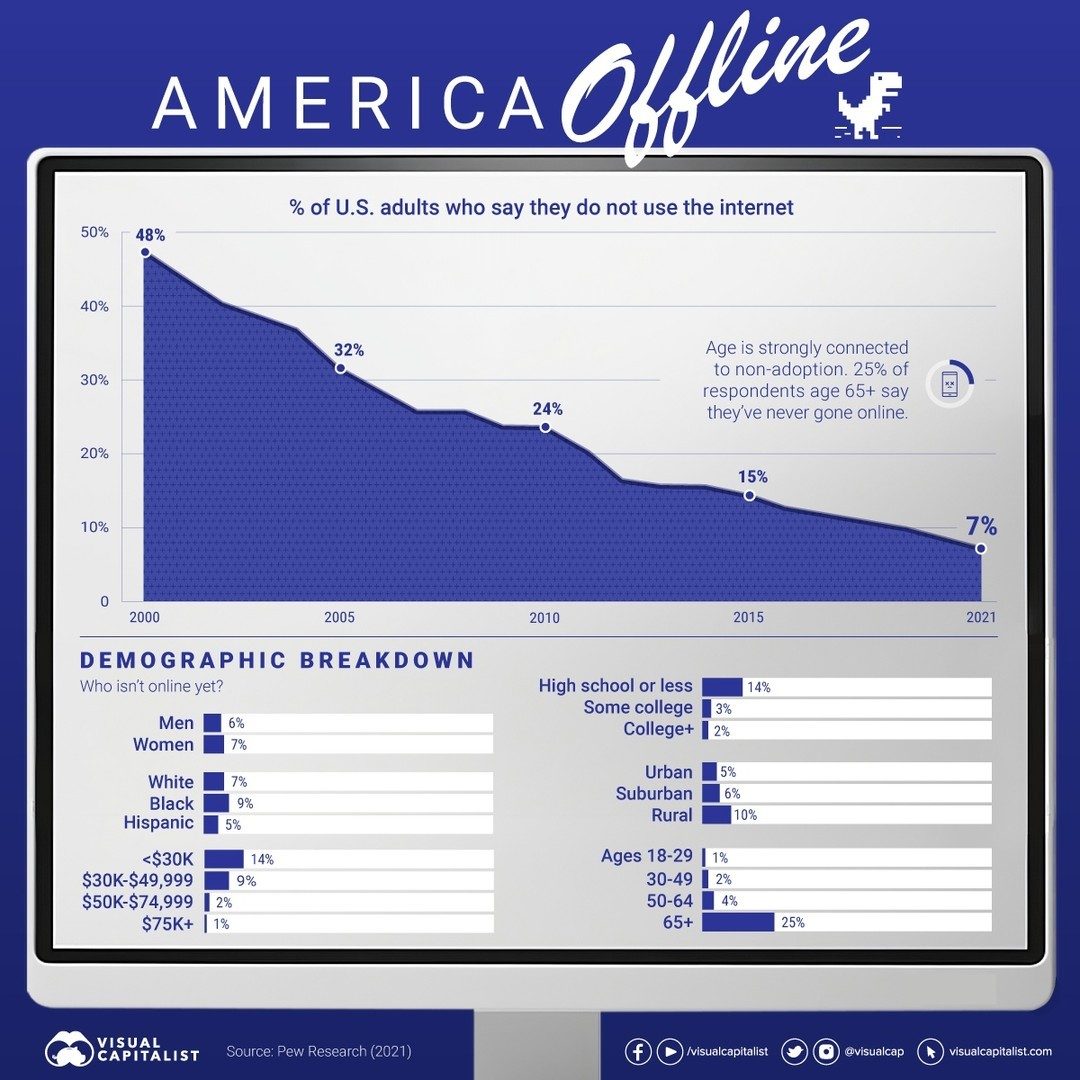
Internet Usage Demographics
The internet has become an integral part of daily life for most Americans. However, there is still a notable fraction of the population that remains offline. Understanding who these non-adopters are provides valuable insights into the digital divide and the factors influencing internet adoption. This demographic breakdown sheds light on the trends and disparities in internet usage across various groups.
Why This Matters
Analyzing internet usage demographics is crucial for policymakers, businesses, and service providers aiming to bridge the digital divide. It helps identify areas where efforts are needed to improve digital literacy and access to technology. By understanding the characteristics of non-adopters, stakeholders can develop targeted strategies to increase internet penetration and ensure that everyone benefits from the digital revolution.
Main Discussion
The Impact of Age
Age is a significant factor in internet adoption. According to the data, 25% of adults aged 65 and above have never used the internet. This age group faces various barriers, including a lack of digital literacy, health limitations, and limited social interaction. In contrast, younger age groups have much higher internet usage rates. For instance, only 1% of adults aged 18-29 and 2% of those aged 30-49 do not use the internet. This disparity highlights the need for programs that promote digital literacy among older adults and provide accessible technology solutions.
Gender and Education
Gender and education levels also play a role in internet adoption. Men are more likely to be offline than women, with 25% of men not using the internet compared to 7% of women. Additionally, education levels significantly impact internet usage. Adults with a high school education or less are more likely to be offline (14%) compared to those with some college (3%) or a college degree and above (2%).
Income and Location
Income is another critical factor in internet adoption. Lower-income individuals are less likely to use the internet, with 14% of those earning less than $30,000 per year not using the internet. In contrast, only 1% of those earning $75,000 or more are offline. Location also matters, with urban areas having a lower percentage of non-adopters (5%) compared to suburban (6%) and rural areas.
Racial and Ethnic Disparities
Racial and ethnic disparities in internet usage are also evident. White adults have a lower non-adoption rate (7%) compared to Black adults (9%). This gap underscores the importance of addressing systemic barriers that may limit access to technology and digital resources for certain racial and ethnic groups.
Trends Over Time
The data from 2000 to 2021 shows a significant increase in internet usage. Over this period, the percentage of adults who do not use the internet has decreased, reflecting the growing importance and accessibility of the internet. However, disparities persist, and certain demographic groups continue to lag behind in internet adoption.
Practical Tips
For Older Adults
Encouraging digital literacy among older adults can help bridge the digital divide. Community centers, libraries, and senior centers can offer classes and workshops on basic computer skills and internet navigation. Additionally, providing accessible and user-friendly technology designed for older adults can make a significant difference.
For Lower-Income Individuals
Initiatives to provide affordable internet access and devices are essential for lowering-income individuals. Programs that offer subsidized or free internet services, along with affordable devices, can help reduce the financial barriers to internet adoption.
For Rural and Suburban Areas
Improving internet infrastructure in rural and suburban areas is crucial. Investing in broadband and wireless networks can ensure that all communities have access to reliable and fast internet connections. This investment can support economic development and provide better access to educational and healthcare services.
Important Takeaways
Age Matters
Age is the most significant determinant of internet usage. Efforts to promote digital literacy and provide accessible technology solutions for older adults are essential.
Education and Gender
Educational attainment and gender also play a role in internet usage. Programs aimed at increasing digital literacy, especially among individuals with lower education levels and men, can help reduce the digital divide.
Income and Location
Lower-income individuals and those living in rural and suburban areas are less likely to use the internet. Addressing financial barriers and improving internet infrastructure in these areas is crucial.
Racial and Ethnic Disparities
Racial and ethnic disparities in internet usage highlight the need to address systemic barriers that limit access to technology and digital resources for certain groups.
Trends Over Time
While internet usage has increased significantly over the past two decades, disparities persist. Continued efforts are needed to ensure that all Americans, regardless of demographic background, can benefit from the digital revolution.
Conclusion
Understanding the demographics of internet non-adopters is vital for addressing the digital divide and ensuring that everyone can access the benefits of the internet. By focusing on age, education, income, location, and racial and ethnic disparities, stakeholders can develop targeted strategies to increase internet penetration and promote digital inclusion. These efforts will not only help bridge the digital divide but also support economic development, education, and healthcare for all Americans.
Watch the Reel
Questions readers ask
Who are the primary non-internet users in the US?
The primary non-internet users in the U.S. are older adults, individuals with lower income levels, and those with lower education levels. Additionally, men are slightly more likely to be offline than women. These groups are crucial to consider when addressing the digital divide.
Why is it important to understand the demographics of non-adopters?
Understanding the demographics of non-adopters is important for identifying areas where digital literacy and technology access need improvement. It helps policymakers, businesses, and service providers to develop targeted strategies to address the digital divide and ensure that more people can benefit from online resources.
How has internet adoption changed from 2000 to 2021?
From 2000 to 2021, internet adoption has significantly increased, but notable disparities remain. While the majority of Americans are now online, there is still a significant fraction of the population, particularly older adults and those with lower income and education levels, who are not using the internet.
What role does gender play in internet usage?
Gender plays a role in internet usage, with men being more likely to be offline compared to women. This trend is evident in the demographics of non-internet users, where men are slightly overrepresented among those who do not use the internet. This is an important factor to consider when addressing the digital divide.
What are the main factors influencing internet adoption?
The main factors influencing internet adoption include age, income, and education levels. Older adults, individuals with lower income, and those with lower education levels are less likely to be online. Understanding these factors can help stakeholders develop strategies to promote digital inclusion.
Related deep dives
Similar reads based on topic and creator.


Recent articles
Fresh deep dives from the latest Reels we unpacked.




Comments
Be the first to comment.