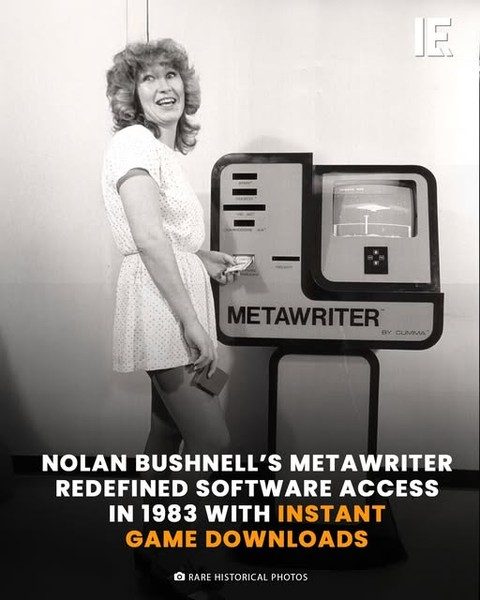
The Cumma Metawriter: A Glimpse Into the Future of Digital Distribution
In 1983, Atari founder Nolan Bushnell introduced an innovative device called the Cumma Metawriter. This vending machine was designed to revolutionize how software reached consumers by allowing users to instantly load games onto reusable cartridges. The Metawriter was an early attempt at digital distribution, aiming to eliminate the need for physical disks, retail stores, and long waiting times. While it ultimately did not gain widespread traction, the Metawriter was a remarkable precursor to the digital distribution models we use today.
The Concept and Technology
The Cumma Metawriter was a pioneering concept that sought to streamline the software distribution process. In an era dominated by physical media, the Metawriter offered a glimpse into a future where digital downloads were the norm. Essentially, the device functioned as a vending machine, allowing users to select and download games onto reusable cartridges without needing physical disks. This idea was revolutionary for its time and showcased the potential of digital distribution.
Redefining Software Access
One of the standout features of the Cumma Metawriter was its ability to redefine software access. By providing instant game downloads, the Metawriter aimed to change the way consumers interacted with software. Instead of waiting for physical disks to be delivered or visiting retail stores, users could instantly download games onto their cartridges. This not only simplified the process of acquiring software but also introduced a level of convenience that was unprecedented at the time.
Instant Game Downloads
The concept of instant game downloads was a groundbreaking feature of the Cumma Metawriter. This allowed users to bypass the traditional methods of software distribution, which often involved delays and the hassle of physical media. The ability to instantly load games onto reusable cartridges was a significant advancement, highlighting the potential of digital distribution in making software more accessible and convenient for consumers.
The Impact and Legacy
While the Cumma Metawriter did not achieve widespread success, its impact on the tech industry is undeniable. The device was a precursor to the digital distribution models we use today, laying the groundwork for future innovations in software distribution.
Nolan Bushnell's Vision
Nolan Bushnell, the founder of Atari, played a pivotal role in the development of the Cumma Metawriter. Known for his visionary ideas and contributions to the gaming industry, Bushnell's involvement in the Metawriter showcased his foresight in predicting the future of digital distribution. His innovative approach to software distribution was decades ahead of its time and continues to inspire modern digital distribution models.
Decades Ahead of Its Time
The Cumma Metawriter was truly decades ahead of its time. In an era dominated by physical media, the concept of digital distribution was not widely accepted or understood. However, the Metawriter demonstrated the potential of this model, paving the way for future advancements in software distribution. Its early attempts at digital distribution laid the groundwork for the digital distribution models we use today, showcasing the visionary thinking behind the device.
Practical Tips for Technology Enthusiasts
While the Cumma Metawriter is a historical artifact, its legacy offers valuable insights for technology enthusiasts today. Here are some practical tips inspired by the innovative features of the Metawriter:
Embrace Digital Distribution
The Cumma Metawriter's focus on digital distribution highlights the advantages of this model. By embracing digital distribution, consumers can enjoy instant access to software and eliminate the need for physical media. This not only simplifies the process of acquiring software but also offers a higher level of convenience.
Utilize Reusable Technology
The reuse of cartridges by the Metawriter underscores the importance of sustainable technology. By utilizing reusable technology, consumers can reduce waste and contribute to a more eco-friendly future. This approach not only benefits the environment but also promotes a more sustainable use of technology.
Explore Early Innovations
Exploring early innovations like the Cumma Metawriter can provide valuable insights into the evolution of technology. By studying these innovations, enthusiasts can gain a deeper understanding of how technology has progressed over time and appreciate the visionary thinking behind these early developments.
Important Takeaways
The Cumma Metawriter offers several important takeaways for technology enthusiasts and industry professionals alike. Its innovative features and groundbreaking concept highlight the potential of digital distribution and the importance of sustainable technology. By embracing these principles, consumers and industry professionals can contribute to a more efficient and eco-friendly future.
Conclusion
The Cumma Metawriter was a groundbreaking innovation that redefined software distribution in the early 1980s. While it did not achieve widespread success, its legacy continues to inspire modern digital distribution models. By embracing the principles highlighted by the Cumma Metawriter, consumers and industry professionals can contribute to a more efficient and sustainable future.
Watch the Reel
Questions readers ask
What was the Cumma Metawriter and who created it?
The Cumma Metawriter was a vending machine invented by Nolan Bushnell, the founder of Atari, in 1983. It allowed users to instantly download games onto reusable cartridges and was an early attempt at digital distribution.
How did the Cumma Metawriter aim to change the gaming industry?
The Metawriter was designed to eliminate the need for physical disks and retail stores by offering instant game downloads. This would have made software access more convenient for consumers by reducing waiting times and eliminating the need to visit retail stores.
What kind of cartridges did the Cumma Metawriter use?
The Cumma Metawriter used reusable cartridges. Users could insert a cartridge into the vending machine, select a game, and the machine would download the game software onto the cartridge.
Why is the Cumma Metawriter considered a historical gaming technology?
The Cumma Metawriter is considered historical because it was one of the first attempts at digital distribution. It was meant to change the way games were distributed in the 1980s and it is a precursor to the digital distribution models that we use today.
What was the impact of the Metawriter on the gaming industry?
Despite its innovative concept, the Metawriter did not gain widespread traction and was not commercially successful. However, it has been recognized as an important precursor to modern digital distribution models.
How did the Cumma Metawriter work?
Users would insert a blank or reusable cartridge into the Metawriter, choose a game from the menu, and the machine would download the selected game onto the cartridge. This process allowed for instant game access without the need for physical media or retail purchases.
What games could be downloaded using the Cumma Metawriter?
The Metawriter offered a variety of games that users could download onto their cartridges. The specific titles available are not widely documented, but they would have been contemporary games from the early 1980s gaming era.
Related deep dives
Similar reads based on topic and creator.


Recent articles
Fresh deep dives from the latest Reels we unpacked.




Comments
Be the first to comment.