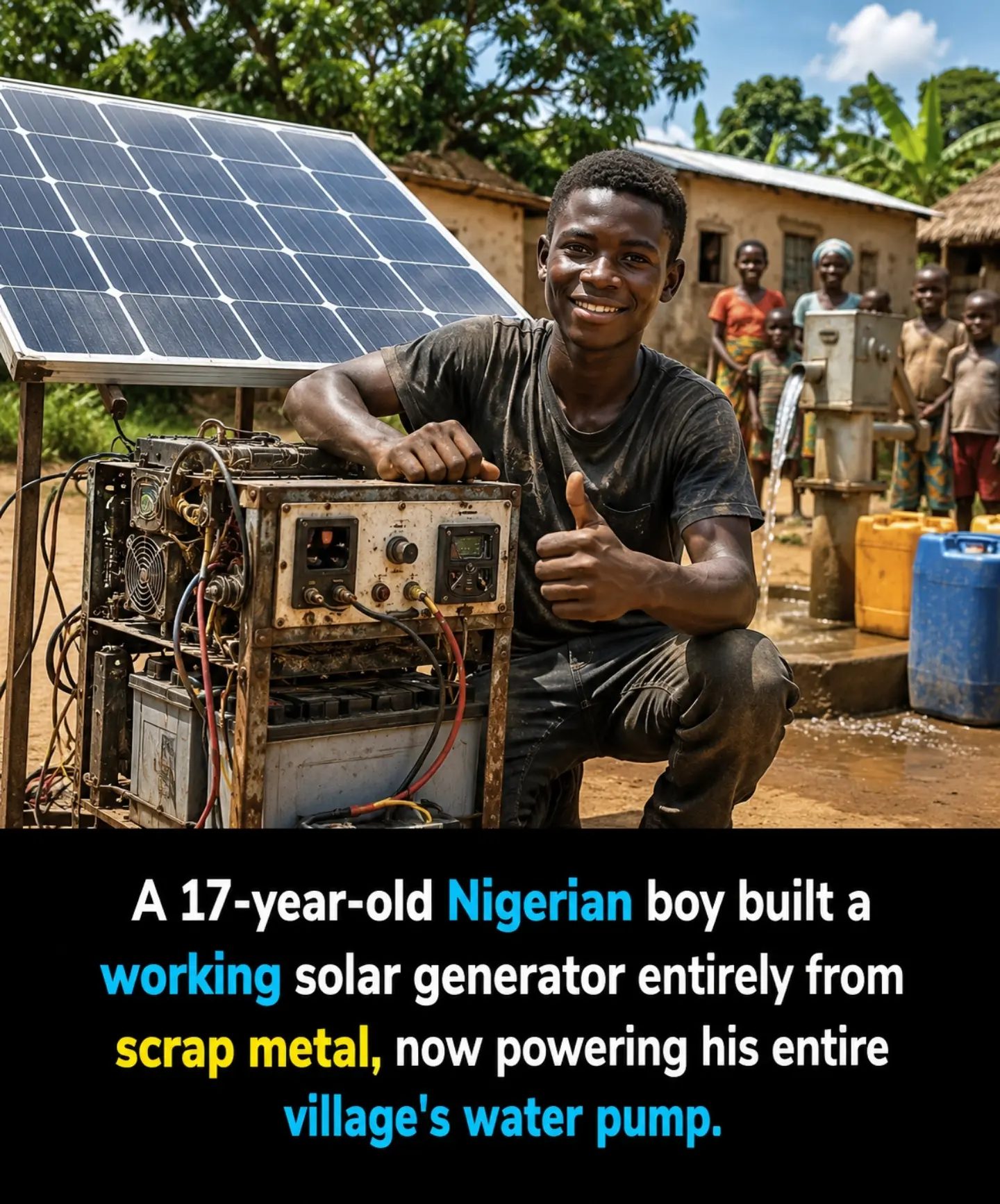
Solar Generators: Pioneering Sustainable Energy in Remote Communities
In resource-constrained environments, access to sustainable energy can significantly improve the quality of life. A standout example of this is a 17-year-old Nigerian boy who constructed a working solar generator entirely from scrap metal. This innovative device now powers his entire village's water pump, providing a reliable and clean energy source.
Why This Matters
The impact of renewable energy solutions like solar generators extends far beyond powering a single appliance. They can transform entire communities by providing access to clean water, improving healthcare, and supporting local economies. This is especially vital in resource-limited settings where traditional power sources are unreliable or nonexistent. The ingenuity behind this project shows the potential for sustainable energy to drive progress and development.
Diving into Solar Generators
Understanding the Technology
A solar generator converts sunlight into usable electricity. Typically, these devices consist of solar panels, a charge controller, a battery, and an inverter. The solar panels capture sunlight and convert it into direct current (DC) electricity. The charge controller regulates the power flow to the battery, ensuring it doesn’t overcharge. The battery stores the energy, and the inverter converts the DC electricity into alternating current (AC) electricity, which is what most appliances use.
The Components of a Solar Generator
- Solar Panels: These panels capture sunlight and convert it into electrical energy. Their efficiency and durability are crucial factors in the overall performance of the generator.
- Charge Controller: This component regulates the flow of electricity from the solar panels to the battery, preventing overcharging and ensuring the battery's longevity.
- Battery: Energy storage is essential for times when sunlight is not available. Batteries store the energy generated during the day for use at night or on cloudy days.
- Inverter: This device converts the DC electricity stored in the battery into AC electricity, making it usable for most household appliances.
The Advantages of Scrap Metal Construction
Building a solar generator from scrap metal has several benefits. Firstly, it reduces the cost significantly since the materials are readily available and often free. Additionally, repurposing scrap metal is an eco-friendly practice that minimizes waste. The construction process can also serve as a learning opportunity, teaching valuable skills in renewable energy and electronics.
Practical Tips for DIY Solar Generators
Gathering Materials
- Solar Panels: Look for damaged or discarded panels that can still capture sunlight. Even if they are not performing at full capacity, they can still contribute to energy generation.
- Batteries: Reclaimed batteries from old electronics can be repurposed. Ensure they are fully charged before use.
- Charge Controller and Inverter: These components may be harder to find, but they can often be sourced from old solar systems or electronics.
- Wiring and Connectors: Use recycled materials where possible. Stripping old wires and using safe connectors is a practical approach.
Assembly
- Solar Panels: Ensure the panels are clean and free of debris. Connect them in a series or parallel configuration based on the voltage and current requirements.
- Charge Controller: Connect the solar panels to the charge controller. Ensure the connections are secure and insulated to prevent short circuits.
- Battery: Connect the battery to the charge controller. Make sure the polarity is correct to avoid damaging the battery.
- Inverter: Connect the battery to the inverter. This device will provide the AC power needed to run most appliances.
- Testing: Before deploying the generator, test it thoroughly to ensure all components are functioning correctly.
Maintenance and Safety
Regular maintenance is crucial for the longevity of a solar generator. Keep the solar panels clean and free of debris. Check the battery and connections regularly to ensure they are secure and free of corrosion. Always follow safety guidelines when handling electrical components to avoid accidents.
Key Takeaways
Building a solar generator from scrap metal is a practical and innovative solution for providing sustainable energy in remote communities. This project demonstrates the potential for renewable energy to drive progress and development, even in resource-constrained settings. The benefits of solar generators extend far beyond powering a single appliance; they can transform entire communities by providing access to clean water, improving healthcare, and supporting local economies.
Conclusion
Innovative solutions like the solar generator built by a 17-year-old Nigerian boy show the potential for sustainable energy to drive progress. By repurposing scrap metal and harnessing the power of the sun, this project provides a model for communities seeking reliable and clean energy sources. Whether you're looking to build a solar generator for personal use or to support a community, the principles of sustainability and ingenuity are essential.
Watch the Reel
Questions readers ask
How did the Nigerian teenager create a solar generator from scrap metal?
The teenager collected scrap metal from his surroundings and used his engineering skills to build a working solar generator. He designed the generator to harness solar power and convert it into electricity, which powers the village's water pump. This initiative highlights the creative use of available resources in developing sustainable energy solutions.
What are the benefits of using solar power in remote communities?
Solar power provides a reliable and clean energy source, which can significantly improve the quality of life in remote communities. It powers essential services like water pumps, supports healthcare facilities, and stimulates local economies. Additionally, solar power is sustainable and reduces dependence on traditional, often unreliable power sources.
How does a DIY solar generator work?
A DIY solar generator converts sunlight into electricity using photovoltaic (PV) cells. When sunlight hits the PV cells, it generates direct current (DC) electricity. This DC electricity is then converted into alternating current (AC) using an inverter, making it usable for various appliances and devices. The Nigerian teenager's generator follows this principle, utilizing scrap metal to build the necessary components.
What challenges might remote communities face when implementing renewable energy solutions?
Remote communities often face challenges such as limited access to resources, lack of technical expertise, and financial constraints. Additionally, the initial setup cost of renewable energy solutions can be high, and maintenance might be challenging due to the remote location. However, innovations like the Nigerian teenager's DIY solar generator demonstrate that these challenges can be overcome with creativity and resourcefulness.
How can sustainable energy solutions impact local economies in remote communities?
Sustainable energy solutions can stimulate local economies by creating jobs in installation, maintenance, and related services. They also support local businesses by providing a reliable power source, which can enhance productivity and encourage entrepreneurship. Furthermore, the availability of clean and affordable energy can attract investments and foster community development.
Related deep dives
Similar reads based on topic and creator.

Recent articles
Fresh deep dives from the latest Reels we unpacked.




Comments
Be the first to comment.