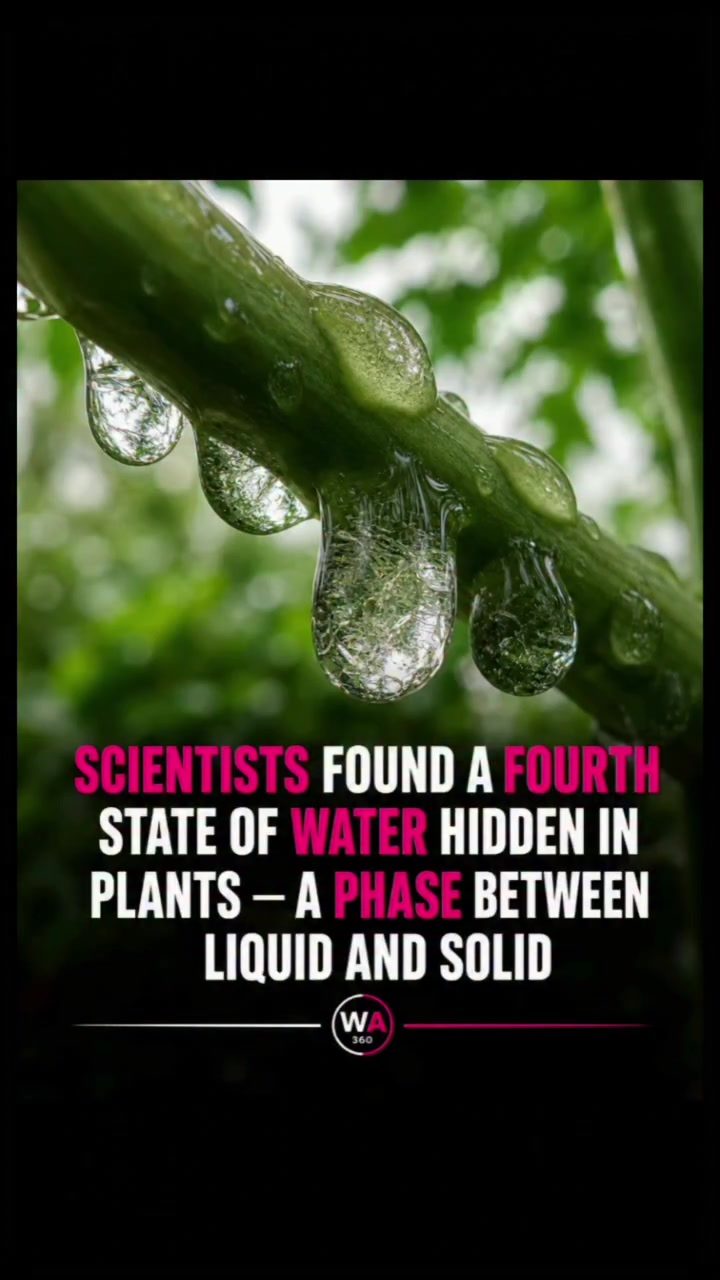
The Fourth State of Water in Plants: A Revolutionary Discovery
Water, as we know it, comes in three primary states: solid (ice), liquid (water), and gas (steam). However, recent scientific discoveries have revealed that there is a fourth state of water, especially prevalent within plant structures. This fourth state, known as the exclusion zone (EZ), exists in a unique phase between liquid and solid. This structured form of water behaves distinctly from ordinary H₂O and could significantly influence various biological processes.
What is the Exclusion Zone (EZ) Water?
The exclusion zone (EZ) water is a structured form of water that exists between the typical liquid and solid states. Unlike ordinary water, EZ water has a distinct layered structure, similar to ice, but with properties that allow it to remain liquid at room temperature. This unique phase was discovered by scientists who observed it within plant cells, especially near cellular membranes and in the spaces between cells.
Why This Matters
The discovery of EZ water is reshaping our understanding of biology, physics, and plant science. Instead of being a simple, passive liquid, water may possess remarkable properties that help living organisms function more efficiently. Researchers believe that EZ water could play a crucial role in how plants transport water, store energy, and sustain life. This hidden phase could influence everything from nutrient movement to cellular processes, opening exciting possibilities for future scientific breakthroughs.
The Role of EZ Water in Plants
Water Transport
One of the most significant implications of EZ water is its potential role in water transport within plants. Traditional models of water transport in plants rely on the cohesion-tension mechanism, where water molecules stick together to form a continuous column from the roots to the leaves. However, EZ water's structured form could provide a more efficient and controlled means of transporting water, especially under stressful conditions.
Energy Storage
EZ water may also play a role in energy storage within plants. The structured form of water could act as a reservoir for energy, allowing plants to store and release energy as needed. This would be particularly beneficial during periods of environmental stress, such as drought or extreme temperatures, where plants need to conserve energy.
Nutrient Movement
The unique properties of EZ water could also influence nutrient movement within plants. Nutrients dissolved in EZ water might move more efficiently through the plant's vascular system, ensuring that all parts of the plant receive the necessary nutrients for growth and development.
Practical Tips for Gardeners and Plant Enthusiasts
While the scientific community continues to explore the implications of EZ water, there are a few practical tips gardeners and plant enthusiasts can consider:
Optimize Watering Practices
Understanding the role of EZ water can help gardeners optimize their watering practices. Since EZ water is more structured and efficient, it might be beneficial to water plants deeply and less frequently, allowing the soil to retain more of the structured water.
Maintain Soil Health
EZ water is more stable in healthy, well-structured soil. Maintaining soil health through the use of organic matter, compost, and beneficial microorganisms can help support the formation of EZ water.
Monitor Environmental Conditions
Since EZ water is influenced by environmental conditions, monitoring and managing environmental stressors such as temperature and humidity can help promote the formation and stability of EZ water within plants.
Important Takeaways
The discovery of the fourth state of water, known as the exclusion zone (EZ), represents a significant breakthrough in our understanding of plant biology and water transport. This structured form of water has the potential to revolutionize how we think about water in living organisms, from nutrient movement to energy storage. As research continues, it is likely that we will uncover even more fascinating properties of EZ water and its role in sustaining life.
Conclusion
The hidden world inside every plant is far more complex and fascinating than we ever imagined. The discovery of EZ water is a testament to the countless mysteries that nature still holds. As we continue to explore and understand these hidden phases of water, we open up new possibilities for scientific breakthroughs and a deeper appreciation for the natural world.
Watch the Reel
Related deep dives
Similar reads based on topic and creator.




Recent articles
Fresh deep dives from the latest Reels we unpacked.




Comments
Be the first to comment.