3D Printing Innovation
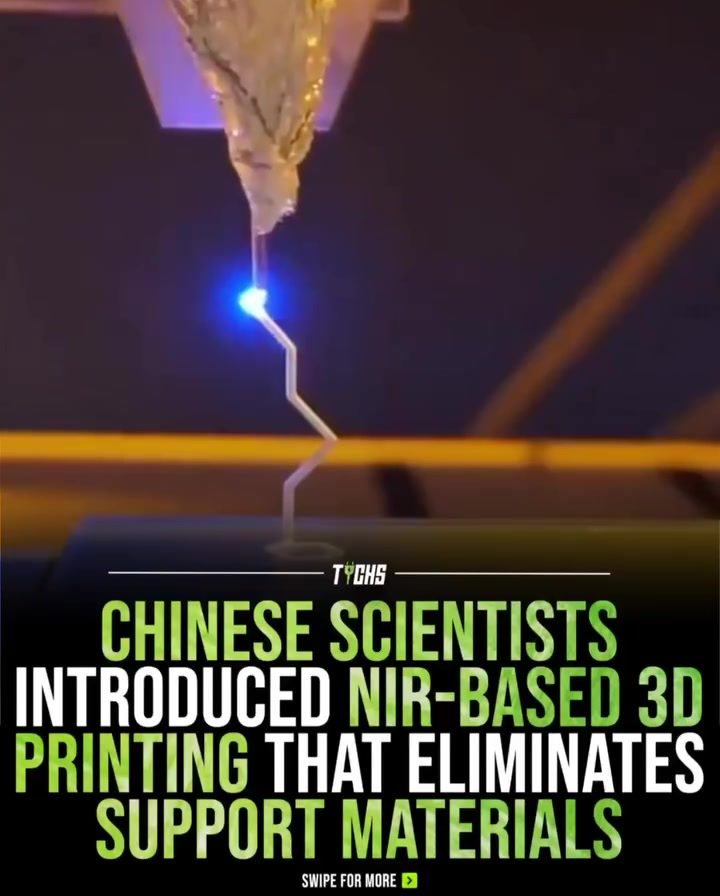
Chinese scientists have introduced a groundbreaking 3D printing method that eliminates the need for support materials. This innovation combines direct ink writing with near-infrared (NIR) light, allowing ceramic materials to harden almost instantly as they are printed. This advancement opens up new possibilities for creating complex structures that can hold their shape without the need for additional scaffolding.
Context / Why this matters
Traditional 3D printing methods often require support materials to keep complex structures in place during the printing process. These supports are typically removed afterward, which can be a time-consuming and messy process. The new NIR-based 3D printing method developed by Chinese scientists addresses this issue by using NIR light to instantly harden the ceramic material as it is printed. This not only speeds up the printing process but also reduces waste and makes it easier to create intricate designs.
Main discussion
How NIR-based 3D Printing Works
The new 3D printing method introduced by TYCHS combines direct ink writing with NIR light. This process allows the ceramic material to harden almost instantly as it is being printed, eliminating the need for support materials. By using NIR light, the system can create complex shapes that would normally require extra supports to hold their shape. This includes low-angle, wide-span, and even fully horizontal structures.
Benefits of NIR-based 3D Printing
The primary benefit of this new method is the elimination of support materials. This not only speeds up the printing process but also makes it cleaner and more flexible. Without the need for supports, the printer can create more complex and delicate structures. Additionally, the process is more efficient as it reduces waste and the time required for post-processing.
Applications of NIR-based 3D Printing
The potential applications of this new 3D printing method are vast. In the ceramics industry, it can be used to create intricate and delicate designs that were previously impossible to produce. It could also be used in other industries such as aerospace, automotive, and medical devices, where complex structures are required. The ability to create complex shapes without the need for support materials opens up new possibilities for designers and engineers.
The Future of 3D Printing
The next generation of 3D printers may not need scaffolding at all, thanks to innovations like the NIR-based method. This could revolutionize the way we think about 3D printing, making it faster, cleaner, and more flexible. As this technology continues to develop, we can expect to see even more innovative applications and uses for 3D printing.
Practical tips
Choosing the Right Material
When using NIR-based 3D printing, it's important to choose the right material. Ceramic materials work well with this method, but other materials may also be compatible. It's essential to experiment with different materials to find the best fit for your project.
Optimizing Printing Settings
To get the best results, it's important to optimize your printing settings. This includes adjusting the speed, temperature, and intensity of the NIR light. It's also important to ensure that the printer is calibrated correctly to produce high-quality prints.
Post-Processing
Even with NIR-based 3D printing, some post-processing may be required. This could include sanding, polishing, or applying a finish to the printed object. It's important to choose the right post-processing techniques to achieve the desired finish.
Important takeaways
The new NIR-based 3D printing method introduced by Chinese scientists is a significant advancement in the field of 3D printing. By eliminating the need for support materials, this method makes the printing process faster, cleaner, and more flexible. It opens up new possibilities for creating complex and intricate designs, and has the potential to revolutionize the way we think about 3D printing. As this technology continues to develop, we can expect to see even more innovative applications and uses for 3D printing.
Conclusion
The introduction of NIR-based 3D printing is a game-changer in the world of 3D printing. This innovative method, developed by Chinese scientists, eliminates the need for support materials, making the printing process faster, cleaner, and more flexible. As this technology continues to evolve, it has the potential to revolutionize the way we create complex and intricate designs. Whether you're in the ceramics industry, aerospace, automotive, or any other field that requires intricate structures, this new method opens up a world of possibilities.
Watch the Reel
Questions readers ask
What is the significance of eliminating support materials in 3D printing?
Eliminating support materials in 3D printing simplifies the process by reducing the time and effort required to remove them post-printing. This also decreases material waste, as supports are often discarded, making the process more efficient and eco-friendly.
How does the new 3D printing method developed by Chinese scientists work?
The new method combines direct ink writing with near-infrared (NIR) light to print ceramic materials. The NIR light allows these materials to harden instantly, creating structures that maintain their shape without needing additional support materials.
What makes ceramic materials suitable for this new 3D printing technique?
Ceramic materials are suitable for this technique because they can be formulated into inks that harden quickly under NIR light, allowing for the creation of complex structures that retain their shape immediately after printing.
What are the primary advantages of using NIR light in 3D printing?
Using NIR light in 3D printing offers several benefits, including the instant hardening of materials, which enables faster printing speeds, reduces the need for support structures, and allows for the creation of more intricate and stable designs.
Can this new 3D printing method be applied to materials other than ceramics?
While the current method is specifically designed for ceramic materials, the principles behind it—using NIR light to harden materials quickly—could potentially be adapted for other materials in the future, depending on further research and development.
How does this innovation speed up the 3D printing process?
This innovation speeds up the 3D printing process by allowing materials to harden immediately upon contact with NIR light, which reduces the time needed for each layer to solidify and eliminates the need for additional steps to remove support materials.
Related deep dives
Similar reads based on topic and creator.


Recent articles
Fresh deep dives from the latest Reels we unpacked.




Comments
Be the first to comment.