Nerve Cells: Specialized Structures in the Nervous System
Nerve cells, also known as neurons, are the fundamental units of the human nervous system. These specialized cells are designed for unique functions, enabling the body to process information, respond to stimuli, and coordinate complex actions. The nervous system relies on a variety of nerve cells, each with distinct roles and structures, to ensure the body functions efficiently.
Context / Why This Matters
Understanding the diverse types of nerve cells is crucial for appreciating how the nervous system operates. These cells are responsible for transmitting electrical and chemical signals that enable everything from basic movements to complex cognitive processes. By examining the different types of neurons, we can gain insights into how the brain and nervous system manage and execute these vital functions.
Main Discussion
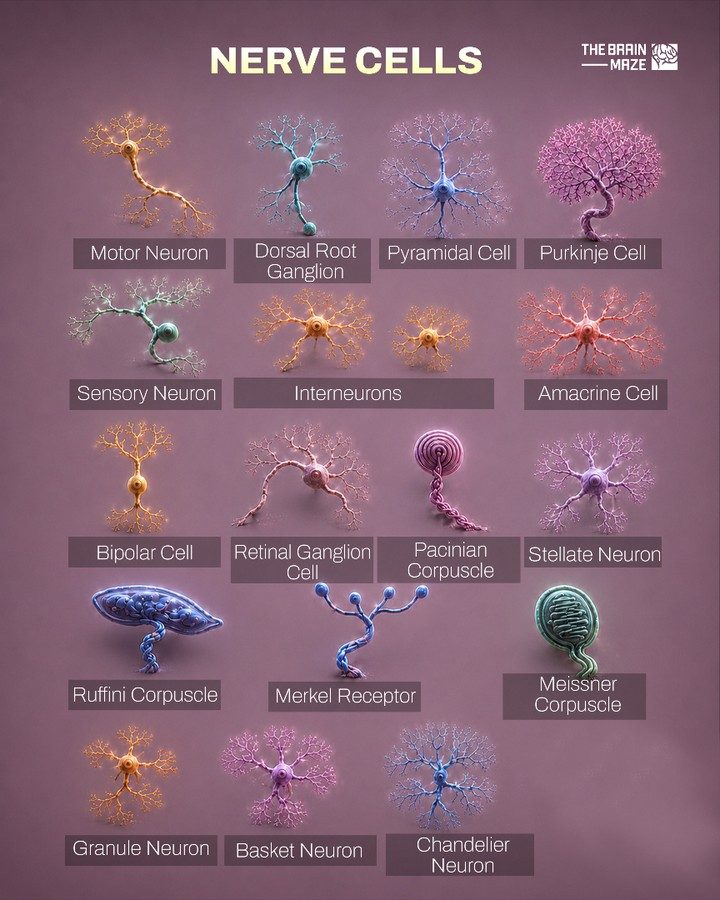
Motor Neurons
Motor neurons are responsible for controlling muscle movement and are essential for voluntary and involuntary actions. They transmit signals from the brain to the muscles, initiating contractions that enable body movement. For example, when you decide to pick up a cup of coffee, motor neurons send signals to your arm muscles, allowing you to reach for and grasp the cup.
Sensory Neurons
Sensory neurons are specialized to detect and transmit information from the external environment to the brain. They convert stimuli such as touch, pain, and temperature into electrical signals. For instance, when you touch a hot surface, sensory neurons in your skin detect the heat and send a signal to your brain, prompting you to withdraw your hand.
Interneurons
Interneurons are found within the brain and spinal cord, where they process and relay information between other neurons. They play a critical role in coordinating the activity of neurons and are essential for functions such as learning, memory, and sensory perception. Interneurons help regulate the flow of information within the nervous system, ensuring that the right signals reach the right destinations.
Specialized Nerve Cells
Beyond motor, sensory, and interneurons, the nervous system includes other specialized nerve cells that serve specific functions:
- Purkinje Cells: These large cells are found in the cerebellum and are crucial for motor coordination. They help refine movements, ensuring smooth and precise actions.
- Pyramidal Cells: Located in the cerebral cortex, these cells are involved in cognitive functions, including learning, memory, and decision-making.
- Bipolar Cells: Found in the retina, these cells relay visual information from photoreceptors to retinal ganglion cells, contributing to the processing of visual signals.
- Amacrine Cells: Also in the retina, amacrine cells modulate the signals from bipolar cells, refining the information sent to the brain for visual interpretation.
Additional Specialized Structures
The nervous system also includes various other structures that aid in sensory perception and neural communication:
- Pacinian Corpuscles: These receptors detect rapid vibrations and pressure changes, contributing to the sense of touch.
- Ruffini Corpuscles: These receptors respond to sustained pressure and are involved in the sense of proprioception, helping to detect the position and movement of body parts.
- Merkel Receptors: Located in the skin, these receptors detect gentle touch and pressure, contributing to fine-touch sensitivity.
- Meissner Corpuscles: These receptors are responsible for detecting light touch and vibrations, providing the brain with important information about the environment.
Practical Tips
When exploring the functions of nerve cells, remember that understanding their roles can enhance appreciation for the complexity of the nervous system. Engaging with educational resources, such as visual aids and diagrams, can provide a clearer picture of how these cells work together. Additionally, staying updated with the latest research in neuroscience can offer new insights into the mechanisms and functions of these specialized cells.
Engaging with Visuals
Visual aids, such as diagrams and illustrations, can be invaluable in understanding the structure and function of nerve cells. Detailed graphics, like those provided by The Brain Maze, help visualize the diverse range of neuronal structures and their roles within the nervous system. Utilize these resources to enhance your comprehension of how these cells contribute to various neurological processes.
Important Takeaways
The human nervous system is a complex network of specialized nerve cells, each with a unique role in maintaining bodily functions. From motor neurons controlling muscle movement to sensory neurons detecting external stimuli, and interneurons processing information, these cells work together to ensure the body operates efficiently. Specialized structures like Pacinian corpuscles and Merkel receptors also play essential roles in sensory perception, contributing to the overall functionality of the nervous system.
Conclusion
The diversity of nerve cells within the human nervous system highlights the intricate nature of our biological machinery. Each type of neuron, from motor and sensory to interneurons and specialized cells, plays a crucial role in maintaining our ability to move, sense, and think. By understanding these specialized structures, we can better appreciate the complexity and efficiency of the nervous system.
Watch the Reel
Questions readers ask
What are the primary types of nerve cells in the human body?
The primary types of nerve cells, or neurons, in the human body are sensory neurons, motor neurons, and interneurons. Each type plays a distinct role in processing and transmitting information within the nervous system.
What is the function of motor neurons?
Motor neurons are responsible for sending signals from the brain and spinal cord to muscles and glands, enabling body movements and other responses. They are crucial for voluntary and involuntary actions.
What are interneurons and where are they primarily found?
Interneurons are located within the brain and spinal cord, acting as intermediaries between sensory and motor neurons. They facilitate communication between different neurons, enabling complex processing and coordination of information.
What are Purkinje cells and what role do they play in the brain?
Purkinje cells are a type of neuron found in the cerebellum, a region of the brain that coordinates movement. Purkinje cells are crucial for motor control, balance, and fine-tuning movements.
What are bipolar neurons and where are they typically located?
Bipolar neurons have two branches extending from the cell body, one for receiving signals and the other for transmitting. They are typically located in the retina of the eye and the olfactory epithelium in the nose, playing a key role in sensory functions.
What are amacrine cells and what is their function?
Amacrine cells are a type of retinal neuron that play a key role in processing visual information. They help refine and enhance visual signals, contributing to tasks such as edge detection and motion perception.
What are retinal ganglion cells and what is their function?
Retinal ganglion cells are a type of neuron found in the retina that transmit visual information from the eye to the brain. They are crucial for processing and relaying visual signals, enabling sight.
Related deep dives
Similar reads based on topic and creator.




Recent articles
Fresh deep dives from the latest Reels we unpacked.




Comments
Be the first to comment.