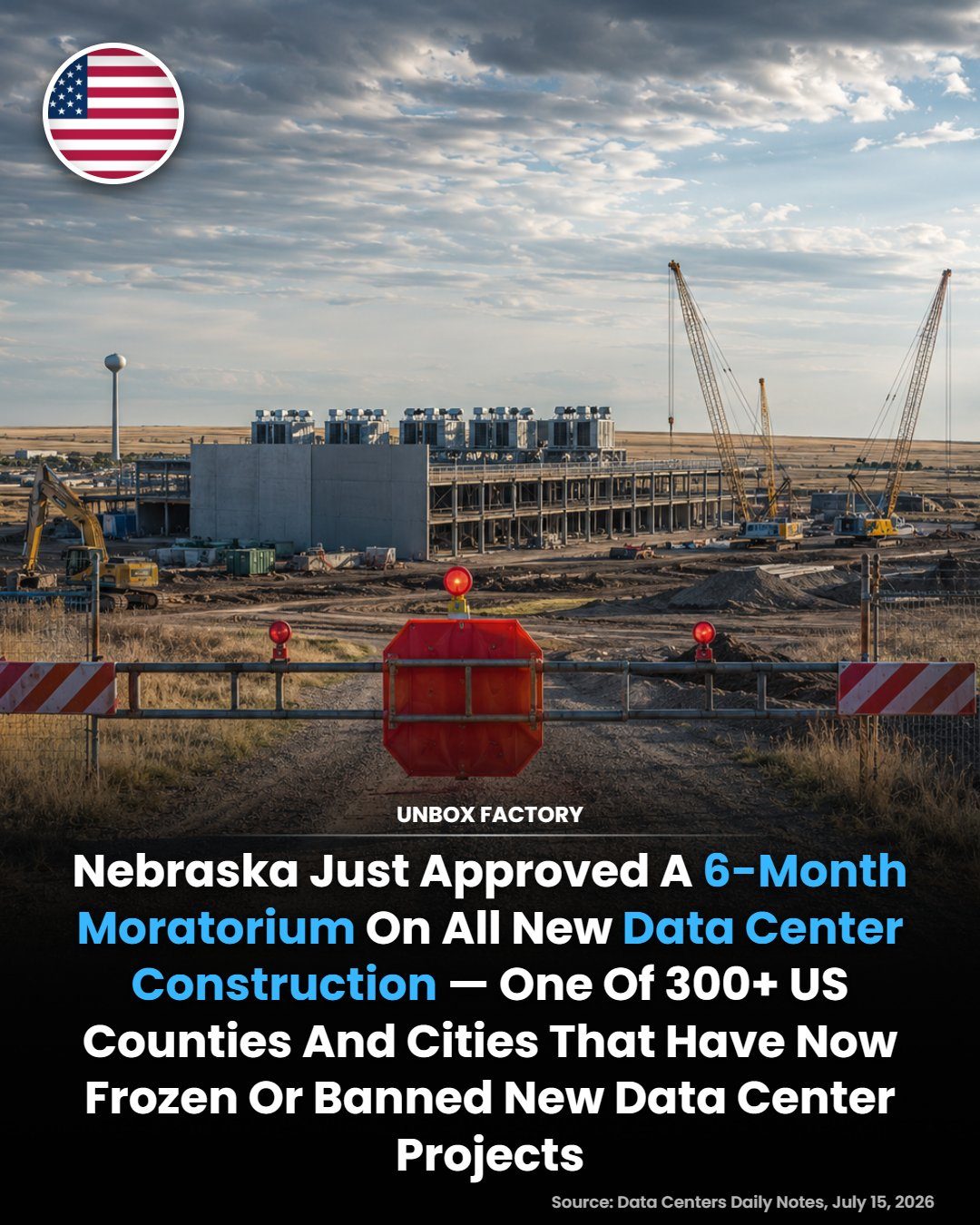
Data Center Construction Moratorium
Nebraska's recent six-month moratorium on new data center construction marks a significant step in the ongoing evaluation of the long-term impacts of these facilities on electricity demand, water resources, land use, and local infrastructure. This decision is part of a broader trend, as more than 300 counties and municipalities across the United States have implemented similar freezes or bans on new AI data center development. The surge in demand for hyperscale computing facilities, driven by the rapid expansion of artificial intelligence, has led to concerns about the permanent reshaping of communities.
Why This Matters
The construction and operation of data centers require substantial resources. Individual campuses can demand more than 1 gigawatt of electricity, enough to power hundreds of thousands of homes. This immense energy consumption raises critical questions about sustainability and the strain on local resources. As local governments grapple with these issues, the moratoriums provide a necessary pause to conduct comprehensive studies and ensure that new developments align with community needs and long-term sustainability goals.
The Rapid Growth of AI and Data Centers
The exponential growth of artificial intelligence has led to an unprecedented increase in the demand for data centers. These facilities are essential for powering AI applications, from machine learning algorithms to large language models and real-time data processing. The high energy consumption and resource requirements of these centers have prompted many local governments to reassess their policies.
Energy Consumption and Sustainability
Data centers are notorious for their high energy consumption, with some facilities requiring more than 1 gigawatt of electricity. This massive demand not only strains local power grids but also raises concerns about environmental sustainability. As communities seek to balance the benefits of AI with the need for environmental stewardship, the moratoriums allow for a deeper examination of energy-efficient technologies and renewable energy sources.
Water Resources and Land Use
Beyond energy, data centers also consume significant amounts of water for cooling systems. In regions where water is a scarce resource, this can exacerbate existing issues. Additionally, the land use for data centers is substantial, often occupying large tracts of land that could otherwise be used for other community needs.
Local Infrastructure and Community Impact
New data center developments can place considerable strain on local infrastructure, from transportation networks to utilities. The rapid expansion of these facilities can lead to unforeseen challenges, such as increased traffic congestion and strain on public services. Local governments are increasingly recognizing the need to evaluate these impacts before approving new projects.
Practical Tips
For local governments and communities facing similar decisions, here are some practical steps to consider:
Conduct Comprehensive Impact Assessments
Before approving new data center projects, conduct thorough impact assessments that cover energy consumption, water usage, land use, and local infrastructure. Involve stakeholders from various sectors, including environmental groups, utility providers, and local businesses, to ensure a holistic approach.
Promote Energy Efficiency and Renewable Energy
Encourage data center developers to adopt energy-efficient technologies and renewable energy sources. Incentives such as tax breaks or grants for implementing sustainable practices can be effective in driving this shift.
Engage the Community
Engage the community in the decision-making process to ensure that the concerns and needs of residents are addressed. Public consultations, surveys, and community meetings can provide valuable insights and foster a sense of ownership and responsibility.
Develop Long-Term Planning
Create long-term planning strategies that balance the benefits of AI and data centers with the need for sustainability and community well-being. This includes setting clear guidelines for future developments and ensuring that new projects align with broader community goals.
Important Takeaways
The six-month moratorium on new data center construction in Nebraska highlights the growing awareness of the environmental and community impacts of these facilities. By pausing new developments, local governments can conduct thorough evaluations and ensure that future projects are sustainable and aligned with community needs. As the demand for AI and data centers continues to grow, it is essential to adopt a balanced approach that promotes innovation while safeguarding the environment and community well-being.
Conclusion
The moratoriums on new data center construction in Nebraska and other regions across the United States are a critical step towards ensuring that the rapid expansion of AI is sustainable and beneficial for communities. By addressing concerns about energy consumption, water resources, land use, and local infrastructure, local governments can strike a balance between technological advancement and environmental stewardship. As we continue to navigate the complexities of AI and data centers, it is essential to prioritize comprehensive impact assessments, promote sustainable practices, engage communities, and develop long-term planning strategies. This approach will help ensure that new developments align with community needs and contribute to a sustainable future.
Watch the Reel
Questions readers ask
How long will Nebraska's moratorium on data center construction last?
Nebraska's moratorium on new data center construction is set to last for six months. This pause aims to give the state time to assess the long-term impacts of these facilities on local resources and infrastructure.
Why did Nebraska implement a moratorium on data center construction?
Nebraska implemented the moratorium to address concerns over the impacts of data center infrastructure on electricity demands, water resources, and local infrastructure. The state wants to ensure that the rapid expansion of data centers, driven by AI advancements, does not permanently alter local communities.
Are there other places in the U.S. implementing similar policies?
Yes, Nebraska is not alone. Over 300 counties and municipalities across the United States have implemented similar freezes or bans on new AI data center development. This trend reflects a growing awareness of the significant resource demands and infrastructure impacts of data centers.
What resources are affected by data center construction?
Data centers require substantial resources, including electricity, water, and land. The construction and operation of these facilities can place a significant strain on local resources, which is a primary concern for local governments implementing moratoriums.
What does this moratorium mean for current data center projects in Nebraska?
The six-month moratorium on data center construction in Nebraska means that any new projects will be paused. Current projects will need to be evaluated, and new construction will need to wait until the moratorium is lifted.
What are local governments hoping to achieve with data center policies?
By implementing moratoriums, local governments hope to strike a balance between fostering technological growth and protecting local resources. They aim to ensure that data center expansion benefits the community without overwhelming local infrastructure and resources.
Related deep dives
Similar reads based on topic and creator.



Recent articles
Fresh deep dives from the latest Reels we unpacked.




Comments
Be the first to comment.