The Language of the Earth
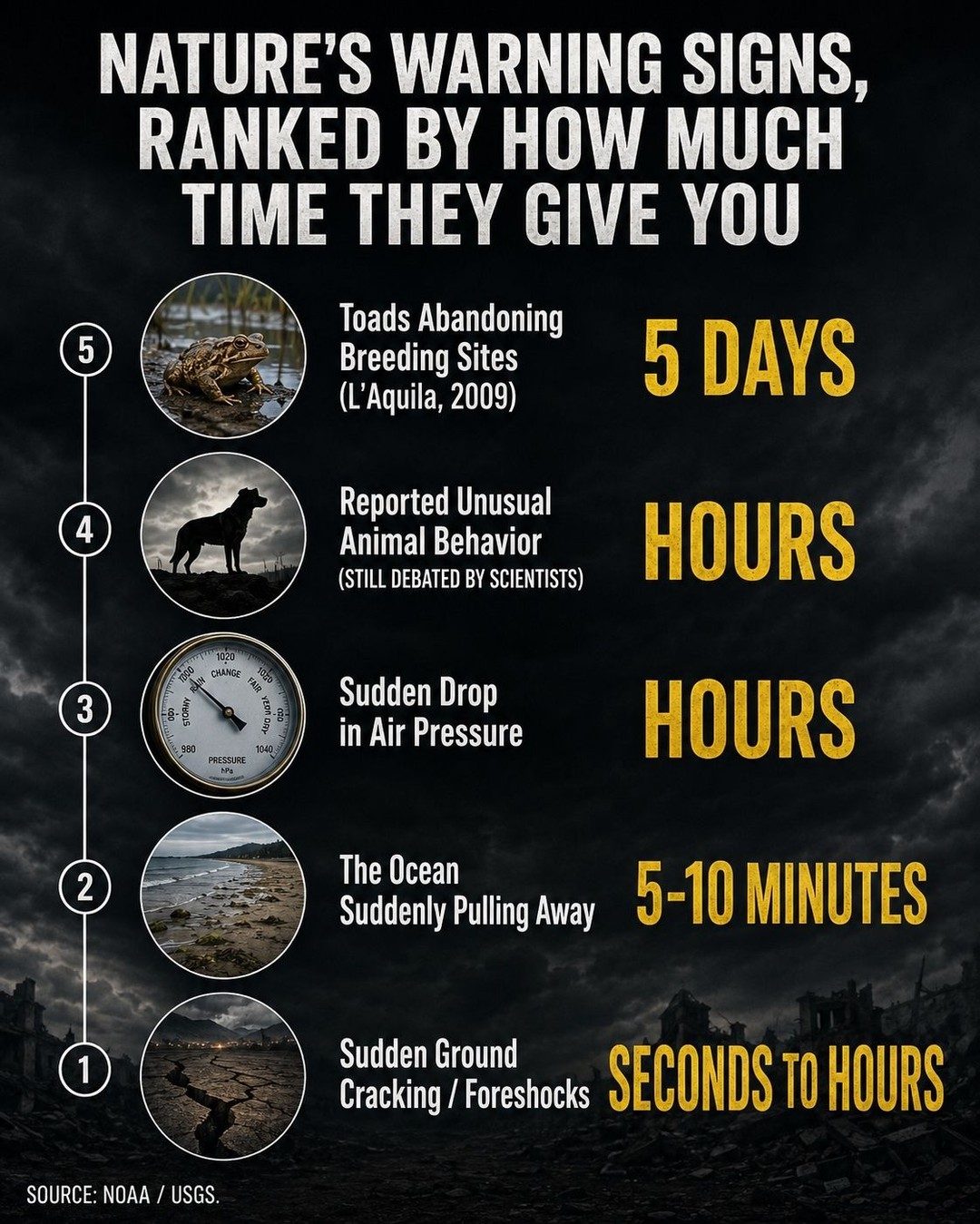
Nature, in its vast wisdom, often provides clues before a disaster, offering time to act. These warnings are not always loud or dramatic, but they are present. Recent research and historical events reveal animal behavior fluctuations can provide signals of an impending event, acting like an early-warning system. From toads to barometric readings, nature's indicators range widely, and their reliability varies. These pointers can provide critical moments to prepare for an event or, in some instances, avert it. Unpredictable and sudden, disasters can strike with little warning. While nature offers clues of distress, societies have historically struggled to decode them with full certainty. The U.S. Geological Survey and NOAA affirmed this in 2009. In L’Aquila, the anecdote of the toads is infamous. A day before the cataclysm, the local toad population "abandoned their breeding sites", providing five days of warning for those willing to listen. Unfortunately, this early warning was overlooked. In some cases, nature's signals are too fleeting to lament.
Hours to moments
A sudden drop in air pressure signals an event within hours. Barometers are static measures, but atmospheric changes are dynamic. One such change is a steep drop, which occurs when the surrounding air pressure drops so quickly that all the wind is knocked out. The ocean itself can signal a tsunami. When a massive wave is approaching, the ocean can appear to recede. This sudden withdrawal of seawater offers a brief window of time, approximately five to ten minutes, to act. Yet nature's warnings are never straightforward. Firefighters now know that animals may seek refuge before a storm, while their barometric indicators are unlikely to deviate. A body cannot peer into the future. When it comes to animals, it is well known that humans rely on the scientists and not the animals.
Seconds to spare
While nature's warnings can vary in their reliability, some signs are more trustworthy than others. Since the early 20th century, scientists have observed the animals before a disaster. But what of the human body? When the ground trembles or cracks, it might start to shake. Those vibrations can provide seconds to hours to react. Reducing the impact of a natural disaster requires looking at a multitude of factors, but listening to this simple sign can be key.
Watch the Reel
Related deep dives
Similar reads based on topic and creator.



Recent articles
Fresh deep dives from the latest Reels we unpacked.

Comments
Be the first to comment.